

A Report by Aileen Anthony, Executive Editor, MALAYSIA SME
Cleantech’s Tough Present and Promising Future
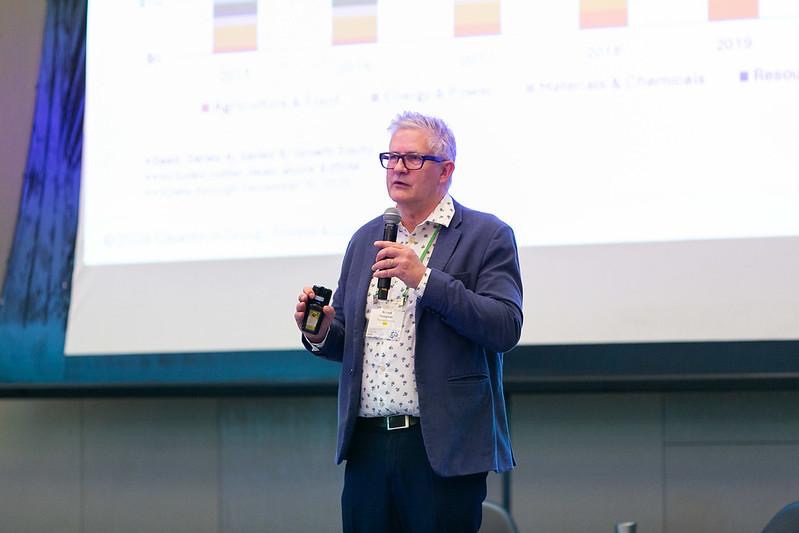
During the first quarter of 2026 alone, he shared, investment levels exceeded those recorded in the same period in 2025, underscoring that investor appetite remains strong. What has changed, however, is the reason investors are deploying capital. Increasingly, climate concerns are being accompanied by another powerful driver. “The next chapter of cleantech is really going to be about security and resilience,” Youngman said.
Dependency
For much of the last decade, the cleantech narrative has been shaped by climate change. Governments adopted renewable energy targets. Corporates announced net-zero commitments. Investors sought opportunities that aligned with sustainability goals.
Today, Youngman believes a new force is accelerating the transition. Dependency. “Seventy-five per cent of the world lives in a state of dependency,” he observed. Whether it is dependence on imported energy, foreign manufacturing, critical minerals or strategic supply chains, countries around the world are increasingly recognising vulnerabilities that were previously overlooked. “If dependency is a condition that nobody really wants to live under, we have now been triggered, in very unfortunate circumstances, into reacting,” he said.
Recent geopolitical developments have accelerated this realisation. Around the world, governments are responding with new urgency. To Youngman, this is evidence of a broader transformation. “The arrival of the age of electricity has actually just been given an enormous further accelerant.”
The difference between today’s transition and past energy crises is that technologies are no longer experimental. “We have technology that is ready to go, that is already at price points that are competitive and has the promise to keep falling,” he said, adding that this could power cleantech-driven alternative attitudes to food, water, materials, and waste.
Sovereign Technologies
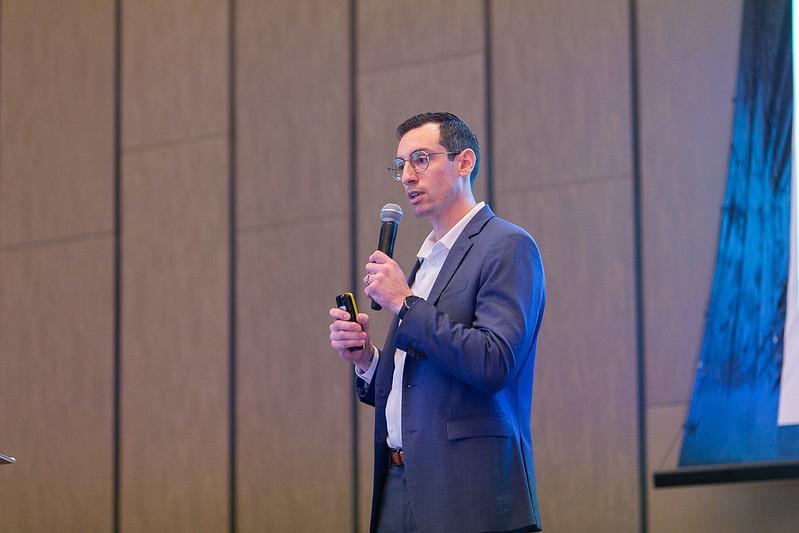
Using a “Grow, Flow, Slow” framework, Anthony DeOrsey, Research Manager at Cleantech, outlined how Cleantech Group identifies sectors expected to accelerate, progress steadily or face headwinds over the coming years. “Any technology that improves self-determination” is likely to become increasingly important in the years ahead.
According to DeOrsey, two broad categories currently dominate this landscape. The first revolves around artificial intelligence (AI). As countries compete to establish leadership in AI, demand for supporting infrastructure is growing rapidly. This includes baseload power generation, battery storage, liquid cooling systems, transmission infrastructure and other technologies capable of supporting increasingly power-hungry data centres.
The second category centres on critical minerals. Materials are becoming strategic assets that influence industrial competitiveness, energy security and national resilience. The growing focus on critical minerals reflects a broader shift taking place across governments worldwide.
Asia Pac’s Take
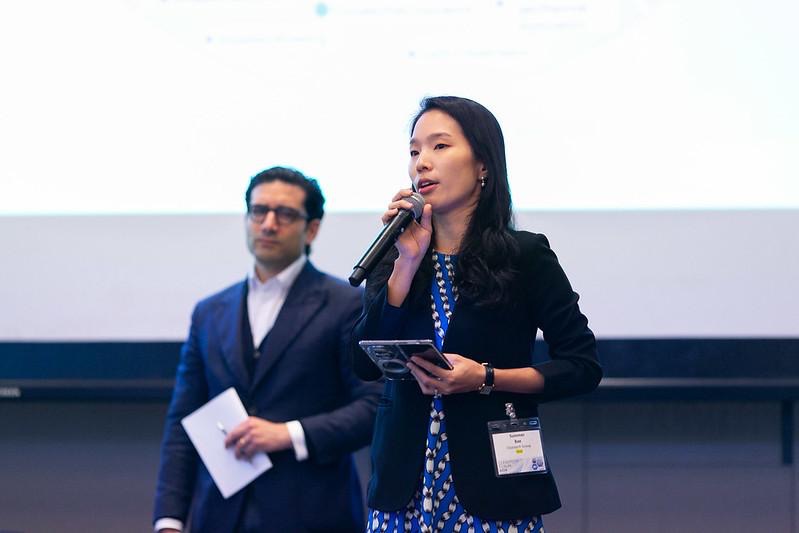
Summer Bae, Managing Director of Asia-Pacific at Cleantech Group, shared that Asia’s realities require a different perspective. She cites long-duration storage to illustrate. Across China, India and Southeast Asia, renewable energy deployment is accelerating rapidly. However, grid infrastructure is struggling to keep pace.
“Long-duration storage doesn’t really grow where grids are comfortable,” Bae said. Instead, “long-duration storage is growing where the grid is stressed.” Rapid economic growth, industrial expansion and rising electricity demand is making energy storage solutions essential rather than optional.
Hydrogen, she shared, has become one of the most debated technologies within the global cleantech industry. “Strong government-led, demand-led analysis, especially in the hard-to-abate sectors, we believe that hydrogen will grow more here.”
The third area attracting significant attention is next-generation battery technology. Lithium-ion batteries currently dominate the market. Yet recent developments suggest the industry may be entering another phase of evolution. Alternative battery chemistries could reduce dependence on certain supply chains, lower costs and expand energy storage deployment across emerging markets.
And no discussion about Asia-Pacific cleantech is complete without discussing China. Today, approximately 80 per cent of mature technologies such as electric vehicles, solar panels and batteries are manufactured in China. This dominance has transformed China into both a major producer and a major consumer of critical minerals.
At the same time, Asia itself is becoming the centre of global energy demand growth. Electricity consumption across South Asia is expected to rise dramatically as economies expand and standards of living improve. Demand for air conditioning, electric vehicles, charging infrastructure, storage systems and power generation continues to grow.
These shifts have also created new questions. “We know that we need a lot of generation and innovation in Asia, but that investment flow is not coming to Asia.” That disconnect led Bae to pose what may be one of the region’s most important questions. “How can we get capital to Asia?”
Europe’s Search
Jules Besnainou, Executive Director of Cleantech for Europe, offered the European standpoint, a reality that “We have no oil and gas.” Cleantech, Besnainou said, is critical not only for decarbonisation but also for economic competitiveness and energy security. However, as the region reduces its dependence on fossil fuels, there is growing concern that Europe could replace one dependency with another.
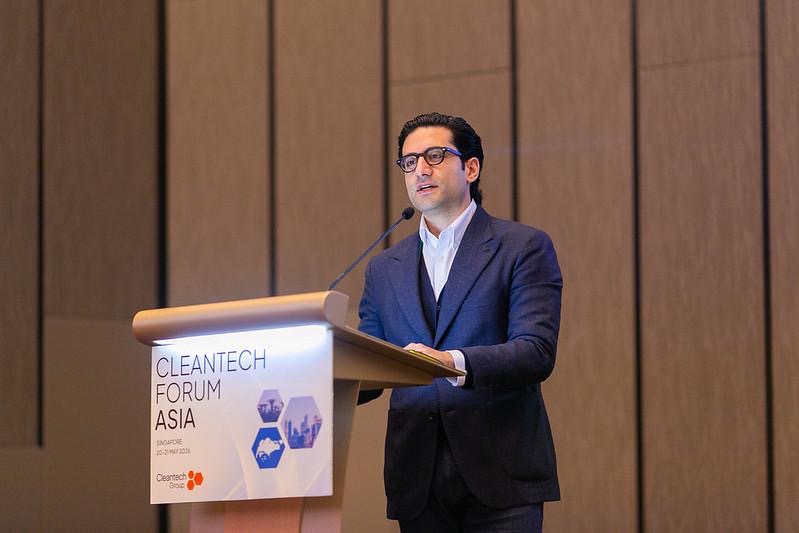
“The EU is looking to de-risk, diversify its cleantech supply chains,” he stated. Countries such as India, Japan and South Korea could become increasingly important partners as Europe seeks to broaden its supplier base. He highlighted that while venture and growth investments have plateaued after years of rapid expansion, capital deployment remains significantly higher than levels seen a decade ago.
Some of the largest investments continue to flow into deployment of mature technologies, including solar infrastructure, EV charging networks and industrial energy systems. Opportunities are also emerging in areas such as batteries, heat pumps, electrolysers and quantum computing. Besnainou opined that substantial opportunities remain available for investors, “If you have capital to put to work in the late stages in Europe.”
Sustainability to Sovereignty
If the industrial age was built on oil, the next era may well be defined by electricity, not just as a source of power, but as a strategic enabler of economic resilience, technological leadership and national sovereignty.
While climate change remains central to the cleantech story, it is no longer the only driver. Security, resilience, sovereignty and energy independence are increasingly shaping investment, innovation and policy decisions.
As a result, the technologies attracting attention today are not only those capable of reducing emissions, but also those that reduce dependency. As countries seek greater control over their energy futures, strengthen supply chains and build more resilient economies, cleantech is evolving from an environmental solution into a strategic one.
If the discussions in Singapore were any indication, the next chapter of cleantech will be defined as much by the pursuit of sovereignty as by the pursuit of sustainability.