
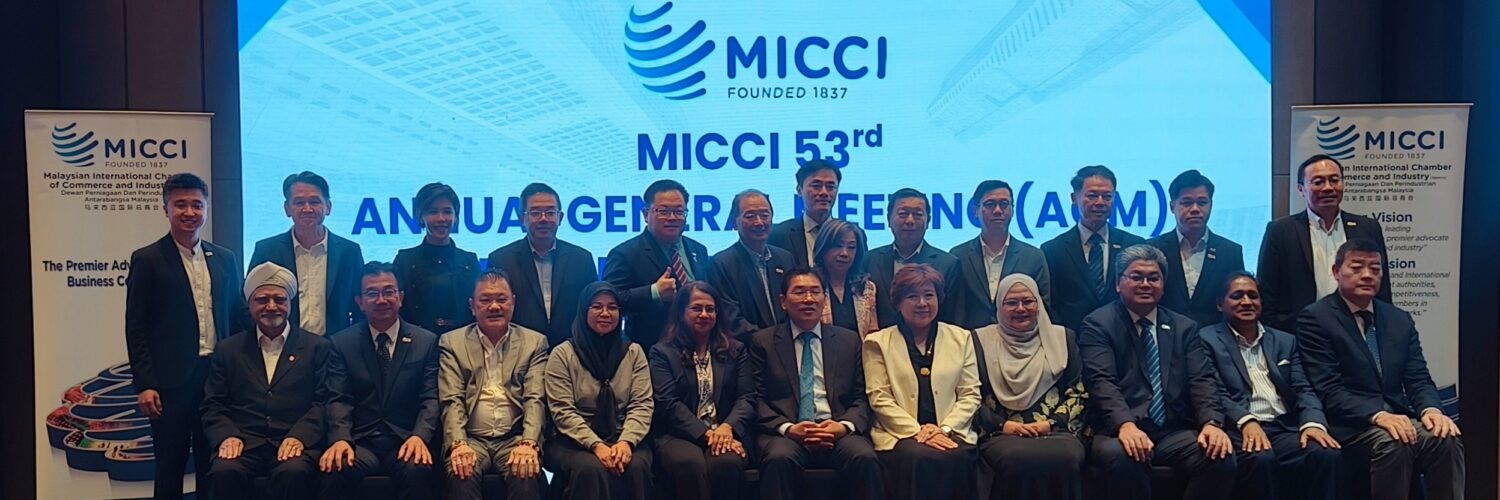
The Malaysian International Chamber of Commerce and Industry (MICCI) has called for greater resilience, adaptability and stronger public-private sector collaboration as businesses contend with a more volatile global operating environment.
Speaking during MICCI’s 53rd Annual General Meeting and Annual Luncheon, the chamber underscored how geopolitical tensions, supply chain disruption and shifting economic conditions are continuing to reshape the business landscape for companies in Malaysia and beyond.
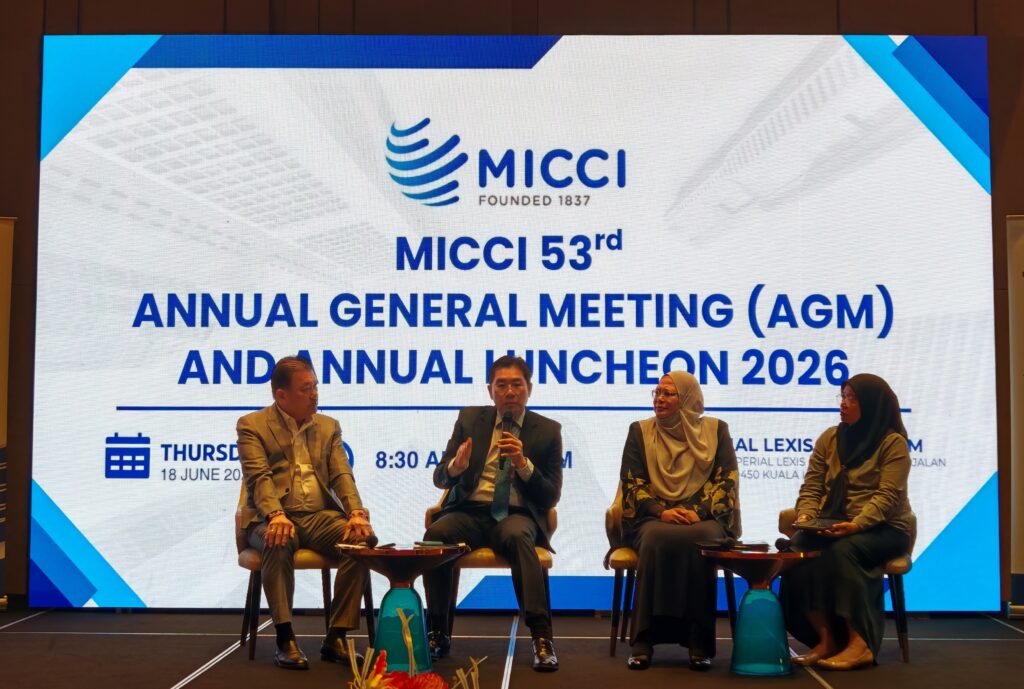
The event also featured an address by Deputy Minister of Investment, Trade and Industry YB Tuan Sim Tze Tzin, followed by a dialogue session with Puan Zalina Zainol, Deputy CEO of Investment Promotion and Facilitation at MIDA, and Puan Noor Hayati Abu Noh, Director of Strategic Planning Division, Coordination and Monitoring Section at MATRADE. The discussion focused on the current trade and investment outlook, business sentiment and the impact of the conflict in West Asia on the wider economic environment.
Businesses Face a New Era of Constant Uncertainty
MICCI President Christina Tee said businesses have already had to navigate an extraordinary series of disruptions this decade, from the global pandemic to changing trade policies, rising protectionism and escalating geopolitical tensions.
She noted that the conflict in West Asia is now creating fresh ripple effects across global markets, influencing energy prices, trade flows, investment decisions, supply chains and operating costs. According to Tee, these developments serve as a reminder that events taking place far beyond Malaysia’s borders can still have direct and far-reaching consequences for businesses operating locally.
Businesses, she said, are already feeling the first effects through higher logistics costs, rising fuel and energy prices, and increased uncertainty across global markets. At the same time, some of the more significant consequences may only emerge over the coming months or even next year.
Resilience Is No Longer Optional
Against this backdrop, MICCI stressed that resilience can no longer be viewed simply as a competitive advantage. Instead, it has become an essential part of doing business in today’s environment.
With global uncertainty becoming a long-term operating condition rather than a temporary disruption, the ability of businesses to adapt quickly, manage costs, respond to market shifts and remain agile will be increasingly important. MICCI’s message was clear: the companies that will be best positioned moving forward are those that can remain flexible while continuing to make strategic decisions amid uncertainty.
Opportunities Still Exist for Malaysia
Despite the difficult global backdrop, MICCI said Malaysia remains well-positioned to benefit from changing global supply chains, deeper regional economic integration and growing investor interest in ASEAN.
Tee pointed out that periods of uncertainty can also create openings for innovation, adaptation and stronger engagement between the private sector and policymakers. As companies rethink sourcing strategies, investment priorities and regional market positioning, Malaysia has an opportunity to strengthen its appeal as a competitive and globally connected business destination.
MICCI Reaffirms Its Role as a Bridge Between Business and Policymakers
As MICCI marks its 189th anniversary this year, the chamber reaffirmed its commitment to supporting Malaysia’s position as an open, competitive and internationally connected economy.
Tee said MICCI will continue to serve as a trusted bridge between the international business community and policymakers, while advocating for a business environment that supports growth, investment and long-term competitiveness.
In a period defined by uncertainty, MICCI’s message is one of realism but also opportunity: while global shocks may be unavoidable, resilience, collaboration and forward planning will be critical to helping Malaysian businesses weather disruption and seize new growth opportunities as they emerge.