
Malaysia’s business community is calling for stronger policy support, greater regulatory efficiency and faster adoption of technology as companies navigate rising operating costs, changing global trade conditions and intensifying competition.
The calls came from business leaders representing the Associated Chinese Chambers of Commerce and Industry of Malaysia (ACCCIM), the Klang Chinese Chamber of Commerce and Industry (KCCCI) and the Malaysia-China Chamber of Commerce (MCCC), who highlighted the need for closer government-business collaboration to strengthen Malaysia’s economic competitiveness.
The issues were raised against a backdrop of higher employment costs, changes to the Sales and Service Tax (SST), electricity tariff adjustments, rising energy expenses and increasing competition from foreign businesses.
Business-government cooperation remains critical
Speaking at the 80th ACCCIM Annual General Meeting in Klang on 9 August, ACCCIM President Datuk Ng Yih Pyng said businesses are facing both domestic and external challenges that require forward-looking policies to strengthen resilience and support sustainable economic growth.
He said closer collaboration between the Government and the private sector would be critical to attracting quality investments, creating quality jobs, strengthening domestic supply chains and improving productivity.
Ng also called for Malaysia to move beyond simply improving its “Ease of Doing Business” towards an “Ease of Getting Things Done”, with faster approvals, better coordination between government agencies, digital-first public services and a more transparent and predictable regulatory environment.
ACCCIM launches Trade and Investment Facilitation Centre
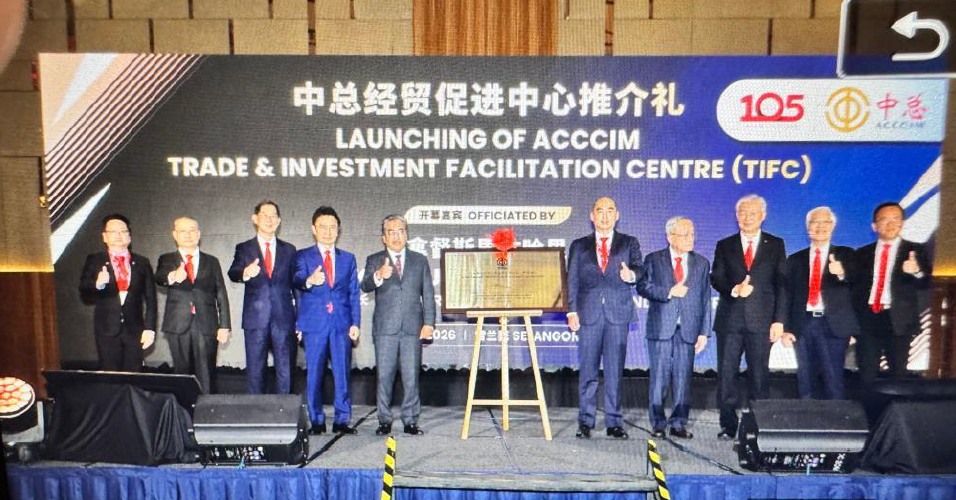
As part of efforts to strengthen Malaysia’s trade and investment ecosystem, ACCCIM also launched the ACCCIM Trade and Investment Facilitation Centre (TIFC) during the AGM.
The centre is intended to support foreign investors, overseas companies and trade organisations exploring Malaysia, while helping Malaysian businesses seeking international connections and overseas opportunities.
TIFC will work with the Ministry of Investment, Trade and Industry (MITI) and its agencies to better understand business needs, facilitate business linkages and networking opportunities, and guide companies and investors towards the relevant government agencies for further assistance.
According to ACCCIM, the initiative is intended to complement the Government’s existing investment promotion and business support efforts while helping Malaysian companies expand internationally.
2027 Budget recommendations target SMEs and investment
ACCCIM has also submitted a series of recommendations for Budget 2027 covering the cost of living, business operating costs, workforce productivity and skills development, technology and artificial intelligence (AI) adoption, the green transition, the circular economy and food security.
Among its proposals is a call to refine the tax system to better support business expansion, reinvestment and cash flow management.
The chamber has proposed raising the preferential tax threshold for SMEs, strengthening investment incentives such as the Reinvestment Allowance and Investment Tax Allowance, and improving tax administration.
It also called for a more realistic CP204 tax estimation mechanism and faster tax refunds to ease cash flow pressures and compliance costs.
For high-value investment and domestic competitiveness, ACCCIM proposed extending the Accelerated Capital Allowance until 2030, strengthening reinvestment incentives and reviewing the definition of SMEs to ensure growing mid-tier companies are not excluded from government support.
Digitalisation and ‘Buy Made by Malaysia First’ push
Digital transformation was another key priority.
ACCCIM called for the Digitalisation Grant to be strengthened through a higher funding ceiling and greater flexibility, allowing businesses to adopt technology in phases. It also advocated greater use of locally developed digital solutions and technologies tailored to specific industries.
The chamber further proposed that government procurement be used to strengthen domestic value creation through a structured “Buy Made by Malaysia First” framework.
Calls for fairer competition and stronger e-commerce rules
With Malaysia continuing to welcome foreign investment, ACCCIM also called for a more balanced regulatory framework covering foreign-owned businesses and cross-border e-commerce.
The chamber said clearer registration and compliance requirements, stronger accountability for online platforms and enhanced consumer protection would help ensure a fair and level playing field.
Among its recommendations are a review of the import duty de minimis threshold, requiring high-volume foreign online sellers with annual sales exceeding RM1 million to establish a Malaysian business presence with local representatives, and strengthening product verification through mechanisms such as SIRIM certification and the Malaysian Authenticity Portal.
KCCCI highlights US tariffs and foreign business compliance
KCCCI President Dato’ Jeffery Tan also highlighted the challenges facing Malaysian businesses, particularly those involved in international trade.
He noted that Klang’s close links to international trade, manufacturing, exports, logistics and SMEs mean global trade developments have a direct impact on the local business community.
Tan highlighted recent US trade policy and tariff developments as a source of uncertainty for Malaysian exporters, calling on MITI to continue negotiations with the United States to secure favourable trading conditions for Malaysian businesses.
He also raised concerns over foreign businesses operating in Malaysia without complying with local laws and regulations, including business licensing, Wholesale, Retail and Trade requirements and tax obligations.
KCCCI proposed a more coordinated mechanism to register, monitor and regulate foreign-owned MSMEs and SMEs, particularly smaller foreign businesses that may not fall clearly within existing investment frameworks.
SMEs urged to diversify export markets
KCCCI also called for stronger support to help Malaysian SMEs diversify their export markets amid continuing US-China trade tensions, rising protectionism and deglobalisation.
Tan said relying heavily on one or two traditional export markets has become increasingly risky for Malaysian SMEs.
He welcomed the Government’s Market Development Grant (MDG), which has supported SMEs in expanding overseas, but proposed increasing its lifetime ceiling from RM300,000 to RM500,000 to provide greater assistance to businesses pursuing internationalisation.
KCCCI also proposed that ACCCIM and its constituent chambers be allowed to renew their Certificate of Origin issuing permits on a three-year basis, rather than annually or semi-annually, while exploring the possibility of issuing Certificates of Origin for exports to the US market subject to the necessary safeguards.
Regulatory reform remains a business priority
Regulatory efficiency was another major concern.
Tan highlighted the Malaysia Productivity Corporation’s work under MITI to improve national productivity and regulatory reform.
He pointed to the Government’s aim under the Itizam Act 2025 to reduce regulatory burden by 25% over three years and introduce a “one-in, one-out” approach to prevent unnecessary regulations from being introduced.
KCCCI said continued efforts to streamline public-sector bureaucracy and assess the impact of new regulations would help create a more efficient and business-friendly environment, strengthening Malaysia’s ease of doing business and global competitiveness.
MCCC: Foreign investment should create value for Malaysia
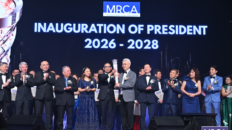
The importance of foreign investment was also addressed by MCCC President Loo Kok Seong during the chamber’s 2026 Annual General Assembly.
Loo acknowledged concerns surrounding the increasing number of foreign enterprises, particularly Chinese companies, investing and expanding in Malaysia. However, he argued that foreign investment should be assessed based on the quality and long-term value it creates for the Malaysian economy.
While foreign investment inevitably brings greater competition, he said it can also bring capital, technology, talent development, management expertise and new market opportunities.
The key question, he argued, is how foreign investors and Malaysian businesses can grow together.
Loo said foreign investors establishing regional headquarters, developing supply chain ecosystems, nurturing local talent and strengthening industrial capabilities could generate benefits extending beyond the investors themselves.
MCCC therefore plans to place greater emphasis on investment quality through its business matching, investment exchange and investment promotion activities.
Businesses must accelerate digital transformation
Loo also urged Malaysian companies to view technological disruption as an opportunity to transform rather than a threat to their survival.
He pointed to the evolution of e-commerce and digital platforms as examples of how businesses that embraced technological change were able to expand their markets and grow faster.
The same principle, he said, applies to artificial intelligence.
“AI is no longer the future — it is the present,” Loo said, stressing that businesses capable of effectively using AI would have an advantage over those that failed to adapt.
AI is already transforming areas including marketing, customer service, administration, financial analysis, production efficiency and strategic decision-making.
MCCC plans to promote AI-related forums, seminars, training programmes and business exchange activities to help companies understand how AI can improve efficiency, reduce costs, create new business opportunities and strengthen competitiveness.
Learning speed could define the next generation of businesses
For Loo, the competitive gap between companies in the coming years may not be determined solely by capital, but by how quickly businesses can learn and adapt.
He encouraged businesses to embrace change early and invest in technology, innovation and value creation rather than relying solely on traditional approaches.
The message echoes wider calls from Malaysia’s business community for companies to strengthen their competitiveness as global supply chains, technology and international markets continue to evolve.
Building a more competitive Malaysian economy
Across the three speeches, business leaders stressed that Malaysia’s long-term competitiveness will depend on a combination of effective government policy, private-sector transformation and stronger collaboration between local and international businesses.
For ACCCIM, priorities include tax reform, digitalisation, high-value investment, food security and fair competition. KCCCI has highlighted export diversification, regulatory reform and stronger oversight of foreign businesses. MCCC, meanwhile, has focused on attracting quality foreign investment and helping Malaysian businesses accelerate AI adoption.
The common message is that Malaysia must continue adapting to a rapidly changing global economy.
As ACCCIM marks its 105th anniversary, Ng said the organisation would continue working with its 17 constituent chambers, members and young entrepreneurs to support the business community and contribute to Malaysia’s economic development.
For Malaysia’s businesses, the challenge ahead is not simply surviving change, but turning technological, trade and investment shifts into opportunities for sustainable growth.