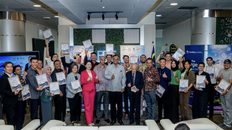


The Malaysia External Trade Development Corporation (MATRADE) has launched the ASEAN Online Sales Day (AOSD) 2026 – Malaysia Edition, reaffirming its efforts to help Malaysian businesses harness e-commerce to strengthen their domestic presence and expand into ASEAN and international markets.
Launched on 7 August 2026 and officiated by MATRADE Chief Executive Officer Dato’ Indera Abu Bakar Yusof, the initiative positions e-commerce as a key trade facilitation tool for enhancing the competitiveness of Malaysian exporters in regional and global markets.
Held annually in conjunction with ASEAN Day on 8 August, AOSD is a regional initiative under the ASEAN Coordinating Committee on Electronic Commerce (ACCEC). It aims to promote cross-border e-commerce, strengthen regional digital trade collaboration and create more opportunities for businesses to connect with consumers across ASEAN.
Building export-ready Malaysian businesses
For AOSD 2026, MATRADE has adopted a whole-of-ecosystem approach, bringing together government agencies, e-commerce platforms, logistics providers, digital payment companies, technology solution providers and business associations.
The collaboration is intended to create greater commercial opportunities for Malaysian businesses while reinforcing Malaysia’s position as a leading digital trading nation.
As part of the campaign, MATRADE organised two regional webinars ahead of AOSD 2026 to equip Malaysian businesses with the knowledge and capabilities needed to participate more effectively in cross-border e-commerce.
The sessions featured industry experts from Teleport, salaam Market, Airwallex, DHL Express and YouBeli, together with representatives from MATRADE’s Trade Commissioner Offices in Singapore and Manila.
The webinars provided market insights and practical strategies aimed at strengthening exporters’ digital capabilities and awareness of cross-border e-commerce opportunities.
They also served as platforms for Malaysian businesses to build stronger connections with digital trade ecosystem players and gain practical knowledge to improve their export readiness and maximise opportunities across ASEAN’s growing digital marketplace.
Beyond capacity building, MATRADE worked with local and international ecosystem partners to mobilise participation in AOSD 2026 through merchant onboarding, promotional activities, digital marketing initiatives and commercial collaborations.
According to MATRADE, these efforts are intended to continue creating value for Malaysian businesses beyond the campaign period itself.
39 partners support ASEAN Online Sales Day
AOSD 2026 is supported by an extensive network of ecosystem partners, with a total of 39 organisations participating in the initiative.
These include leading e-commerce marketplaces, logistics providers, digital payment solution providers and technology partners such as Shopee, Hurix’s, DHL Express Malaysia, Teleport, Airwallex, AVENYS, Salaam Market and YouBeli, alongside industry associations and other digital commerce stakeholders.
The partnerships reflect MATRADE’s efforts to build a stronger digital trade ecosystem that enables Malaysian businesses, particularly micro, small and medium enterprises (MSMEs), to access new markets, enhance competitiveness and accelerate export growth through e-commerce.
ASEAN’s e-commerce market offers major opportunities
The scale of ASEAN’s digital economy presents significant opportunities for Malaysian businesses looking to expand through cross-border e-commerce.
According to the Google–Temasek–Bain e-Conomy SEA 2025 report, Southeast Asia’s e-commerce market recorded an estimated gross merchandise value (GMV) of US$185 billion in 2025, making it the largest segment of the region’s digital economy.
With more than 600 million consumers, ASEAN represents a substantial potential market for Malaysian businesses.
MATRADE said the region should increasingly be viewed not as a collection of separate national markets, but as one connected digital marketplace enabled by digital platforms, integrated logistics and seamless digital payment systems.
ASEAN remains a key export destination
The importance of the regional market is also reflected in MATRADE’s eTRADE 2.0 Programme Impact Study, which evaluated the programme’s impact on incentive recipients under the Twelfth Malaysia Plan (12MP) from 2021 to 2025.
The study found that ASEAN emerged as the primary export destination successfully penetrated by programme beneficiaries, highlighting the region’s strategic importance to Malaysian exporters.
The findings reinforce the potential for Malaysian businesses to use digital platforms and e-commerce channels to reach consumers and develop new export markets within the region.
‘Not just about a single day of online promotions’
Commenting on the initiative, MATRADE Chief Executive Officer Dato’ Indera Abu Bakar Yusof said ASEAN Online Sales Day goes beyond a one-day promotional campaign.
“ASEAN Online Sales Day is not just about a single day of online promotions. It is about creating long-term opportunities for Malaysian businesses to embrace digital trade, strengthen their competitiveness and expand sustainably into regional and international markets.”
He added that the programme could also help accelerate intra-ASEAN trade.
“This programme also serves as a catalyst to further accelerate intra-ASEAN trade. Currently intra-ASEAN trade accounts for approximately 25% of ASEAN’s total trade and the room for growth are promising.”
Supporting Malaysian businesses beyond AOSD 2026
While the AOSD 2026 campaign culminated on 8 August, MATRADE emphasised that the initiative forms part of its wider and ongoing efforts to strengthen Malaysia’s digital trade ecosystem.
Through continued exporter development programmes, strategic industry collaborations, digital capacity building and cross-border market facilitation, MATRADE will continue supporting Malaysian businesses throughout their export journey.
For Malaysian MSMEs in particular, the expansion of e-commerce and digital trade provides an opportunity to reach a wider regional customer base while building the capabilities needed to compete in an increasingly connected global marketplace.