


By Aileen Anthony, Executive Editor MALAYSIA SME
Creativity has always been part of entrepreneurship. Behind many successful businesses is an individual who saw something differently, imagined what could be possible and found the courage to turn an idea into reality. Yet, for many aspiring entrepreneurs, particularly those in the creative industry, the challenge has never been a shortage of ideas. It has been the ability to commercialise them.
Traditionally, bringing a product to market required considerable investment. Entrepreneurs had to engage manufacturers, commit to minimum order quantities, manage inventory and hope that consumers would respond favourably. For those operating with limited capital, the risks could easily outweigh the opportunities.
Today, that equation is changing. Advancements in digital marketplaces, accessible production technologies and on-demand manufacturing are gradually removing barriers that once separated established businesses from aspiring entrepreneurs. Individuals can now explore commercial opportunities from their homes, experiment with designs, personalise products and progressively build businesses without committing to large-scale production.
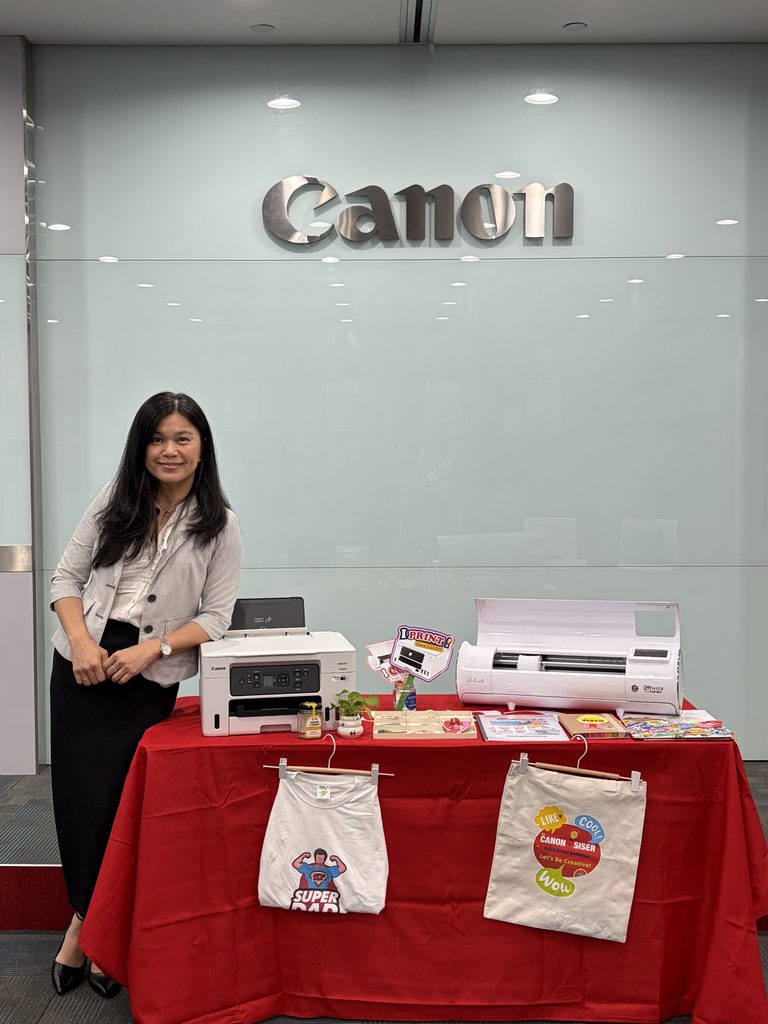
For Sandy Lee, Head of Personal Systems Devices Division at Canon Marketing Malaysia, this represents an important shift in how entrepreneurship is evolving. “We are seeing more Malaysians turning their creativity into businesses,” said Lee, attributing the growing trend to technological advancements and the accessibility of e-commerce platforms.
“Previously, someone starting a business would need to invest in a retail shop and work with distributors to bring their products to market. Today, they can set up their own stores through online platforms and marketplaces.”
Equally significant is the democratisation of business knowledge. Aspiring entrepreneurs have ample avenues to develop their understanding of branding, digital marketing, and e-commerce, equipping themselves with capabilities that once required specialised expertise or considerable resources.
Turning Creative Passion into Commercial Opportunities
While technology has made entrepreneurship more accessible, Lee believes that creativity alone does not guarantee commercial success. “For many artists and entrepreneurs, having a creative idea is only the starting point. The bigger opportunity is how they can turn their artwork into a finished product that consumers actually want to buy,” Lee explained.
She observed that many first-time entrepreneurs underestimate the costs involved in production, operations and inventory management. More importantly, they may invest in producing products before establishing whether there is sufficient market demand. This creates a familiar dilemma. Producing in bulk may reduce unit costs but exposes entrepreneurs to unsold inventory. Producing smaller quantities, meanwhile, may prove commercially unattractive because of minimum order requirements and higher per-unit costs.
Accessible production technology, on the other hand, offers another option: letting entrepreneurs experiment before committing substantial resources. “Sometimes, entrepreneurs only realise after producing their products that these are not necessarily what consumers want. By then, considerable investment may already have been made,” said Lee.
Instead of producing first and selling later, entrepreneurs can now test their designs, assess customer responses and progressively increase production when demand becomes clearer.
This approach fundamentally changes the economics of starting a creative business. It allows entrepreneurs to treat product development as an ongoing process of learning and refinement rather than a single, high-stakes investment decision. For a young illustrator, for example, an original design need not remain confined to a digital portfolio. It could become a sticker, a customised T-shirt, a tote bag or another personalised product. Each variation offers an opportunity to explore different customer segments without necessarily investing in large inventories.
Personalisation: A Growing Market for Small Businesses
One of the opportunities Lee highlighted is the growing demand for personalised products. Consumers increasingly appreciate products that reflect their preferences, identities and occasions. Whether customised gifts, corporate merchandise or lifestyle accessories, personalisation creates an emotional connection.
“Personalised products are definitely becoming more popular because consumers like items that are tailored to their preferences. This creates considerable opportunities for micro businesses and SMEs,” Lee said.
Companies regularly budget for employee welcome kits, anniversary gifts, appreciation merchandise, and corporate events. Unlike occasional consumer purchases, corporate requirements can generate recurring orders, giving smaller suppliers opportunities to develop longer-term customer relationships. “For example, companies may require customised employee kits or anniversary gifts. These are products that need personalisation, and companies will often reorder them. This creates a good opportunity for small businesses,” she explained.
Beyond recurring demand, micro businesses may also possess an advantage in responsiveness. A small supplier with in-house production capabilities can accommodate short lead times, adjust designs and produce specific quantities without depending entirely on an external manufacturer’s production schedule.
“Speed is one of the advantages micro SMEs can offer. When they control their own production, they can deliver according to the customer’s timeline and accommodate last-minute changes,” Lee said.
Bringing Production Closer to the Entrepreneur
As businesses grow, another consideration emerges: whether to continue outsourcing production or bring certain capabilities in-house. Lee acknowledged that outsourcing remains a practical option, particularly when a company wants to minimise operational commitments. However, she cautioned that the arrangement may become less advantageous as demand evolves.
Minimum order quantities can further complicate matters when customers require only small batches or highly customised products. In-house production gives greater control over these variables, letting them manufacture based on actual orders rather than projected demand. Interestingly, this opportunity extends beyond creative entrepreneurs.
Established SMEs and larger corporations may benefit from producing selected promotional materials, employee merchandise and customised items internally. With the solutions available today, companies can consider producing these items in-house. Lee said, “Different departments could develop their own merchandise, accommodate individual preferences and respond to changing requirements without committing to uniform designs across an entire organisation.”
Making Business and Branding Accessible Through Print-and-Cut Solutions
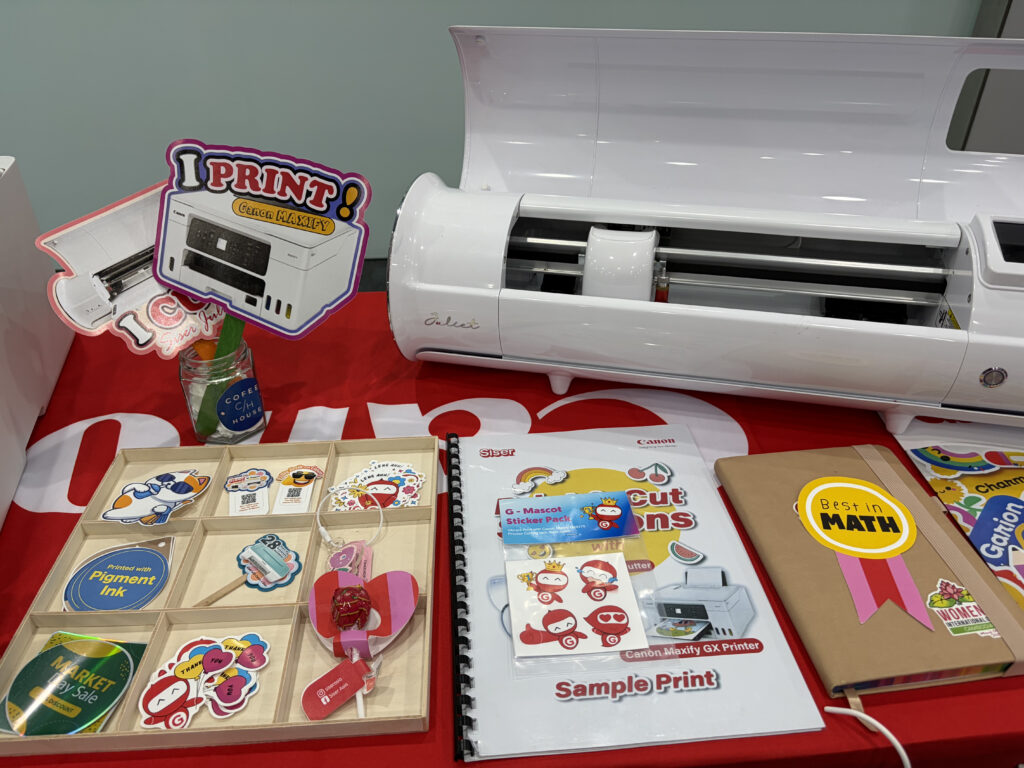
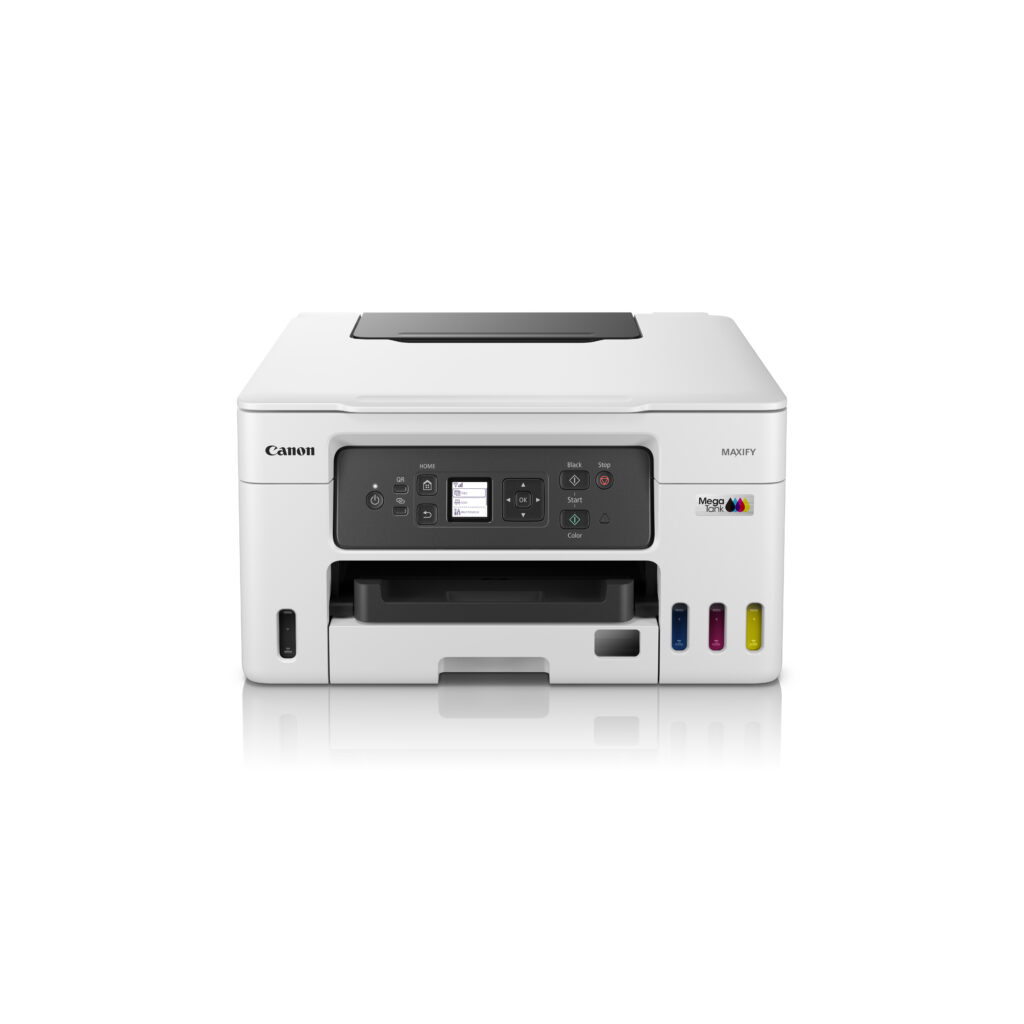
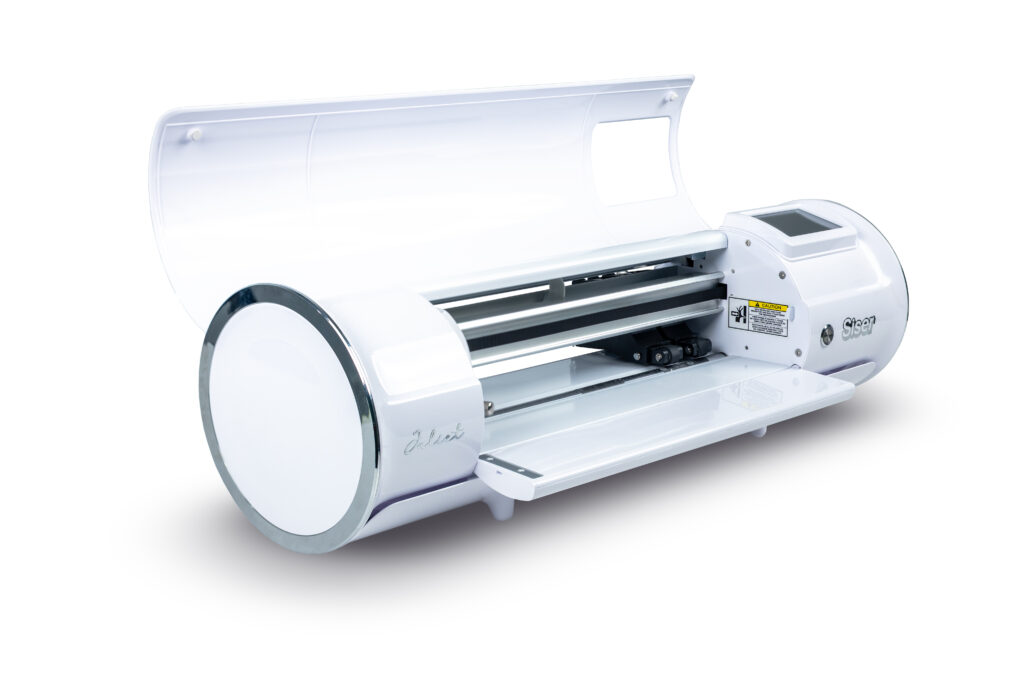
Canon’s print-and-cut solution combines its GX series printers with the Juliet cutting machine from Italian brand Siser to address emerging opportunities. This integrated approach lets entrepreneurs turn digital artwork into physical products through a relatively straightforward process.
Designs are first printed using Canon’s full-pigment ink technology, which Lee explained provides consistent, vibrant and water-resistant output. The printed material is then transferred to the Juliet cutter, which uses a built-in camera to support precise cutting around the artwork.
Depending on the application, the finished design can be used for stickers, labels or transferred onto suitable materials such as T-shirts and tote bags. “For customised T-shirts, the artwork can be printed onto heat-transfer vinyl, cut precisely and then applied to the fabric using heat.
The solution also accommodates applications such as customised product labels and packaging elements, creating opportunities for entrepreneurs beyond the merchandise industry. A home-based baker, for instance, could develop branded labels for festive cookies, while a small lifestyle business could produce packaging stickers that reinforce its visual identity. This is where the technology becomes more than a production tool. It also supports brand building.
For small businesses competing in increasingly crowded marketplaces, professional-looking labels, consistent visual identities and personalised packaging can contribute to stronger customer recognition. The ability to create these materials internally gives entrepreneurs greater freedom to experiment with their branding as their businesses evolve.
Levelling the Playing Field Through Innovation
According to Lee, Canon’s printer-and-cutter combination packages start from RM3,899.00. She added that the printer’s ink system is designed for high page yields, supporting lower printing costs over extended use. While entrepreneurs must still evaluate material costs, production capacity and their individual business requirements, the availability of such solutions creates a route into product-based entrepreneurship. Lee also encouraged aspiring business owners to explore relevant government grants and assistance programmes that may help support equipment investments, subject to prevailing eligibility requirements.
For Canon, the development reflects a broader evolution. Lee attributed Canon’s established position in Malaysia to its product reliability, after-sales support and nationwide partner network. She highlighted the company’s reported 30 consecutive years of leadership in Malaysia’s inkjet printer market since 1996. Lee’s message to aspiring entrepreneurs is clear: begin with their creativity, understand the market and build progressively.
“To all the artists, illustrators and designers, don’t let your creative work go to waste. Design your products, test the market and grow from there.”
Sandy Lee, Head of Personal Systems Devices Division at Canon Marketing Malaysia
Watch the interview: