Beyond The Counter – How Benny Wee, Founder and CEO of Vendfun, Is Reimagining Hospitality Through Technology, Human Connection and Out of the Box Thinking
When most people think about hospitality technology, they imagine software built by people who have spent their entire careers inside hotels. But for the Founder and CEO of Vendfun, the breakthrough came precisely because he was not from the hospitality industry.
Benny Wee sat down with MALAYSIA SME to share his entrepreneurial journey, one that began far away from hotel lobbies and hospitality operations, immersed in touchscreen technology, semiconductors and supply chain ecosystems across the UK, Taiwan and China, and how it was this “outsider perspective” that allowed him to identify gaps many in the hospitality industry had accepted as unavoidable.
Patents Before Launch
“Sometimes when you are too long in an industry, you carry baggage,” Benny said. “You think things must be done in a certain way because that’s how the industry has always done it. Because I came from outside hospitality, I didn’t have that baggage. I could think differently.”
That willingness to think differently did not just shape Vendfun’s products. It shaped how Benny approached the business from day one.
Long before the company had fully rolled out its hospitality automation ecosystem, Vendfun had already begun pursuing patents and trademarks across six countries, a move Benny believes many businesses overlook because they are too focused on surviving the present rather than protecting the future.
“A lot of businesses don’t want to spend money on patents because they are unsure whether the business will work,” he said. “But when the product launches publicly, it’s already too late. If you want protection, you need to do it before the market sees it.”
Touchscreens To Hospitality
After beginning his career in Malaysia’s e learning industry, Benny moved to the UK in 2005 to work in semiconductor and touchscreen technology before touchscreen devices became mainstream. “iPhone 3 only launched in 2006,” Benny recalled. “So we were already working on touchscreen technology before touchscreen phones became popular.”
His work eventually brought him to Taiwan, where he spent 13 years managing relationships with some of Asia’s largest technology brands. The experience sharpened his understanding of user behaviour, interfaces and how technology should feel natural and intuitive to people.
But after nearly two decades in the industry, Benny wanted to challenge himself.
“People told me, ‘Benny, you should continue doing touchscreen business because that’s your forte,’” he said.
The Vendfun inspiration eventually came from an unexpectedly frustrating hotel experience. Arriving at a five star hotel in the US at 1am after a late night flight, Benny simply wanted to check in quickly and rest. Instead, the process dragged on for nearly 10 minutes. “They were trying to be very polite,” he laughed. “‘How was your day?’ But honestly, at 1am, I just wanted my room key.” But inspiration is not enough to justify a viable product. Benny knew he had to go to the ground.
Real Problems
“When I design a product, I want market feedback,” Benny said. That approach allowed him to hear firsthand stories many people outside the hospitality industry never see. While many technology businesses aim immediately for premium hospitality, Benny intentionally focused on budget hotels first. Not because they were glamorous, but because they were facing problems few people openly discussed.
“What I realised is that many budget hotel owners are not actually hoteliers,” Benny explained. “Some come from construction, tyre businesses or other industries. They open hotels because they think being a hotel owner sounds prestigious.”
But the reality behind the scenes was far more difficult. Many operators struggled with staffing, inconsistent service quality and high employee turnover. Some operated in smaller towns or outskirts where hiring experienced front desk staff was nearly impossible.
What struck Benny most during his conversations with hotel owners was how vulnerable many of them had become operationally. Some owners quietly admitted they suspected staff were pocketing money from cash transactions, but felt powerless to act because replacing them would leave the hotel unmanned altogether.
“I remember one hotel owner telling me, ‘I know they take my money, but as long as they don’t resign, I close one eye,’” Benny shared. “Because if the staff resign, then who is going to take care of the hotel?” It became a hidden operational compromise many operators were forced into.
For some hotel owners, the problem was not only theft or leakages, but unpredictability. “They don’t come to work sometimes,” Benny said. “You are expecting them at 8am, but they WhatsApp and say they cannot come.” In smaller budget hotels with lean staffing structures, a single absentee employee could disrupt the entire operation. Benny realised that automation was not simply about replacing labour. It was about giving operators stability, consistency and peace of mind.
“It may actually be better not to have a front desk at all,” Benny said candidly. “If the staff are inept, don’t understand the guests or create frustration, it damages the whole experience.”
Real Solutions
It was from these real world conversations and observations that Vendfun, a name inspired by the idea that “vending should be fun”, began evolving into a hospitality ecosystem designed to solve deeply human operational problems faced by hotel operators every single day.
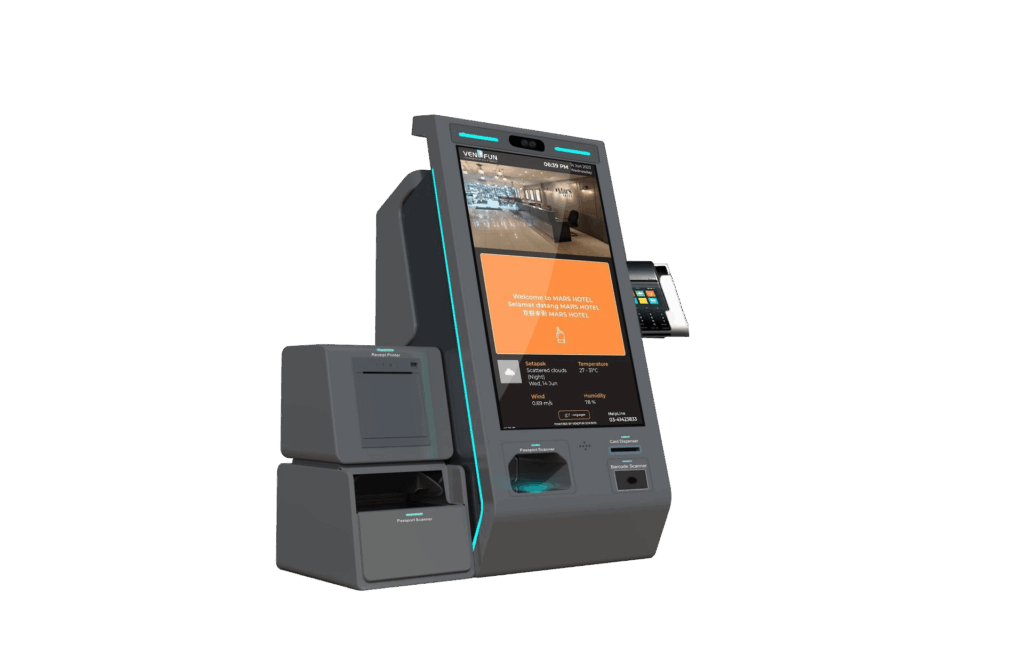
To simplify hospitality, Vendfun automates repetitive processes such as identity verification, room assignment and payment collection, allowing operators to redirect their focus towards maintaining rooms, improving guest comfort and creating a smoother overall experience.
“For budget hotels, guests mainly want a smooth check in, a clean room and a good shower,” Benny said. “If the check in process becomes frictionless, the overall experience improves immediately.”
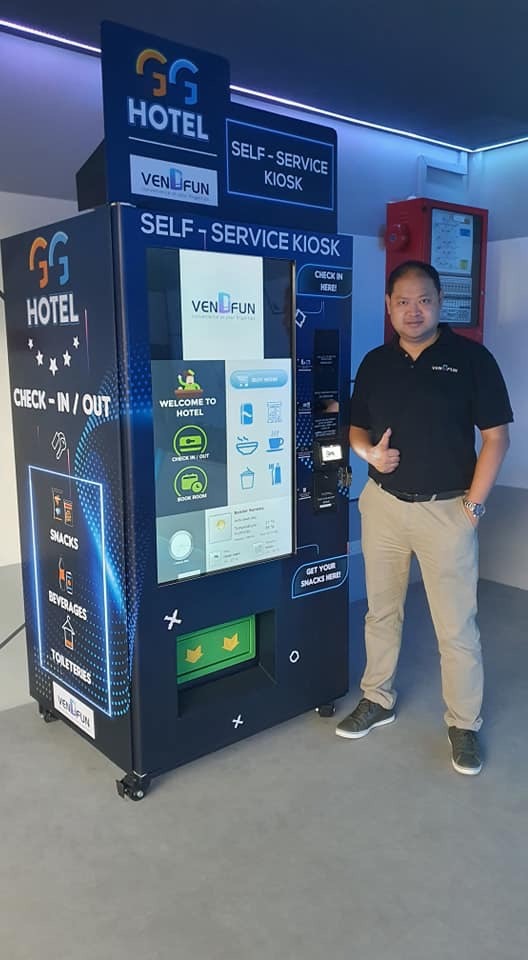
At the same time, the company’s integrated vending functionality creates additional revenue opportunities for hotel owners themselves. “The hotel owners stock the vending products themselves,” Benny explained. “So the revenue goes back to them. It’s another way for them to generate income.”
Vendfun’s Smart Ecosystem
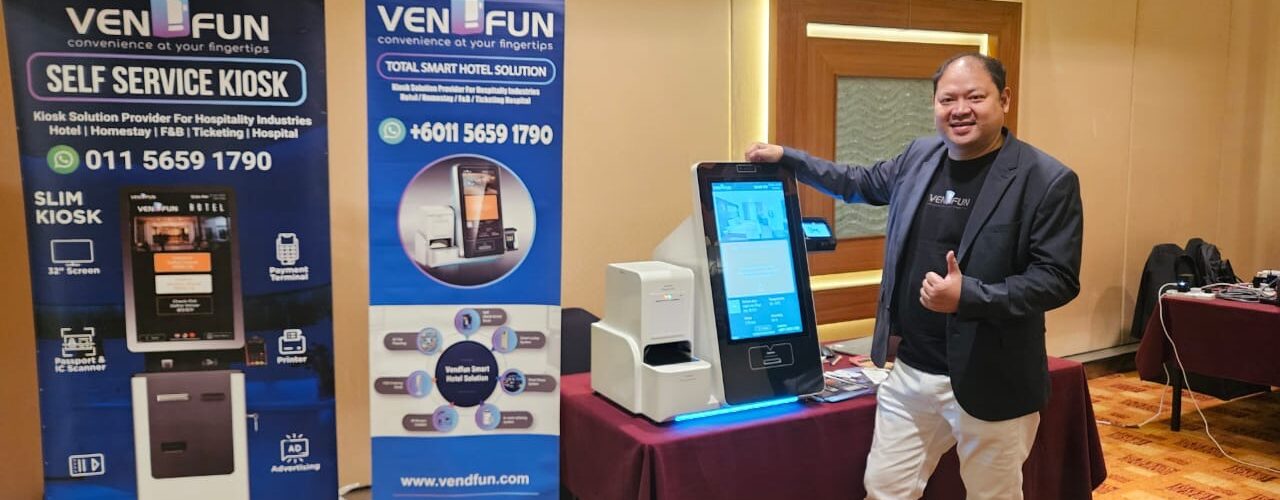
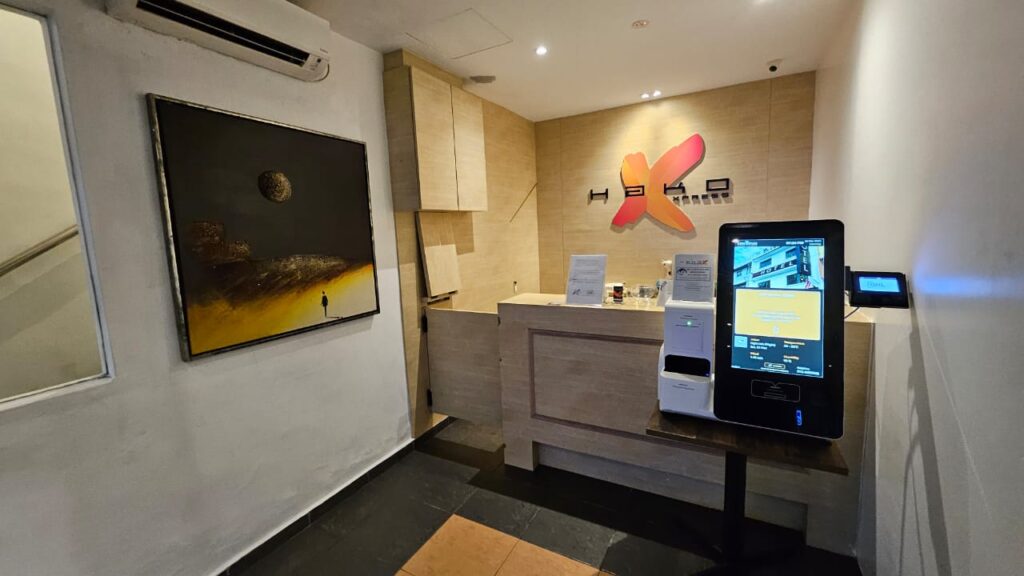
What started as an idea to combine self check in and vending into a single touchpoint has since grown into a broader hospitality automation ecosystem. Today, Vendfun’s solutions span self check-in kiosks, smart room integrations, chatbot support systems and in room ordering features, all designed around creating a more seamless hospitality experience before, during and after check in.
Many smaller hotels also struggle with front desk communication, particularly when guests arrive from different countries or speak different languages. Vendfun’s interface was intentionally designed to transcend those barriers through a guided, intuitive and step-by-step user experience that reduces confusion and friction.
Because of Benny’s long background in touchscreen technology and user interface ecosystems, simplicity became a key design philosophy. “ It may be easier to use the Vendfun system than using a fast food ordering kiosk,” Benny enthused.
Importantly, the solutions were also designed to remain affordable and accessible for smaller operators, with Vendfun’s tabletop kiosk solutions starting from below RM1,000 monthly, lowering the barrier for budget hotels seeking to modernise their operations.
Empowering Human Connection
Ironically, Benny believes automation can ultimately make hospitality feel more human. He points to evolving hospitality concepts overseas where technology is being used not to reduce interaction, but to remove the “over the counter” barrier between guests and staff.
“In traditional hotels, there’s always a counter separating guests and staff,” Benny said. “The staff spend most of their time typing information into systems. That’s not real hospitality.”
With repetitive administrative tasks automated, hotel staff gain more freedom to genuinely engage with guests. “They can finally talk to guests properly,” he said. “They can create real communication and real connections instead of focusing on administrative tasks.”
Today, Vendfun has deployments across 11 Malaysian states alongside expansion into Singapore and Indonesia. “I hope Malaysia can become the first example of transforming budget hotels through automation,” he said. “When tourists come here and experience seamless hospitality, it changes perceptions.”