

Sarawak is stepping up efforts to develop its digital economy, with artificial intelligence (AI), semiconductor innovation and space technology emerging as key priorities at the ninth International Digital Economy Conference Sarawak 2026 (IDECS26).
Held at the Borneo Convention Centre Kuching on 5 and 6 October, the conference brings together participants from more than 30 countries. It aims to turn technological innovation, research and investment into practical economic opportunities for the state.
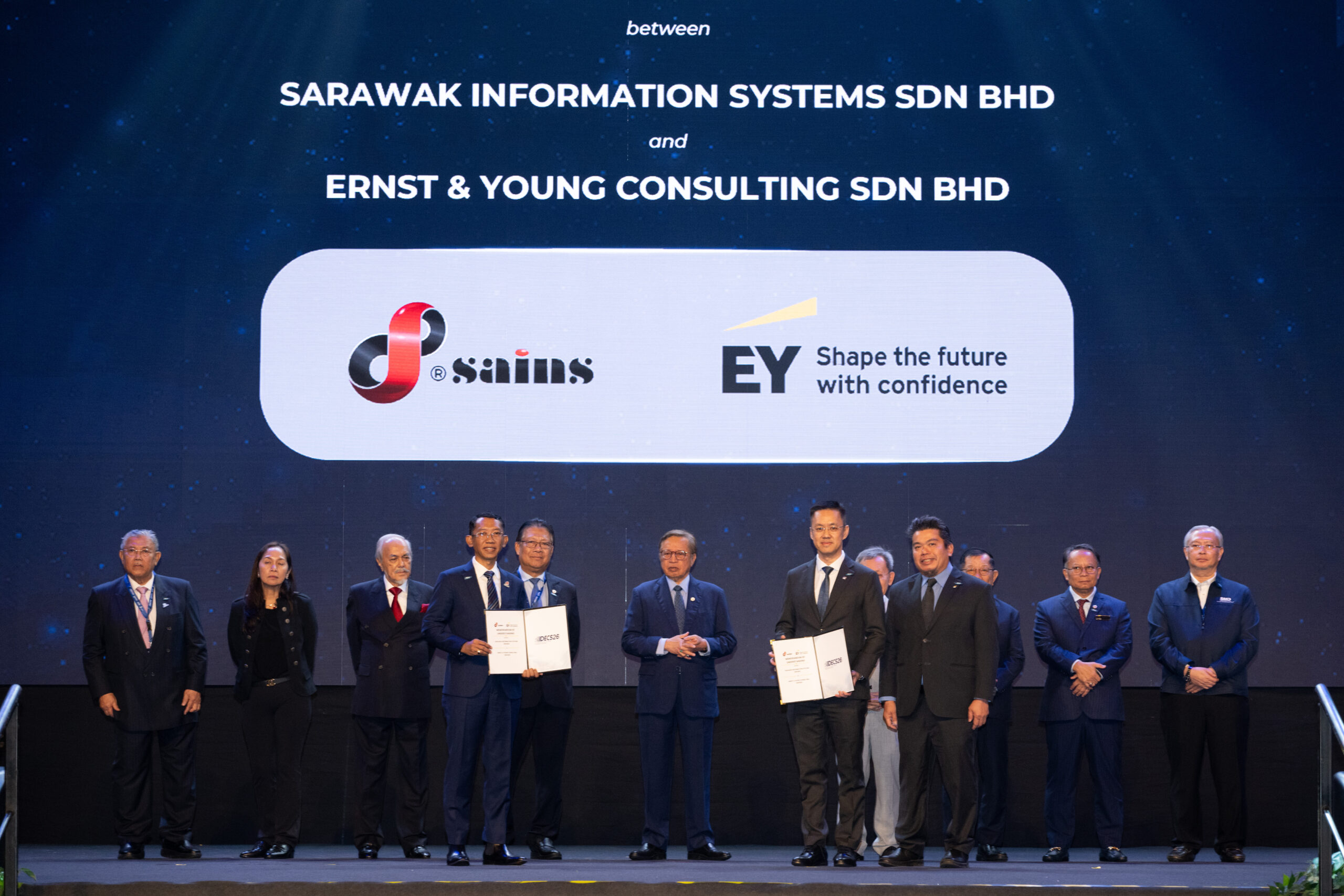
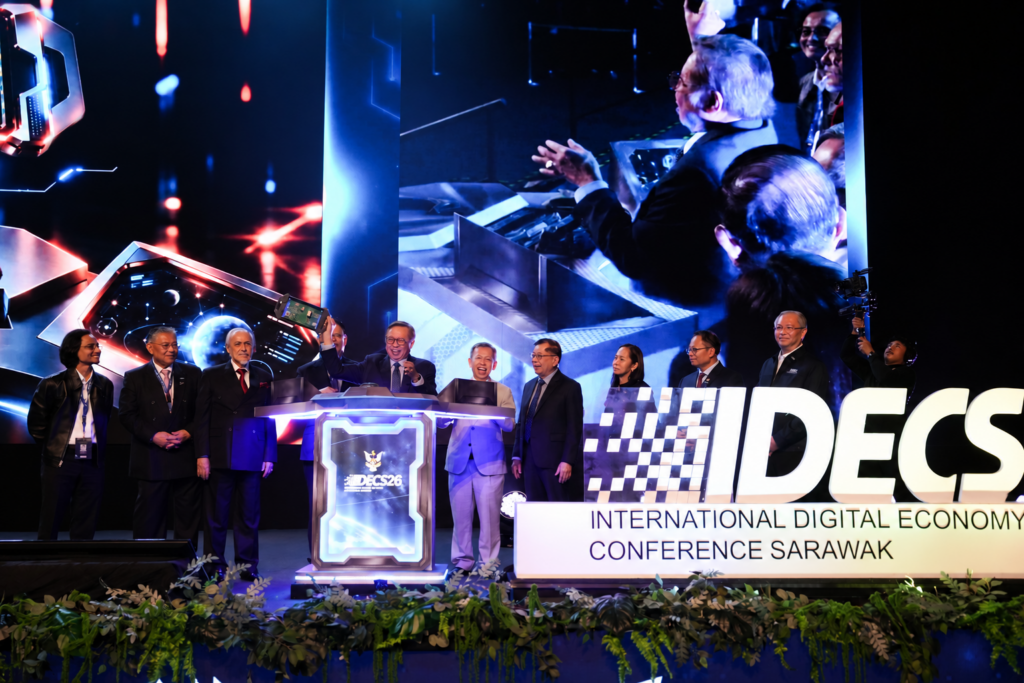
The official opening ceremony was officiated by Sarawak Premier Datuk Patinggi Tan Sri (Dr) Abang Haji Abdul Rahman Zohari bin Tun Datuk Abang Haji Openg. The event also marked 12 strategic collaborations involving technology companies, government-linked organisations and research institutions.
Jointly organised by Sarawak Digital Economy Corporation (SDEC), Sarawak Multimedia Authority (SMA) and Sarawak Information Systems (SAINS), IDECS26 carries the theme “Scaling Innovation Ecosystems for a Borderless Economy: Earth, Orbit and Beyond.”
Sarawak Targets High-Income Economy Through Digital Transformation
IDECS26 supports Sarawak’s broader ambitions under the Post COVID-19 Development Strategy 2030 (PCDS 2030). The state sees digital transformation as a key driver of productivity, skilled employment and new industries.
Premier Abang Johari said Sarawak aims to build its own technological capabilities rather than rely solely on innovations developed elsewhere.
The state wants local ideas, businesses and expertise to connect with regional and global markets. This approach could also create new opportunities for investment, research and commercial development.
The conference reflects a broader shift in Sarawak’s digital economy strategy. Alongside established priorities such as AI, digital talent and future cities, IDECS26 introduces semiconductor innovation and the emerging space economy as major areas of focus.
12 Strategic Collaborations Aim to Expand Technology Capabilities
The opening ceremony marked 12 strategic collaborations, including a Strategic Communication Instrument, 10 memoranda of understanding (MOUs) and an aerospace-related collaboration involving the Royal Malaysian Air Force (RMAF), Airbus Defence and Space, and the Centre for Technology Excellence Sarawak (CENTEXS).
The agreements involve organisations across technology, infrastructure, AI, telecommunications and other sectors.
Among the collaborations, SDEC signed MOUs with Huawei Technologies (Malaysia), Agibot Innovation, Airbus Defence and Space, MYTEKSI (Grab) and other partners. Sarawak Artificial Intelligence Centre (SAIC) also entered into collaborations with Global Data Centre and IBM Malaysia.
Other agreements involve Zecon Berhad, Neuronet Borneo, SAINS, Ernst & Young Consulting, the Construction Industry Development Board (CIDB) Malaysia and additional organisations.
The collaborations are intended to strengthen partnerships and create opportunities to develop, deploy and commercialise technologies in Sarawak.
The ceremony also included the handover and acceptance of two Sikorsky Nuri helicopters from RMAF to CENTEXS, supporting aerospace and defence-related collaboration.
Sarawak Plans First CubeSat Nanosatellite by 2030
Sarawak is targeting the launch of its first CubeSat-based nanosatellite by 2030. The planned satellite aims to collect Earth imagery, geolocation data and other strategic information from low Earth orbit.
These capabilities could support development planning, environmental monitoring and resource management. They could also help build local expertise in semiconductors, satellite systems, engineering, AI and data analytics.
The initiative forms part of a wider effort to establish a local space ecosystem. Sarawak has established the Sarawak Aerospace Advisory Council to provide strategic direction, while the planned Sarawak Space Agency is expected to coordinate sector development and partnerships.
Work on the nanosatellite is also being shaped through collaboration between the Sarawak Space Agency and i-CATS University College. The initiative includes plans for two laboratories dedicated to related research.
By investing in space technology and supporting research, Sarawak aims to develop capabilities that could create new economic opportunities beyond conventional digital services.
New Research Conference Connects Universities With Industry
IDECS26 introduces the inaugural Centre of Excellence (CoE) for Digital Research Conference 2026. The platform aims to strengthen links between universities, researchers, government and industry.
The programme focuses on moving research towards real-world applications. Researchers can gain a clearer understanding of industry and public-sector needs, while businesses and policymakers can identify technologies with potential for testing, deployment and commercialisation.
This approach could help narrow the gap between academic research and market demand. It also creates opportunities for businesses to explore new technologies and work with research institutions on practical solutions.
The conference features five tracks: The Future, Future Cities, Startup Village, SHE-TECH Asia Forum 2026 and the CoE for Digital Research Conference. Together, they cover technology development, urban transformation, entrepreneurship, leadership and research commercialisation.
Startup Village and SHE-TECH Highlight Innovation and Leadership
IDECS26 also brings back Startup Village, which connects startups with investment and business-development opportunities.
At IDECS25, seven startups received up to RM150,000 each in seed funding and business-development support. Four MOUs also covered digital agriculture, facility management, smart cities and AI-enabled biodiversity innovation.
The returning programme builds on this focus by creating further opportunities for entrepreneurs to develop solutions and connect with potential partners.
Meanwhile, SHE-TECH Asia Forum 2026 adopts the theme “From Participation to Power.” It shifts attention beyond women’s participation in technology towards their roles in leadership, decision-making and shaping emerging technologies.
The programme features international and regional experts, including former Japan Aerospace Exploration Agency (JAXA) astronaut Dr Soichi Noguchi, architect and urbanist Professor Jason Pomeroy, scientific futurist Dr Catherine Ball, ethical AI strategist Dr Nici Sweaney and Professor De Kai of the Hong Kong University of Science and Technology and the International Computer Science Institute at Berkeley.
Their participation adds international perspectives on innovation, sustainability, AI and the future of technology.
Kuching to Host Global AI Summit in 2027
Looking ahead, Sarawak Premier Abang Johari announced that IDECS will celebrate its 10th anniversary in 2027. Kuching will also host the World Innovation, Technology and Services Alliance (WITSA) Global AI Summit 2027.
The summit is expected to bring together leaders from the global technology industry, government and innovation ecosystem. It will build on Sarawak’s partnership with WITSA through its Global AI Ecosystem Network.
The event is expected to strengthen international connections in technology, investment, research and policy.
For Sarawak, the next step is to translate the partnerships and discussions from IDECS26 into tangible outcomes. These include new investment, stronger research-industry collaboration and commercial opportunities for technologies developed and tested locally.
By connecting innovation with business growth and international markets, Sarawak aims to strengthen its position in Malaysia’s digital economy and build capabilities that can compete across the region.