

Key Takeaways on What the Malaysia-France Strategic Partnership Means for Malaysian SMEs
- While Macron’s address focused primarily on strategic sectors and established industrial partnerships, the direction he outlined also carries potential implications for Malaysia’s wider business ecosystem.
- Cooperation in defence, energy transition, critical minerals, digital connectivity, semiconductors and aerospace could contribute to greater industrial activity, creating potential opportunities for supporting services, specialised capabilities and supply-chain participation.
- The emphasis on manufacturing, processing, infrastructure and technological development is particularly relevant to Malaysian businesses seeking to strengthen their capabilities and participate in higher-value economic activities.
- In energy transition, greater cooperation could create opportunities for businesses involved in engineering, infrastructure development and technical services.
- Critical mineral processing and advanced manufacturing could support the development of specialised industrial capabilities, while semiconductor and artificial intelligence partnerships could provide opportunities for businesses operating in electronics, software and research-driven activities.
- Similarly, cooperation in aerospace and digital connectivity could contribute to demand for precision manufacturing, specialised components, telecommunications infrastructure and technical expertise.
- These opportunities would depend on the implementation of the partnerships and the ability of Malaysian businesses to meet the technical, operational and commercial requirements of the respective industries.
- For SMEs, the broader direction reinforces the importance of strengthening technical competencies, developing strategic relationships and positioning themselves within emerging industrial value chains.
The President’s Address, We Can Do More Together
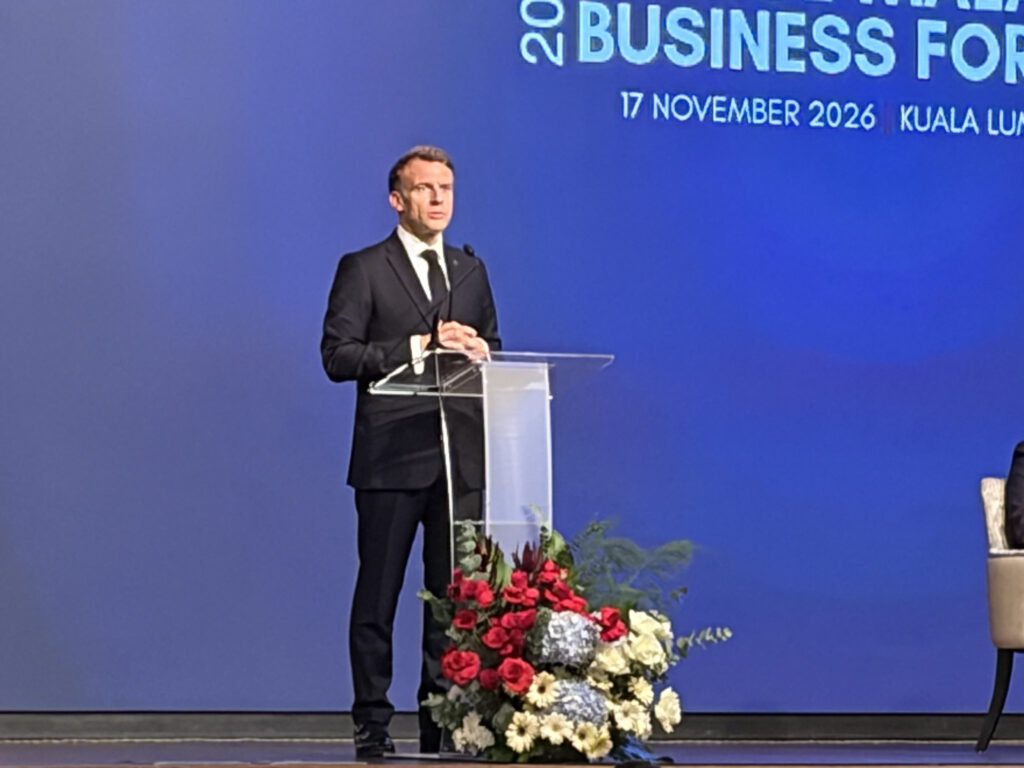
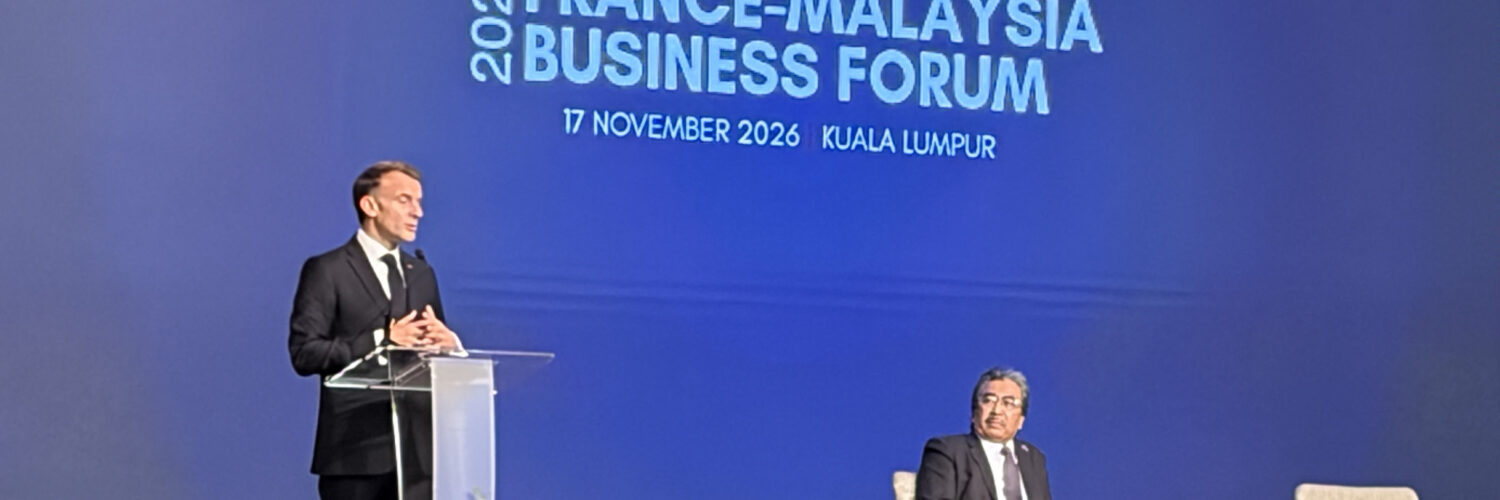
KUALA LUMPUR, 17 November 2026 — MALAYSIA SME’s Executive Editor, Aileen Anthony, was at the France–Malaysia Business Forum 2026, held at The Majestic Hotel Kuala Lumpur, where French and Malaysian business leaders, government officials and key economic stakeholders gathered to explore opportunities for deeper bilateral trade and investment cooperation.
Jointly organised by the Embassy of France, Business France, the Foreign Trade Advisors of France – Malaysia (CCE), CCI France Malaysia and La French Tech Malaysia, the forum provided a platform to advance economic relations between the two countries.
Addressing the forum, French President Emmanuel Macron reaffirmed the importance of the Malaysia–France strategic partnership, identifying shared priorities in strengthening economic independence, industrial capabilities and international cooperation.
Acknowledging the established presence of French companies and investors in Malaysia, Macron recognised their contributions to the economic relationship, including investment and employment creation.
“France is indeed a very strong presence here,” Macron said, noting that France was Malaysia’s second-largest European investor and recognising the companies that had contributed to these foundations.
Strategic Autonomy: A Shared Ambition
At the centre of Macron’s address was the importance of strategic autonomy — the ability of countries to strengthen their independence while maintaining constructive international relationships.
“Our intention is not to become a vassal, but to defend the multilateral order and to try to work amongst powers in order to keep, preserve, strengthen our strategic autonomy and be more independent,” Macron said.
“We want to be more independent. And so, we are engaged in a sort of de-risking mode,” he said. Macron described a strategy of reducing vulnerabilities through greater diversification and stronger partnerships.
“And this is where the partnership between Malaysia and France does make sense, because this is clearly a source of de-risking on both sides,” he said.
He described the direction as an “agenda of independence based on mutual respect”, identifying several sectors where stronger cooperation could support industrial development and create opportunities for businesses.
Defence and Security: Strengthening Capabilities Through Cooperation
Defence and security were among the first areas Macron identified for deeper bilateral cooperation.
He expressed France’s intention to strengthen defence and security cooperation with Malaysia, referring to agreements reached during his visit and the potential for further collaboration.
“We signed some agreements this morning; we finalized on the helicopters. I really believe that on submarines, on fighter jets, we can find agreements.”
His remarks referred to the helicopter cooperation concluded during the bilateral engagement, while identifying submarines and fighter jets as areas where further agreements could potentially be reached.
Macron also highlighted France’s capabilities in radar systems and other defence technologies, naming Airbus, Thales, Safran and Dassault among the companies capable of supporting Malaysia’s requirements.
Energy Transition: Supporting Decarbonisation and Regional Connectivity
Energy transition emerged as another major area of cooperation, with existing partnerships providing a foundation for further development.
Macron referred to the partnership between TotalEnergies and PETRONAS, expressing France’s intention to expand cooperation in liquefied natural gas (LNG), including opportunities to facilitate access to European markets.
Beyond conventional energy cooperation, he highlighted France’s potential to contribute to Malaysia’s decarbonisation efforts and regional electricity connectivity.
“But I think we can be great partners to help you to decarbonize your energy and to be one of the key players of the Asian power grid,” Macron said.
He identified the partnership between Électricité de France (EDF) and Tenaga Nasional Berhad (TNB) as an important component of this agenda.
Macron also highlighted France’s capabilities in low-carbon electricity generation and grid interconnections, particularly in supporting stronger electricity networks across ASEAN. The French Development Agency was another institution he recognised for its involvement in regional energy cooperation.
He referred specifically to the establishment of an ASEAN School of Regulators in Malaysia. The initiative forms part of a broader effort to strengthen regional energy cooperation through regulatory development and institutional capabilities.
Beyond electricity infrastructure, Macron identified nuclear energy as another potential area for future collaboration.
“I really believe we can start a series of cooperation on nuclear energy,” he said.
He highlighted France’s extensive experience in nuclear power generation, referring to the country’s existing nuclear capacity, plans for additional reactors and expertise across the industry’s value chain.
“So this is a strength, and we have expertise upstream to downstream in this sector,” Macron said.
Critical Minerals: Building a Mutually Beneficial Value Chain
Critical minerals featured prominently in Macron’s address, reflecting their strategic importance to industrial development and economic independence.
Macron highlighted the importance of reducing dependencies in rare earths and critical minerals while developing partnerships that support more diversified industrial value chains.
He referred to discussions held between ministers on critical minerals and highlighted the agreement between French company Carester and Malaysia’s Malaco as a cornerstone of the cooperation.
“Yesterday, our ministers had a seminar on critical minerals, and I think the cornerstone agreement was between Carester and Malaysia’s Malaco, and it’s a very important one,” Macron said.
The partnership is intended to develop complementary capabilities across the mineral value chain, with Malaysia undertaking extraction and processing activities and France securing offtake arrangements and further refining capabilities. Macron also highlighted the role of BRGM — the Bureau de Recherches Géologiques et Minières, or French Geological Survey — in supporting France’s critical minerals strategy.
Digital Connectivity, Semiconductors and Artificial Intelligence: Advancing Higher-Value Cooperation
Digital connectivity and advanced technology were also identified as important components of the Malaysia–France strategic partnership.
Macron highlighted an agreement involving Alcatel Submarine Networks (ASN), referring to the importance of submarine cables and digital connectivity in supporting future cooperation.
“ASN, I mean, signed a very important agreement this morning, but we want to be partners with you on this connectivity and digital connectivity,” he said.
He also identified data centres and digital infrastructure as areas where both countries could develop further cooperation.
Macron highlighted the partnership between French investment company Ardian and Khazanah Nasional, describing its role in supporting semiconductor research, human capital development and innovation.
He also referred to the agreement involving French semiconductor company SiPearl and Malaysia’s SkyeChip in microprocessor design.
The companies signed an MoU to pursue a proposed joint venture focused on developing advanced computing capabilities. Macron presented the initiative as an example of higher-value technological collaboration between the two countries.
Scientific cooperation was another area of focus, with Macron identifying CEA-Leti and MIMOS as institutions that could contribute to deeper collaboration.
Together, these initiatives reflect a broader ambition to strengthen technological capabilities through research, semiconductor development and digital infrastructure.
Aerospace: Expanding Established Industrial Cooperation
Aerospace was another sector Macron identified for accelerated cooperation. “Our cooperation in space, in aerospace, is substantial,” he said.
He highlighted France’s established aerospace capabilities and Malaysia’s importance as a market for Airbus.
Macron also recognised the existing manufacturing relationship between the two countries, including the presence of French aerospace companies.
“We manufacture in your country,” he said.
He expressed France’s intention to expand cooperation in manufacturing while supporting efforts to decarbonise the aerospace industry.
The objective is to build upon established industrial relationships and strengthen capabilities that support greater independence and sustainability.
Macron also highlighted opportunities for Malaysia to undertake more manufacturing activities locally, contributing to the broader agenda of industrial development.
The aerospace relationship forms part of his wider vision of strengthening economic partnerships through sectors where both countries can contribute expertise, manufacturing capabilities and investment.
Trade and Investment: Creating Stability and Predictability
Alongside sector-specific cooperation, Macron emphasised the importance of establishing a stronger framework to support bilateral trade and investment.
He expressed France’s support for the EU–Malaysia trade and investment agenda, identifying it as an important element in strengthening economic cooperation.
“This is why we do support the EU-Malaysia Trade and Investment Agreement,” Macron said.
He also highlighted the importance of creating a business environment that supports long-term investment decisions.
“It’s very important, but at the same time, what we need is clearly stability, predictability in business,” he said.
Macron called for efforts to address discriminatory practices and remove barriers that could affect commercial activities.
“And it’s very important to address non-tariff barriers,” he said.
His remarks underscored the importance of ensuring that stronger strategic relationships are supported by practical conditions that facilitate trade and investment.
Choose France: Encouraging Malaysian Investment
Macron concluded his economic agenda by encouraging Malaysian businesses and investors to consider opportunities in France.
“And my last remark: it is as well to ask you to invest in France and to choose France,” he said.
He highlighted France’s attractiveness as an investment destination, referring to its pro-business policies, skilled workforce, infrastructure and availability of low-carbon energy.
Macron said France has pursued reforms to taxation, labour laws and business predictability to strengthen its investment environment.
He also emphasised the importance of electricity availability in supporting industrial development.
France’s low-carbon electricity generation capabilities, he explained, provide opportunities for energy-intensive industries, including advanced manufacturing, artificial intelligence infrastructure and data centres.
Macron highlighted the country’s electricity exports and available energy capacity as advantages for companies considering industrial investment.
He also referred again to the partnership between Khazanah Nasional and Ardian, aimed at supporting research, human capital, and innovation in the semiconductor sector.
“You are more than welcome to come to France,” Macron said.
And He extended an invitation to interested investors to participate in the Choose France Summit scheduled for 18 January in Versailles.
The invitation reflects France’s intention to encourage greater two-way investment, complementing the established presence of French companies in Malaysia with opportunities for Malaysian businesses to expand into France.
Macron concluded his address by reaffirming his confidence in the future of the relationship.
“I really believe that given the state of the world, we can do much more together, and we will deliver this agenda,” he said.
Editorial note: The President’s direct quotations are aligned with the official Élysée transcript of 17 November 2026. British English has been retained in the editorial narrative, while American spellings appearing in the official English transcript have been preserved within quotations.