
Space is no longer the exclusive domain of governments and national space agencies. Over the past decade, the global space industry has undergone a fundamental transformation, with commercial enterprises increasingly taking the lead in developing technologies, launching satellites and creating applications that serve people and businesses on Earth.
This transformation, widely known as New Space, is opening opportunities for innovation, entrepreneurship and new business models. At the same time, it is creating demand for a different kind of engineering talent — professionals who understand not only the technical complexities of space systems but also the commercial opportunities and responsibilities associated with them.
Recognising this shift, Chalmers University of Technology in Gothenburg, Sweden, is launching a new Master’s programme, New Space Systems Engineering, in autumn 2027.
The programme will be the first in Sweden to explicitly combine New Space engineering with entrepreneurship, equipping graduates with the knowledge and practical capabilities to develop space-based technologies, applications and services.
From Space Exploration to Commercial Opportunities
For many, space technology may still evoke images of rockets, astronauts and distant planets. Yet its applications have already become deeply embedded in everyday life.
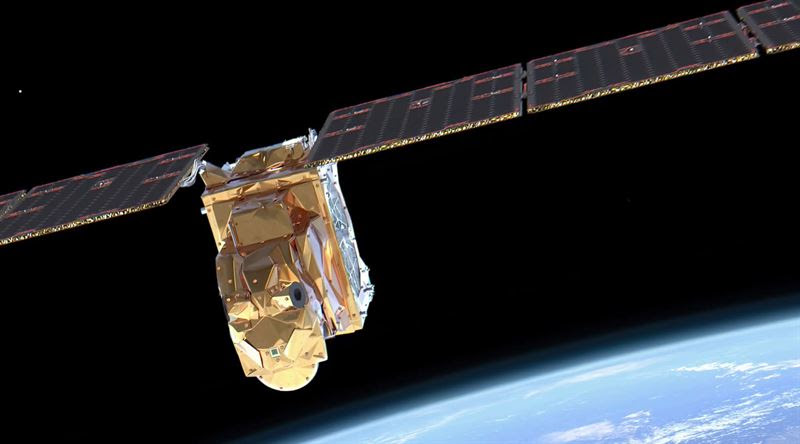
Satellites support communication networks, navigation systems and weather forecasting. They also enable the monitoring of Earth and its changing climate, creating opportunities for new services and solutions.
As access to space technologies becomes more affordable, the potential for commercial innovation continues to expand.
“Today, space technology has become part of everyone’s lives. Satellites enable communication, navigation, and weather forecasting, and the market for new space-based services and solutions is growing rapidly,” said Jörgen Blennow, Vice President of Education at Chalmers University of Technology.
“This creates opportunities for new companies and innovations, but also a growing need for engineers who can combine technical expertise with entrepreneurship. That’s what Chalmers’ new programme will address.”
The emergence of New Space reflects a broader change in how the industry operates. Where space missions were traditionally led by state agencies, commercial companies are increasingly developing and operating space systems through innovative industrial practices and alternative funding strategies.
These developments have reduced the cost of accessing space technologies, encouraged new business models and expanded the range of potential applications.
However, commercialisation also introduces challenges involving safety, environmental protection, security and international regulations.
For businesses exploring opportunities within the space economy, technical innovation must therefore be accompanied by an understanding of commercial viability and regulatory responsibilities.
Developing Engineers Who Think Like Entrepreneurs
At the heart of Chalmers’ new programme is the recognition that technical expertise alone may no longer be sufficient for engineers entering the evolving space industry.
Students will learn to design and operate space systems, including gaining hands-on experience in spacecraft design.
The programme will offer specialisations in space propulsion, space structures and materials, space electronics and software, and space geodesy and remote sensing.
Its curriculum covers a broad range of applications, from rockets and space stations to Earth observation, climate monitoring and the management of satellite constellations.
What distinguishes the programme is its integration of engineering knowledge with entrepreneurship and commercialisation.
“Unique to the programme, students will learn about entrepreneurship, as well as space laws and regulations, how innovations can be commercialised, and the practical differences between state-led and commercial space missions,” said Erik Bohlin, Programme Director for New Space Systems Engineering at Chalmers.
This approach aims to prepare graduates for careers within established space companies while also providing a foundation for those aspiring to establish their own ventures.
Rather than viewing space engineering solely through the lens of technological development, students will be encouraged to explore how space-based innovations can be translated into services that benefit people and businesses.
The programme reflects the increasingly interconnected relationship between scientific advancement, industrial capabilities and entrepreneurship in the New Space economy.
Learning at the Heart of Sweden’s Space Industry
The programme will also benefit from Chalmers’ location in Gothenburg, Western Sweden, a region with a significant concentration of space-related industries.
According to a report from Business Region Göteborg, the region accounts for approximately two-thirds of Sweden’s space-sector workforce and is home to five of the country’s ten largest space companies.
This industrial ecosystem provides opportunities for students to connect their academic learning with practical industry experience.
“We expect that many of the students will carry out project work with space companies in the region during their studies. Students will also have access to advanced facilities and labs, such as Onsala Space Observatory and Chalmers’ clean room,” said Rüdiger Haas, Professor and coordinator for space research at Chalmers.
The programme builds on Chalmers’ established research capabilities in space science, technology and technology management.
By bringing together academic expertise, advanced research facilities and industry engagement, the university aims to develop graduates who can contribute to both the technological and commercial development of the space sector.
The Business of Space Comes With Responsibilities
While the commercial potential of New Space is expanding, the increasing number of satellites operating around Earth is raising important questions about the long-term sustainability and safety of space activities.
According to Karine Le Bail, a course teacher for the programme and an expert in measuring the Earth’s movements from space, more than 16,000 satellites are already in orbit, with many more planned.
This growing concentration of space infrastructure makes satellite safety, space debris, environmental concerns and international regulatory frameworks increasingly important.
“With over 16,000 satellites now in orbit and many more planned, safety, environmental concerns, and international regulatory frameworks are becoming increasingly important issues for the space sector,” she explained.
For the next generation of engineers and entrepreneurs, understanding these challenges will be as important as developing new technologies.
“The new space economy is incredibly exciting right now, but it also presents major challenges. Future space engineers must therefore be able to combine technical development and entrepreneurship with an understanding of the consequences of technology, and the responsibilities that come with it,” said Le Bail.
This emphasis on responsibility is particularly relevant as the space industry transitions towards greater commercial participation.
The ability to innovate must be balanced with the need to operate safely, navigate international regulations and consider the environmental consequences of expanding space activities.
Preparing Talent for the Next Frontier of Innovation
Sweden already offers university programmes focused on space technology through Luleå University of Technology and KTH Royal Institute of Technology.
However, Chalmers’ New Space Systems Engineering programme introduces a distinct approach by placing entrepreneurship alongside advanced space engineering.
The objective extends beyond preparing graduates to work on satellites, rockets and other space infrastructure. It is also about developing individuals who can recognise opportunities, commercialise innovations and create services that deliver value on Earth.
For the wider business community, the evolution of New Space illustrates how technological advancements can create new industries and entrepreneurial possibilities.
As commercial enterprises assume a greater role in the space sector, the relationship between engineering, innovation and business development is becoming increasingly important.
Chalmers’ programme seeks to respond to this changing landscape by developing engineers capable of navigating both the technical and commercial dimensions of the emerging space economy.
The first cohort will begin their studies in autumn 2027, with applications open until 15 January 2027.
More information about the programme, including a webinar outlining its content, is available on the Chalmers University of Technology website.
Editor’s note: This article has been adapted for MALAYSIA SME using only the information provided, with an emphasis on entrepreneurship, commercialisation, industry collaboration and the business opportunities emerging from New Space.