

By Aileen Anthony, Executive Editor, MALAYSIA SME
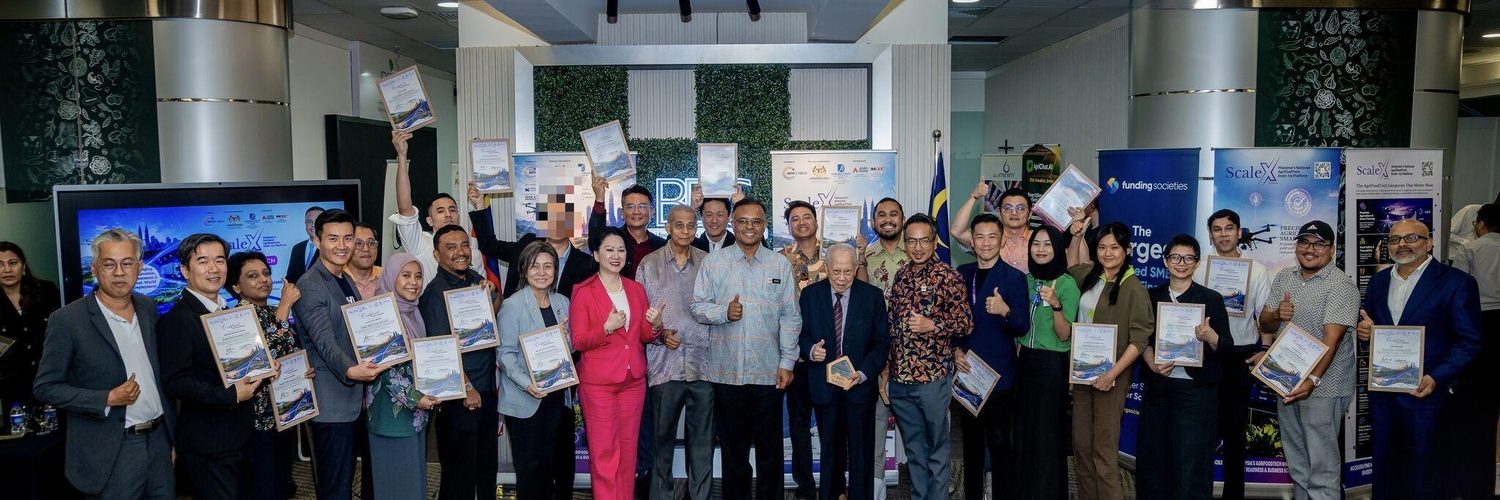
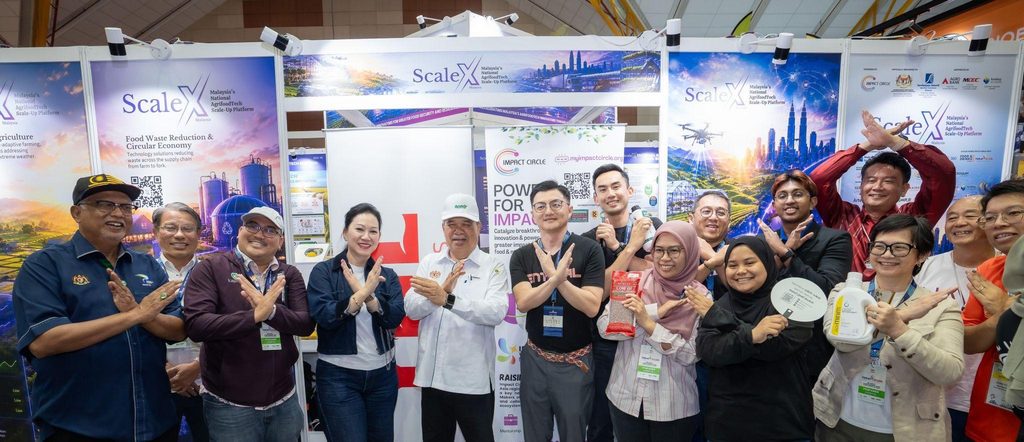
That conviction sits behind ScaleX, Malaysia’s first National AgriFoodTech Scale-Up Programme, developed by agrifoodtech ecosystem enabler Impact Circle. Its founding cohort spans crop science, aquaculture, livestock, farm robotics, biotechnology, circularity, food innovation, and digitalisation—capabilities that, when connected, can help transform the food system from seed and soil to market and consumer. (Featured Pic: ScaleX founding cohort was launched on 2 July 2026 by YBhg. Datuk Seri Isham Ishak, Secretary-General of the Ministry of Agriculture and Food Security (KPKM), at Wisma Tani, Putrajaya.)
MALAYSIA SME spoke with Ong at a ScaleX founders’ gathering, where some cohort members came together to understand one another’s businesses, sharpen how they position their technologies and identify opportunities to collaborate. Food security, she stressed, is not achieved by isolated technologies. It is built when innovators, farmers, government, financiers, and markets work as one system. As Ong categorically explained to each cohort member, ScaleX’s intention became clear to me: ScaleX wants to build an AgriFoodTech ecosystem that can move forward together.
Start with Companies That Are Ready to Scale
ScaleX grew partly out of Ong’s work through Impact Circle, with selected companies coming through Securities Commission Malaysia’s GrowMatch initiative. She noticed that participating companies were at various stages of maturity. Some were proven businesses with products and customers, while others were still developing prototypes or validating their ideas. That difference mattered because companies at different stages require different forms of support.
“We need to understand where they are before deciding what support they need,” she explained. She then proposed segmenting them according to maturity. Early-stage businesses could pursue grants and prototype development. Companies gaining traction needed further commercial development. Those already operating successfully in the market required a different pathway. “They are ready for the next stage, and we can help them attract capital locally or internationally,” said Ong. That thinking eventually became ScaleX.
The “X” stands for multiplication: not simply scaling one company but multiplying impact by deploying complementary technologies in real production systems and then replicating what works. “These solutions are urgently needed to raise food productivity, strengthen resilience and protect smallholder incomes,” Ong said. ScaleX helps founders clarify what differentiates their businesses, understand where their capabilities intersect and build partnerships across the value chain.
Producing Better: Science at the Beginning
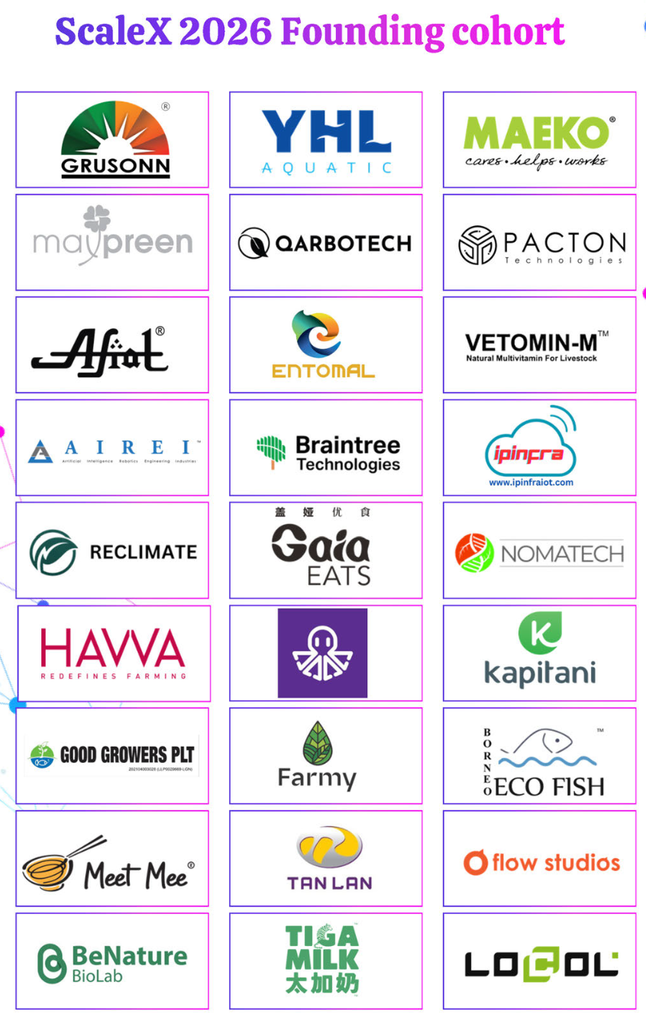
A significant part of the cohort demonstrates how science is changing what can happen before and during food production. Nomatech applies crop-science R&D and breeding to rice commercialisation, including Primera low-GI red rice. Qarbotech uses carbon quantum-dot nanotechnology designed to improve plants’ light absorption and photosynthetic performance, showing how advanced science can translate into higher farm productivity.
Ong emphasised a principle that applies across the cohort: “Every company has a different story. You need to understand what the real innovation is and build the story around that.” Grusonn Wellness cultivates functional mushrooms, including Tiger Milk Mushroom, and develops wellness and functional-food products from locally grown resources such as mushrooms and cacao. Afiat develops wellness products based on Malaysian botanicals and traditional herbs. BeNature BioLab, from South Korea, applies proprietary formulation technology to improve the solubility, stability, and bioavailability of plant-derived bioactives, while Hong Kong-based Meat the Next develops protein-focused food innovations -Tiga Milk plant milk from tiger nuts.
Aquaculture has its own scientific layer. Johor-based YHL Aquatic has established Malaysia’s first shrimp Nucleus Centre and genetic Broodstock Multiplication Centre, developing selected Pacific white shrimp lines for stronger growth, resilience, and local supply security. These businesses show how food production increasingly begins with genetics, biotechnology, plant science, and R&D.
Farming Smarter and Safer
Technology then moves into the farm itself. HAVVA provides controlled-environment and digital farming systems, including IoT-enabled farms and greenhouses, while Braintree Technologies combines drones, robotics and AI for precision agriculture and automated field operations. The test is practical: technology must reduce labour bottlenecks, improve consistency, and give farmers better information without adding unnecessary complexity.
In AI-enabled aquaculture, Pacton Technologies uses AI and computer vision through FishSpeak to give farmers better visibility into fish condition and water quality. IPINFRA integrates AI and IoT for cattle identification, weight estimation, traceability, and farm monitoring. In both cases, data helps producers spot risks earlier and manage operations with greater confidence.
Flow Studios extends IoT and digitalisation across farm operations. Farmy combines integrated farming with direct retail access, connecting food production more closely with consumers while shortening the supply chain, while AIREI works across the oil-palm value chain, developing solutions for both smallholder and milling applications to improve productivity, operational efficiency, and sustainability from cultivation through to processing.
Borneo Eco Fish produces red tilapia at scale through cage farming in Batang Ai, Sarawak, harnessing the reservoir’s distinctive water environment to support high-quality aquaculture. It raises its fish without antibiotics, strengthening the company’s commitment to responsible production, food safety, and healthier seafood.
Livestock health provides another connection. Vetomin-M develops Virgin Coconut Oil (VCO) -based natural multivitamin products for livestock, while Maypreen develops plant-based, eco-friendly detergent and bio-hygiene formulations and is extending its expertise into agricultural bio-solutions that strengthen post-harvest protection and supply-chain resilience. What happens on the farm ultimately affects the safety, quality, and resilience of the wider food chain.
Circularity
The food system also must deal with what it leaves behind. Entomal provides an end-to-end black soldier fly solution, spanning breeding and rearing through to production. Its technology upcycles organic waste into insect protein for pet food, poultry feed, and aquaculture feed, while also producing biofertiliser as a valuable agricultural input. MAEKO provides advanced, technology-enabled composting systems for industrial, retail, and household applications, transforming food waste into fertiliser and helping users close the loop at the point of waste generation. Its proprietary technology supports remote monitoring and maintenance, while an integrated app enables impact and ESG performance to be measured, tracked and reported.
Reclimate develops biochar carbon-removal projects that create value from agricultural residues and help restore soil fertility. Tan Lan Agri Venture focuses on soil reconditioning and healthier soil conditions for long-term agricultural production. Thailand-based LOCOL develops a cocoa-extract cattle-feed supplement to reduce enteric methane while supporting animal performance. Across the cohort, the circular proposition is clear: food waste can become feed or fertiliser, agricultural residues can become biochar, soil can be restored and lower-carbon production can create value rather than cost alone.
From Farm to Market
Producing more creates lasting value only when producers can reach markets. Haroct Technologies integrates inputs, crop trading, logistics and financing to connect farmers with buyers and services. Kapitani connects directly with farmers and digitises in farm records in line with myGAP requirements, while Good Growers works with Orang Asli communities through sustainable agriculture and market access. Together, they strengthen the commercial infrastructure that converts better production into better income.
Gaia Eats brings plant-based food brands and ready-to-heat Malaysian meals, including Pinxin and Mirra, to health-conscious consumers. Meet Mee manufactures halal, non-fried Malaysian instant Pan Mee noodles, and pantry products. These companies extend food security beyond volume to nutrition, affordability, consumer choice, and local value creation.
Seen individually, these businesses are vastly different. Together, they cover much of the journey from science and farm operations to circularity and market access. That breadth is ScaleX’s strength: it treats food security as a connected system rather than a collection of stand-alone projects.
Farmers at the Centre of Deployment
Technology alone does not transform a food system. Adoption happens when a solution is useful, affordable, and trusted by the people who must operate it. For Ong, farmers cannot be treated as the final recipients of technology. They must be partners in defining the problem, shaping the pilot, and judging whether a solution delivers practical value in real operating conditions.
“A successful deployment is not a machine installed or an app downloaded. It is a farmer seeing better yield, lower losses, reduced risk, safer production, or higher income,” she said. “That means listening first, designing with farmers, providing training and after-sales support, and measuring what changes on the ground.”
From Scale-Up to National Deployment through State and Corporate Living Labs

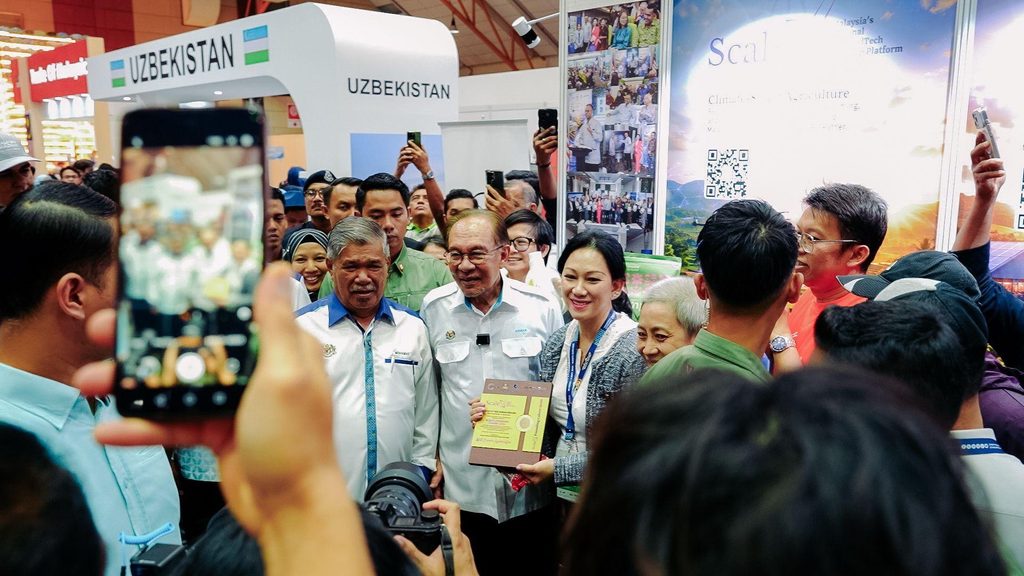
“For food and agriculture, government involvement is important because deployment ultimately happens on the ground,” said Ong. ScaleX positions high-potential companies within the broader national food-security agenda, with the Ministry of Agriculture and Food Security (KPKM) as programme endorser and national policy anchor, and the Securities Commission Malaysia as a strategic pipeline partner through GrowMatch. The purpose is to connect policy priorities with technologies that can be adopted and scaled in Malaysia’s production systems.
“My vision for Impact Circle has always been to make innovation useful to the people who produce our food. I am doing this because food security is not solved by technology, capital or policy working in separate silos; it is strengthened when we connect them so that proven solutions reach farms, fisheries and food businesses, raise productivity and resilience, and create better livelihoods.”
ScaleX is now advancing into State and Corporate Living Labs, where partnerships can be deployed with state authorities, agencies, corporates, and farming communities. “Different companies solve different parts of the problem, and that is where the ecosystem becomes valuable,” Ong said. Investment remains an enabler, not the finishing line: the measure of success is whether companies secure the right opportunities, deploy their technologies and show meaningful outcomes.
ScaleX began with companies ready to scale. Its greater purpose is to turn innovation into stronger farms, more resilient supply chains and a food system that can nourish Malaysia—by scaling what works with farmers, not around them.