
A gap between students’ expectations and employers’ assessments of graduate workplace readiness has emerged from the REHDA Institute Youth Initiative (RIYI) 2026 survey, highlighting the need for closer collaboration between universities and industry as artificial intelligence (AI) changes the skills required of fresh graduates.
The survey found that 41.6% of student respondents considered one to three months a realistic timeframe for fresh graduates to begin adding commercial value at work. Among employer respondents, only 2.9% shared that view.
There was also a difference in perceptions of university preparation. While 62.0% of students felt well prepared by their universities, only 32.3% of employers agreed that local universities adequately prepare graduates for workplace realities.
The findings form part of RIYI 2026’s closing summary report, which draws on responses from students and recent graduates across 21 Malaysian universities, alongside employers. The targeted surveys provide insights into graduate expectations and employer perspectives but are not nationally representative.
Connecting RIYI 2026 with RMK13
The findings come against the backdrop of the Thirteenth Malaysia Plan (RMK13), covering 2026 to 2030, which calls for higher education programmes to align more closely with industry needs and for greater industry involvement in talent development.
RMK13 also targets average labour productivity growth of 3.6% a year between 2026 and 2030. The plan proposes measures including a mandatory paid internship scheme and more demand-driven learning through collaboration between public universities and the private sector.
RIYI’s mentorship programme provides another form of early industry exposure, allowing students to engage with senior professionals, receive feedback on their career plans and gain a clearer understanding of workplace expectations.
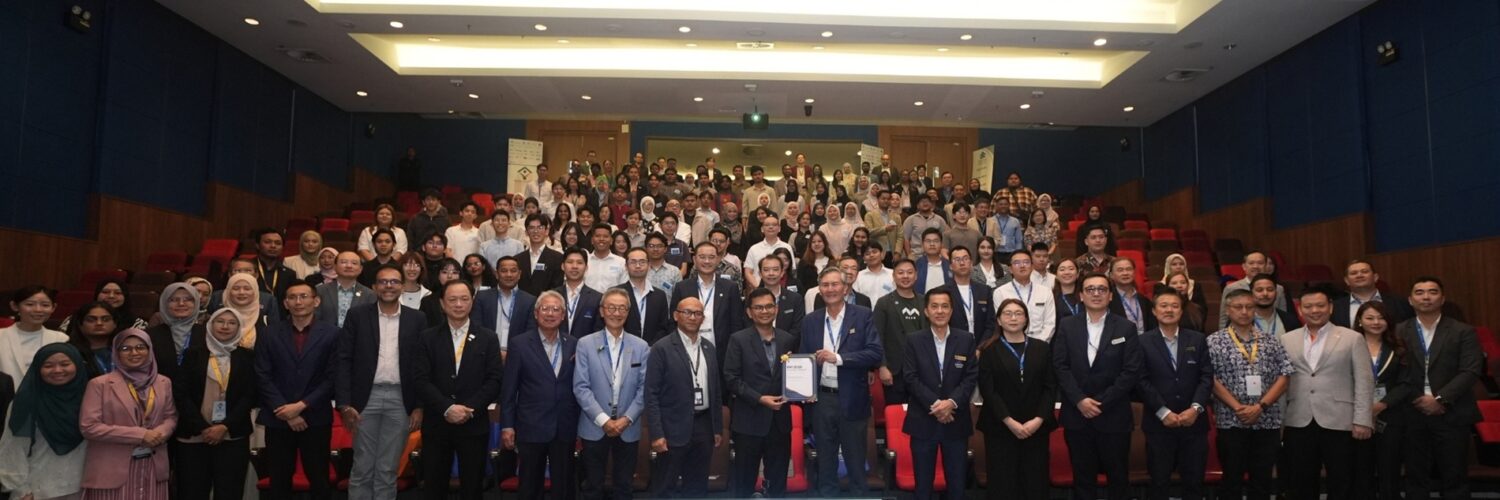
The RIYI 2026 closing report was presented to Economy Minister YB Akmal Nasrullah Mohd Nasir at the programme’s closing event at Monash University Malaysia. The event also featured a town hall titled “Advancing Malaysia’s ESG-Ready Built Environment: Connecting Government, Youth, Universities and Industry under RMK13.”
Preparing Young Malaysians for the Workplace
RIYI 2026 brought together 50 students from 15 collaborating universities, alongside students from six other universities, with senior industry leaders for practical exposure to workplace expectations, career development, leadership and the skills required in a technology-driven economy.
REHDA Institute Chairman Dato’ Jeffrey Ng Tiong Lip said closer university-industry collaboration was needed to give students earlier exposure to workplace realities.
“A university qualification provides an important foundation, but young people also need to understand how workplaces operate, how decisions are made and what employers expect from them. “This is where RIYI plays an important role in bringing students closer to industry through direct engagement and mentorship, while helping them develop the judgement, resilience, communication and adaptability needed to build sustainable careers,” he said.
REHDA Institute describes RIYI as a year-long programme designed to bridge academia and industry through corporate mentorship, practical exposure and future-ready skills development.
Ng added that engagement with industry leaders can give students access to workplace lessons that cannot be gained purely from textbooks, helping them understand what it takes to progress from fresh graduates to future leaders.
AI Could Reshape Entry-Level Employment
Artificial intelligence emerged as another major theme in the RIYI survey, particularly in relation to entry-level employment.
While 76.4% of student respondents said they regularly use AI tools, 50.0% of employers surveyed expected AI to reduce the number of entry-level roles they hire for over the next three years.
The findings point to the importance of developing practical judgement, problem-solving and adaptability alongside digital skills.
RMK13 places AI and digitalisation at the centre of Malaysia’s economic transition and calls for collaboration between the public sector, industry and academia to equip talent with advanced technology skills.
For students entering an increasingly AI-enabled workplace, the issue is therefore not limited to familiarity with digital tools. The ability to apply judgement, solve problems, communicate effectively and adapt to changing work requirements is also becoming increasingly important.
Training and Career Progression Remain Important
The RIYI surveys also identified areas of common ground between students and employers around career development.
Some 79.4% of employers said they were willing to provide structured, quality training and a clear career path in exchange for a retention commitment, while 67.6% of students said they would accept such an arrangement outright.
Pay transparency and talent retention also emerged as areas of concern. Among respondents, 82.4% of students and 58.3% of employers supported compulsory salary-range disclosure in job advertisements.
Meanwhile, 57.1% of student respondents said they were likely or very likely to work outside Malaysia within five years.
The findings add student and employer perspectives to RMK13’s wider labour market agenda, which includes raising the share of employee compensation in GDP to 40% by 2030 and measures relating to graduate starting salaries and the Progressive Wage Policy.
Graduate Employability Remains a Challenge
RIYI’s focus comes as young Malaysians continue to face a different labour market experience from the overall workforce.
According to the Department of Statistics Malaysia, Malaysia’s unemployment rate for people aged 15 to 24 stood at 10.2% in June 2026, compared with a national unemployment rate of 3.0%.
Against this backdrop, earlier exposure to employers and practical workplace expectations is one area RIYI seeks to address. The programme brings together students, universities and industry leaders to develop workplace readiness and strengthen the connection between academic learning and employment.
Technology and Sustainability Skills for the Built Environment
The university-industry skills gap also has particular relevance to Malaysia’s property and built-environment workforce.
Under RMK13, the wider use of technologies such as the Industrialised Building System (IBS) and Building Information Modelling (BIM) is envisaged, particularly in affordable housing. The plan also encourages developers to seek Green Building Index certification.
These priorities point towards demand for professionals who can apply technology and sustainability principles to real-world property and construction projects.
RIYI therefore provides an avenue for young people to engage directly with an industry that will be responsible for implementing many of these priorities.
Building Future-Ready Malaysian Talent
The final RIYI session, themed “Climbing the Career Ladder in the AI Era”, examined AI’s impact on junior roles, productivity, decision-making and the capabilities expected of future leaders.
Participants took part in clinics on AI-augmented judgement, strategic value, leadership influence and stakeholder management before presenting their Three-Year Career Mastery Blueprints for feedback from industry mentors.
The programme concluded with a negotiation and influence masterclass covering workplace communication, deadlines, career progression, salary discussions and managing professional expectations.
Students involved in RIYI 2026 came from more than 21 universities across Malaysia, including Universiti Malaya, Universiti Putra Malaysia, Universiti Sains Malaysia, Universiti Teknologi MARA, Monash University Malaysia, Taylor’s University, Sunway University, UCSI University, Universiti Tunku Abdul Rahman and Universiti Kebangsaan Malaysia.
REHDA Institute aims to develop RIYI into a longer-term platform connecting universities, employers and young talent, while contributing industry perspectives to Malaysia’s graduate employability and future workforce development.
The initiative reflects a broader effort to bring academic preparation and workplace expectations closer together as Malaysia’s labour market evolves alongside AI, digitalisation and new technology-driven industries.