

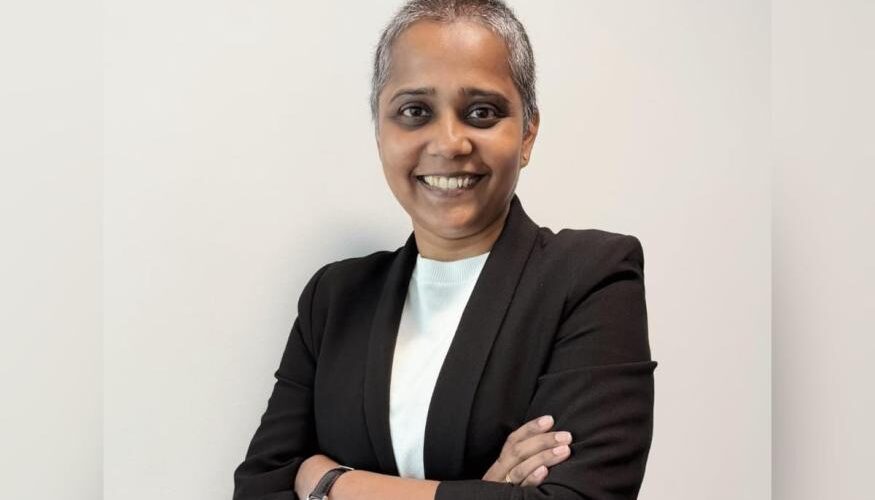
By Saritha Subramaniam, Director of Southeast Asia and Australasia at AICPA & CIMA
Artificial intelligence (AI) is no longer simply a collection of time-saving tools or a major technological advance. It is an exponential force reshaping the accountancy and finance profession, with professionals already using AI across a growing range of operational and strategic functions.
From data entry and bank account reconciliation to fraud detection, tax research and advanced financial analysis, AI is increasingly becoming part of everyday finance work.
Yet while concerns about AI replacing jobs continue, the technology could instead create opportunities for finance professionals to apply their human expertise in new ways.
A Deloitte survey found that finance departments globally are facing a shortage of skilled staff, with 40% investing in AI and automation to address productivity gaps. The research also found that 64% of finance leaders planned to add more technical skills and capabilities to their functions.
Rather than simply replacing professionals, AI can act as a force multiplier, improving efficiency and productivity while allowing finance teams to focus on higher-value work.
Southeast Asia Moves From AI Experimentation to Deployment
Across Southeast Asia, this transition is reaching an important stage as organisations move from exploring AI to deploying it more widely.
Research by McKinsey and Singapore’s Economic Development Board has described a region moving rapidly from AI exploration to deployment, with leading organisations embedding the technology into workflows and establishing formal governance rather than relying on isolated pilot projects.
Finance is firmly part of this transformation. Wolters Kluwer’s 2026 Future Ready CFO research found that 83% of Asia-Pacific CFOs identified AI adoption as a key force reshaping the finance function, compared with 85% globally.
The research also points to a broader transformation of the CFO role, with AI increasingly influencing financial modelling, reporting, capital allocation, budgeting, forecasting and scenario planning.
What stands out in Southeast Asia, however, is the emphasis on implementing AI responsibly and effectively.
Finance leaders are weighing governance, data quality and return on investment rather than pursuing adoption simply for its own sake. In diverse markets where regulations and levels of technological maturity vary considerably, this measured approach plays directly to the strengths of finance professionals.
Those who can bring judgement, ethical oversight and clear thinking to the use of AI will be better positioned to turn the technology into lasting organisational value.
AI Can Amplify Human Judgement
AI can generate new insights and improve organisational performance, but finance professionals must avoid becoming overly dependent on automated systems.
One concern is “cognitive offloading”, where people outsource their thinking and decision-making to AI tools. Instead, intelligent systems should be viewed as collaborative partners that free professionals to apply critical thinking, solve problems and create greater value.
Human judgement therefore remains central.
AI can process information at a scale that would be difficult for an individual or team to replicate, but professionals still need to understand the context behind the information, question outputs and determine how insights should influence business decisions.
This balance between technology and human judgement is becoming increasingly important as AI becomes embedded in finance functions.
Using AI to Anticipate the Future
Another opportunity lies in using AI to look beyond what has already happened.
Finance professionals have traditionally played an important role in analysing historical performance and helping organisations plan ahead. AI can extend this capability by identifying market trends, analysing scenarios and helping organisations anticipate potential opportunities and risks.
No technology can perfectly predict the future. However, AI tools can help finance teams examine different scenarios and identify connections between issues.
This can support a more systems-based approach to decision-making, allowing professionals to assess the ripple effects of decisions across different parts of an organisation.
Instead of simply responding to problems after they emerge, finance professionals can increasingly help organisations identify and address potential challenges before they become crises.
Finance Professionals as Responsible AI Stewards
As AI becomes more deeply integrated into business operations, finance professionals can also play a role in ensuring that these technologies are adopted responsibly.
Their professional ethics and judgement can help organisations assess whether AI systems are being used competently and appropriately. Finance professionals can also provide assurance that systems are operating reliably and as intended.
This responsibility extends beyond day-to-day operations.
AI and automation can raise complex questions about accountability, decision-making and trust. Finance professionals can therefore help their organisations navigate these issues while maintaining confidence among employees, customers and other stakeholders.
The ability to combine AI capabilities with ethical oversight could become an increasingly important part of the future finance profession.
From Business Partner to Strategic Adviser
AI could also accelerate the profession’s evolution from business partner to strategic adviser.
By automating repetitive processes, AI can give finance professionals more time to focus on analysis, strategy and decision-making. This creates an opportunity to move further upstream, from recording what has happened to helping determine what should happen next.
In this sense, the role of the finance professional could become less about being a scorekeeper and more about acting as a strategic adviser and futurist.
The shift is already reflected in broader research on the changing finance function. Deloitte’s 2026 research found that finance leaders are increasingly combining traditional finance expertise with technical capabilities, while AI adoption continues to change how finance teams operate.
Rise2040 Highlights AI’s Potential
The potential of AI to reshape accountancy and finance is also reflected in Rise2040, a profession-wide research initiative launched by AICPA and CIMA.
The initiative brought together more than 6,000 insights from accounting and finance professionals across more than 25 countries to explore how the profession could evolve amid technological advancement, expanding data and increasing complexity.
Its research highlights AI as an enabler for the public accounting and finance profession, particularly through its ability to automate repetitive work and free professionals to focus on higher-order advisory work, judgement and strategy.
However, capturing these benefits will also require the profession to address the risks associated with AI.
These include training gaps among early-career professionals, overreliance on automation and the potential erosion of experiential learning.
Preparing Finance Professionals for an AI-Enabled Future
AI is likely to transform the accountancy and finance profession, creating new opportunities for professionals to deliver value while changing the skills required to succeed.
The challenge is therefore not simply whether finance professionals will use AI, but how effectively they can combine the technology with human judgement, ethical responsibility and strategic thinking.
For Southeast Asia, where organisations are moving increasingly from AI experimentation towards deployment, this distinction could become particularly important.
The future finance professional will need to understand both the technology and the business context in which it operates. Continuous learning and adaptability will be essential as AI capabilities continue to evolve.
AI may be the entry point to the future of the profession, but it is not the endpoint.