

By Aileen Anthony, Executive Editor of MALAYSIA SME
The Fabric That Is KAIN
In Bahasa Melayu, the word kain means fabric. Thread by thread, separate elements are bound into something stronger, more connected, and more functional. That is what artificial intelligence is today: an invisible layer weaving itself into businesses, industries, institutions, and everyday life.
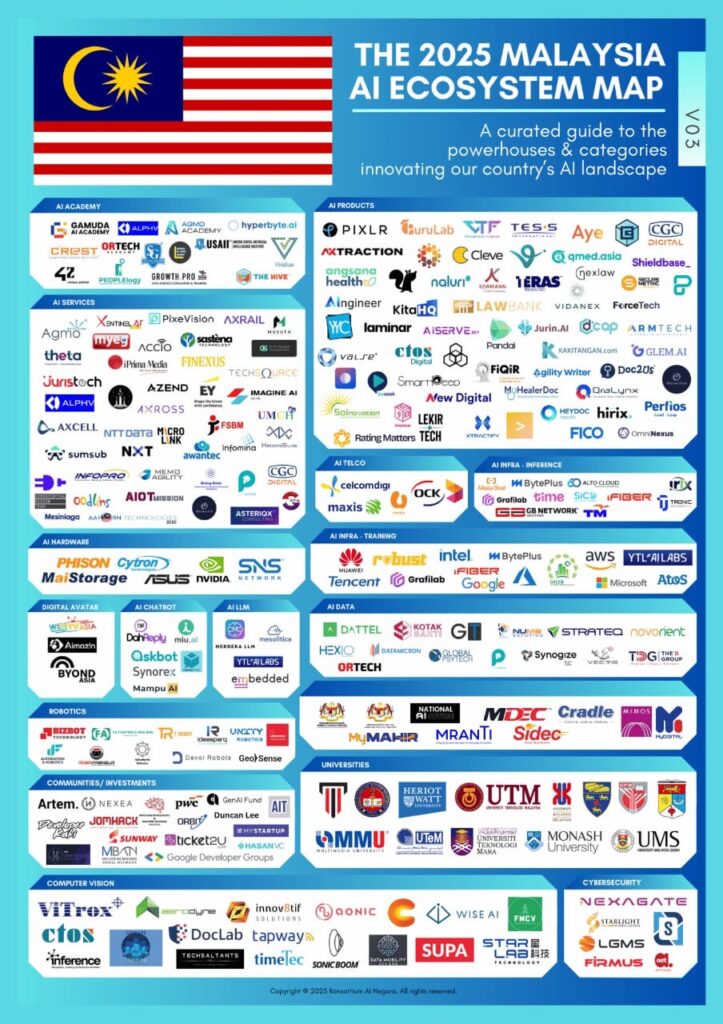
Perhaps that is why the name KAIN feels unusually fitting. KAIN is a growing network of founders, policymakers, CTOs, researchers, educators, ecosystem builders, and AI practitioners brought together to collectively navigate an accelerating AI future.
“KAIN is an alternative way to build an ecosystem of different stakeholders interacting with a series of relationships.” That philosophy sits at the centre of KAIN. The group is intentionally informal, comprising university deans, startup founders, AI practitioners, data centre players, cybersecurity leaders, entrepreneurs, policymakers, and technology builders actively involved in Malaysia’s AI landscape.
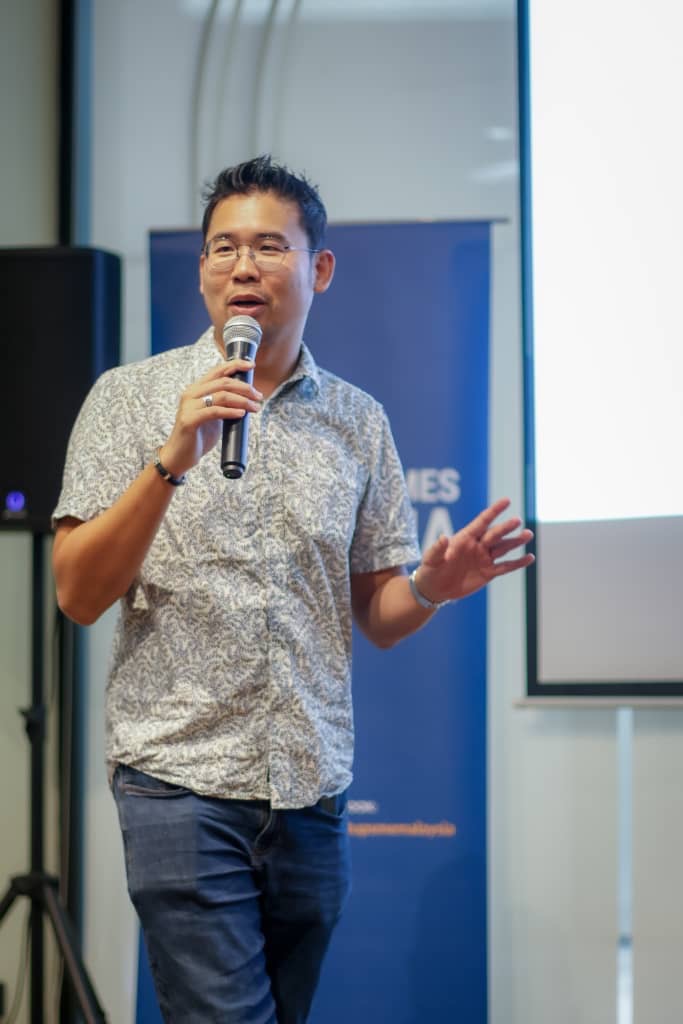
“It’s a curated group of relevant people playing a role in the AI ecosystem as a way to facilitate conversations,” Warren explained. “We discuss, share information, invitations for events, and spark discussions. It’s a consolidated watering hole to disseminate information where everyone is an equal member.”
The simplicity of the structure is intentional. Formal conferences, official forums, and policy discussions already exist. KAIN serves a different role. It creates a space where conversations move faster, information circulates quicker, and ecosystem players remain close enough to evolving developments in an AI future that cannot wait.
Why an AI Future Cannot Wait
“One of the reasons why we set up KAIN is to make sure we can increase the velocity of information and grow the AI ecosystem because we fundamentally believe that upskilling Malaysians and preparing Malaysians for what’s coming is very important,” Warren said.
“Jobs will get disrupted. Business models will get disrupted. Businesses will need to be adaptive in order to stay competitive.” The disruption, according to Warren, is already visible across industries and professions.
During the conversation, I pointed out that many SMEs still treat AI as something distant rather than immediate. To this, he responded, “But they have to do it. They have to get into it. Only then will they understand what is needed.”
That hands-on exposure, he believes, is essential because AI capabilities are evolving too quickly to rely on passive observation. Businesses can no longer afford to wait for perfect understanding before engaging with the tools.
Building Malaysia’s AI Ecosystem
Enthusiasm for technology is only the starting point. Building a sustainable AI ecosystem requires the weaving together of multiple ecosystem layers that progress simultaneously. “You must have enough people in the ecosystem who can apply and use knowledge and tools,” Warren emphasised. “That’s human capital.”
He also pointed to the importance of infrastructure such as data centres, broadband access, policy frameworks, and entrepreneurial activity. “When you combine everything together, it catalyses growth that accelerates the AI ecosystem.”
KAIN reflects that ecosystem approach. The network brings together stakeholders across academia, startups, enterprise technology, cybersecurity, policymaking, and entrepreneurship. The objective is not ownership of the ecosystem, but increasing what Warren repeatedly refers to as the “density of relationships.”
That density matters because the faster information moves across industries and institutions, the faster adaptation can happen collectively.
“AI Agents Push, Humans Approve”
As our conversation progressed, Warren described what will become the next major shift in organisational design.
“We can look to AI agents that co-run your organisation,” he explained. “AI agents will push insights over to you.”
I asked him to expound.
“A team of interconnected AI agents that work in different departments within an organisation. One agent monitors finance and cash flow patterns. Another oversees staffing utilisation and operational bottlenecks. Others analyse customer behaviour, track sales movements, monitor procurement needs, forecast demand shifts, or observe competitor activity in real time.”
These agents, he shared, communicate with each other to understand and exchange context, retrieve organisational memory, compare historical patterns, and coordinate recommendations that are pushed to managers and leadership teams.
To illustrate this in a retail environment, Warren explained how AI agents would simultaneously monitor weather patterns, transaction flows, staffing levels, supplier pricing, seasonal buying behaviour, and competitor promotions. The system would then recommend operational decisions, from adjusting inventory allocation to anticipating demand spikes before management even notices them.
“Agents push, humans approve,” Warren summarised simply.
I asked him how far away this future actually is.
“Technically, it’s doable already this year,” he said.
The Human Side of Disruption
Despite the scale of transformation ahead, there are realities. He acknowledged that many Malaysian SMEs, particularly family-owned businesses, operate with deeply loyalty-driven cultures that may soften the pace of workforce displacement compared to Western markets.
“Many business owners continue retaining long-serving employees out of trust, loyalty, and personal relationships,” he said. At the same time, he believes businesses cannot allow familiarity or hesitation to delay adaptation indefinitely.
“If staff stay, they must reskill,” he stressed.
“The future is not simply about replacing people with AI, but helping employees evolve alongside increasingly intelligent systems. Employees will need to learn how to collaborate with AI agents, critically interpret recommendations, validate outputs, manage exceptions, and make ethical judgment calls where automation alone may fall short,” he added.
Platforms such as AITraining2U, he explained, help employers reskill the workforce through practical exposure to workflows, operational use cases, and implementation strategies. Businesses can better understand how AI orchestration improves productivity, reduces repetitive work, and unlocks new ways to scale operations with leaner, more efficient teams.
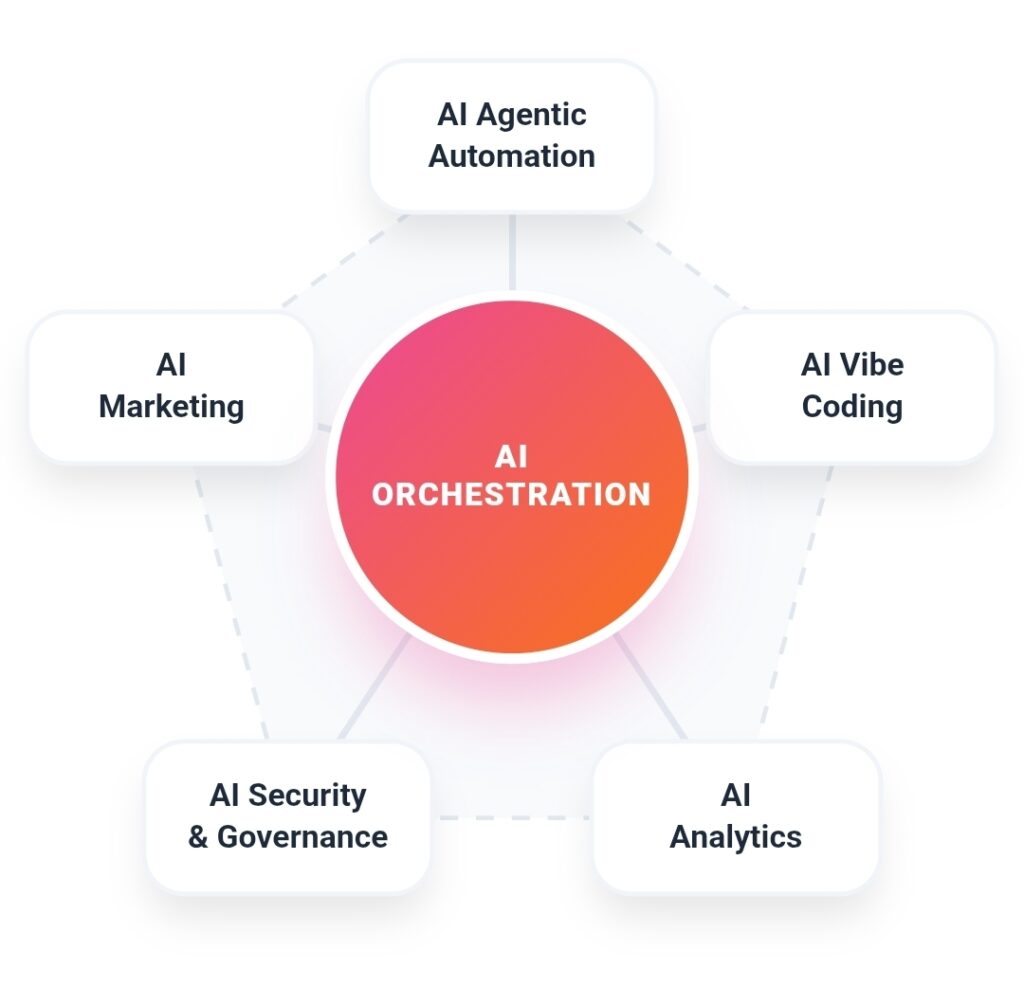
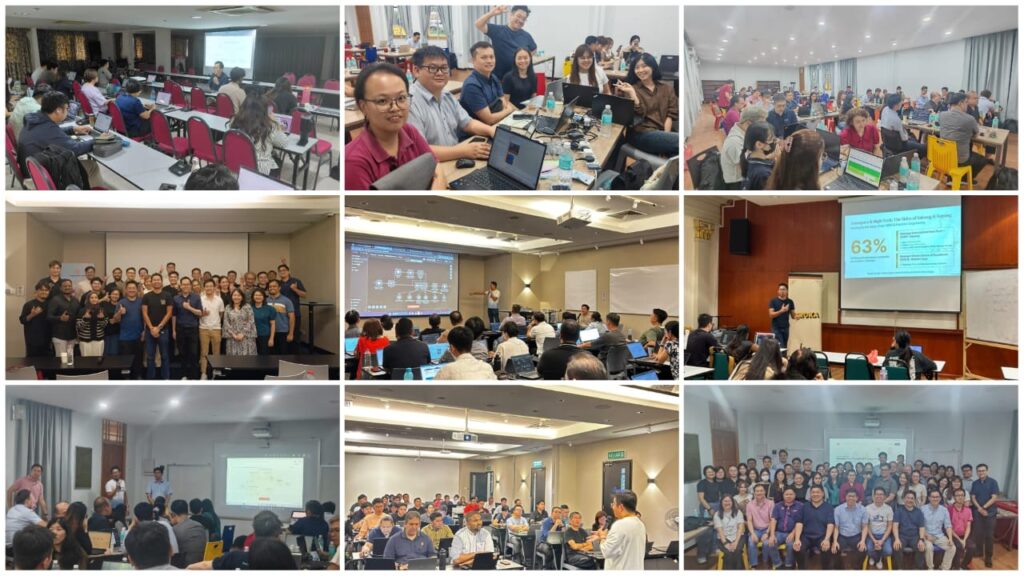
Instead of overwhelming businesses with highly technical concepts, AITraining2U breaks AI down into usable business applications, from automating reporting and customer support to building internal knowledge systems, lead qualification workflows, and AI-assisted decision-making structures.
SMEs Stand to Benefit the Most
Warren believes this practical exposure is especially important for SMEs, many of which risk being left behind if AI transformation is viewed as something only large enterprises can afford. “SMEs actually stand to benefit the most,” he opined. “Because AI allows smaller teams to operate with capabilities that previously required much larger organisations.”
“Companies that survive won’t just be the ones with the best AI,” he said. “They’ll be the ones that can reskill their people the fastest.” Once again, I found it difficult to disagree.
Warren’s message throughout the conversation was consistent. We cannot afford to observe the AI wave passively while waiting for certainty. Businesses, professionals, educators, policymakers, and entrepreneurs need to participate directly in understanding what is changing. And perhaps that is ultimately what KAIN represents. A fabric built from relationships, shared awareness, collective learning, and the willingness to evolve together in real time. Download KAIN’s MALAYSIA AI REPORT 2025.