

By Aileen Anthony, Executive Editor, MALAYSIA SME
Malaysia’s Initial Public Offering (IPO) market has gathered considerable momentum. In 2025, Bursa Malaysia recorded 60 new listings, up from 55 in 2024 and the highest annual number since 2005. Eleven companies listed on the Main Market, 44 on the ACE Market and five on the LEAP Market. Together, the new listings raised RM6 billion and added RM27.4 billion in IPO market capitalisation. Malaysia also recorded the highest number of IPOs among ASEAN exchanges for the second consecutive year. The numbers reflect the capital market’s broader role in enabling home-grown companies to access capital, expand, and move into their next stage of growth.
CHAT MALAYSIA SME spoke with Dato’ Lock Peng Kuan, Managing Partner, Audit & Assurance at Baker Tilly Malaysia, about what companies need to get right long before they embark on an IPO, the gaps that emerge when businesses begin that journey, and why a credible equity story must ultimately answer the question every investor is asking.
“What am I investing in?”
When companies approach Baker Tilly about a potential IPO, one of the first questions is why. “A lot of companies, when they come to us, they say, ‘I have hit the number, I have the size, so I am prepared to list.’ From my experience, most owners can’t clearly articulate their intention for listing; they’re there simply because they hit the threshold. So the next natural step is to go for listing,” shared Dato’ Lock.
Reaching a certain size does not automatically make an IPO the right next step. The business first needs to establish what it intends to achieve with the capital it plans to raise.
“If you are successful in your listing, how would you utilise your proceeds? Is it to buy machinery? Is it going for regional expansion? Is it to strengthen your balance sheet?”
The motivation, Dato’ Lock explained could be various including, expansion, succession planning, or institutionalising the business for its next chapter. Depending on the objective, alternatives such as private equity, peer-to-peer financing or equity crowdfunding may also be appropriate. “Very importantly, the owner must know what the motivation is before they start the IPO process.”
Prepare Before The Need To
Once an IPO becomes the chosen destination, Dato’ Lock emphasised that preparation should begin years in advance. “Ideally, the preparation should start three years before,” said Dato’ Lock. In practice, however, many companies tend to begin considerably later. “When an IPO case comes in one year before the submission, that compresses years of audit, compliance and preparation into a much shorter period.”
Companies that prepare earlier approach the journey differently. “They have the end in mind. They may not have decided when would be the best time to list, but they are building the company in a way that they are prepared to assume the role as a public company.” This includes progressively strengthening financial reporting and developing a much deeper understanding of the business behind the accounts.
“It’s not just about having audited numbers. Management must understand why revenue grows from year to year, why margins have changed, where the better profit margins are coming from, which particular line of service or product drives profitability, and what happens to working capital and cash flow, among other considerations.”
Because, Dato’ Lock emphasised, “Management will eventually need to explain how the company arrived at its current position and a business that consistently tracks its performance is not forced to reconstruct its history when the IPO process begins.”
Build the Business Behind the Numbers
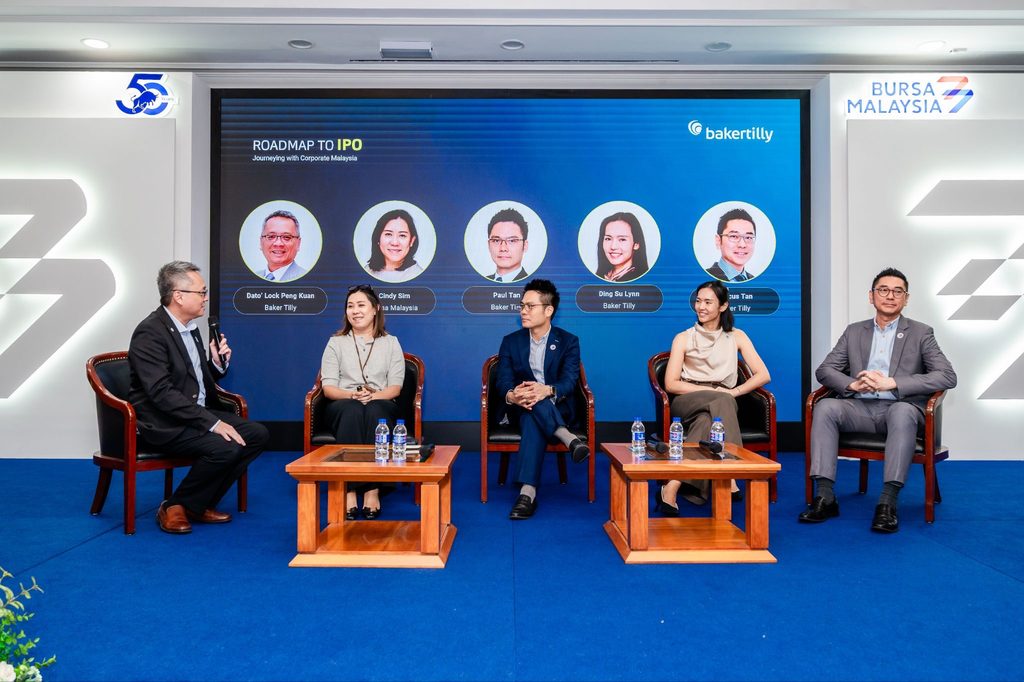
A company may be profitable, growing and seemingly ready for the capital market. Yet the weaknesses uncovered during IPO preparation are often fundamental. According to Dato’ Lock, gaps emerge in documentation, data extraction, account closures, reporting processes, regulatory compliance and the internal resources available to support the IPO.
“They are numbers, but they (the numbers) may be all over the place. Data needs to be compartmentalised in the right context.” This is why preparation cannot be treated as a last-minute exercise. Closing gaps takes time and newly introduced processes must prove that they work. “You need time actually to put in the processes, but you also need time to test again to see whether the newly implemented processes hold water,” cautioned Dato’ Lock.
“Besides numbers accuracy, businesses should be looking at the timely closure of financial numbers.” Management must understand cash flow, debtor turnover, stock ageing and its balance sheet. It needs reliable accounting systems, internal controls, clear approval processes and defined responsibilities.
The same applies to data. “Data quality is important.” The reason goes beyond operational efficiency. Clean, properly organised data allows management to understand the business and explain its performance. It becomes the evidence behind the story the company eventually takes to investors.
From Founder-Led to Institution
Another critical transition is reducing excessive dependence on the founder. “Most entrepreneur-driven businesses in Malaysia are founder-driven. The success of the company is very much tied to the success of the founders.” That influence may have driven the company’s success, but a business seeking external investors must show it can operate beyond one individual.
“It doesn’t mean that we dilute the impact of the founders. It’s more about putting the founder’s decisions into the process, system and, importantly, the governance.”
This means addressing related-party transactions, potential conflicts of interest and management override of controls. It also means establishing professional management, accountability and clear decision-making authority.
“Suppose the founders go away for three months or six months. The business should continue.” The objective is to build “the system, process and the people to safeguard the business” while allowing the founder to focus increasingly on strategic direction and future growth.
The same principle applies to systems. Informal practices may work when the company is small, but eventually they reach their limit. “It gets you to a certain size, but from there, how do you actually scale?” IPO readiness is therefore closely connected to institutional readiness. The company has to demonstrate that its people, governance, information and processes can support the scale it is promising investors.
The Credible Equity Story
This is where, Dato’ Lock explained, the business story has to evolve. “The business story and the product story are about how the business operates. But as we move into the equity market, commonly known as the stock market, we need to build the equity story. A company may have very strong products or services and good sales, but investors are not only looking at what the company is doing today.”
Instead, they (investors) ask two fundamental questions. “‘What am I investing in?’ and ‘What could this company become over the next few years?’”
A credible equity story answers those questions across four areas. The first is market opportunity. “What is the market opportunity? Is the industry still growing? Is there a clear demand for the products that you are selling?” The second is competitive position. What is the competitive position of the company? Why is this business so different from your competitor? What is the barrier to entry into your industry?”
The third is growth. Investors need to understand whether future growth will come from increased capacity, new markets, overseas expansion, new products or acquisitions. The fourth is management. “Does the management team have the ability and capacity to embrace the growth?”
Together, market opportunity, competitive positioning, identifiable growth drivers and management capability turn the business story into an investment proposition. “The equity story is all about credibility.” And that credibility is built from evidence, not aspiration. “The best test is based on what you have achieved in the past, because the past fortifies the future”
Dato’ Lock added, “Managing perception ahead of an IPO is not simply about generating greater visibility. It is about helping investors understand the company behind the product, how it has created value, what has brought it to its present position and why that track record gives credibility to what it says it can become.”
Sustainability, Dato’ Lock said, has also become part of that assessment of future value. “Sustainability has evolved from a good-to-have initiative to a must-have initiative because investors nowadays are not only looking at the hard financial numbers.” It is increasingly connected to “business strategy, governance, risk management and operational resilience. Investors want to see whether the company understands the environmental, social and governance factors that could impact future performance.”
Build Now, For Tomorrow
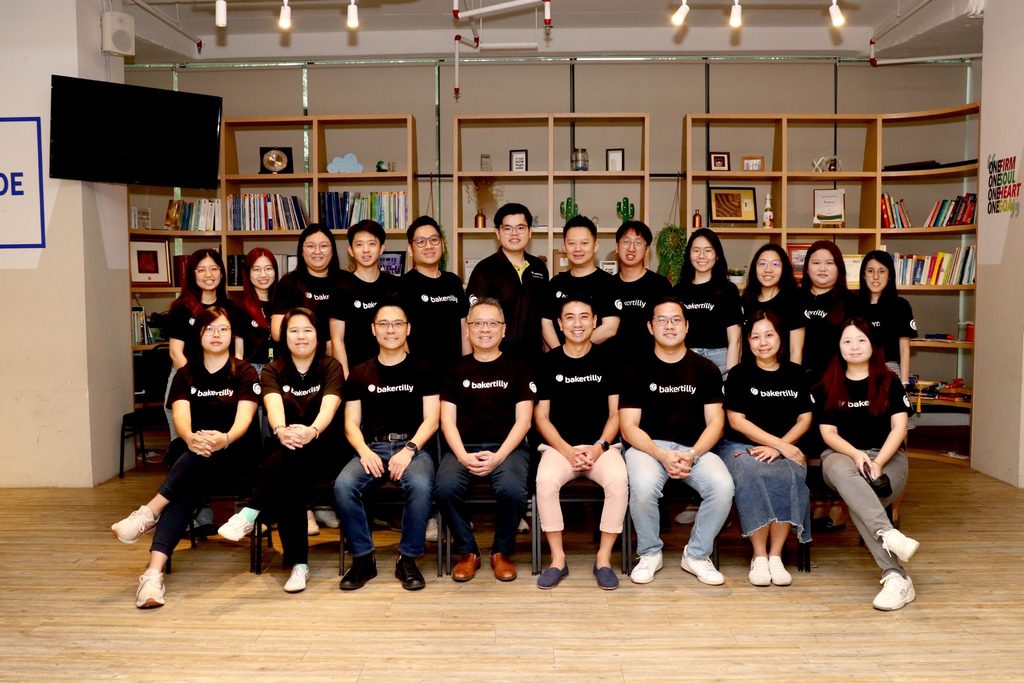
For an SME that might consider listing five or ten years from now, Dato’ Lock’s advice is clear. “They should be looking at the following, financial reporting processes, robust internal controls, even as basic as hiring professionally qualified accountants, forming a capable team and having a sustainable growth strategy.”
“The companies that start early have more options, more flexibility and a smoother journey when the opportunity for IPO arises.” His final advice brings the journey back to its starting point. “Don’t wait until you have decided to list but build a business today that has potential to be listed tomorrow.”
About Baker Tilly
Baker Tilly (Malaysia) is a member of the global network of Baker Tilly International Ltd., the members of which are separate and independent legal entities. The Baker Tilly brand is a US$6.8bn global organisation with 754 offices across 147 territories worldwide.
Baker Tilly (Malaysia) is the 6th largest accounting and advisory firm in Malaysia, with 80 Partners and Directors, 14 offices across Malaysia and a staff force of 1000 professionals.
With more than 45 years of experience in Malaysia, Baker Tilly (Malaysia) has the edge and capacity to provide high-quality audit and assurance, tax and financial advisory services to multinational corporations, publicly listed corporations, organisations in the public sector, and small and medium-size corporations, across industries.