


Rolls-Royce Motor Cars has begun its global testing programme for Project Nightingale, an exclusive Coachbuild Collection limited to just 100 client motor cars.
Announced in April 2026, Project Nightingale combines the design freedom of Rolls-Royce Coachbuild with an all-electric powertrain and an open-top driving experience. The project is designed as an expression of the marque’s current capabilities while offering a glimpse into its future direction.
Preparing the vehicles for clients who intend to drive them around the world has led Rolls-Royce to develop one of the most extensive testing programmes in its history.
Engineers will devote 350 collective weeks to testing Project Nightingale across a range of driving conditions, from Mediterranean coastal roads and the Arctic Circle to the deserts of the Arabian Peninsula.
The prototypes will also be tested at altitudes of up to 2,750 metres and in extreme temperatures, with the programme beginning in Southern Europe.
Returning to Rolls-Royce’s Testing Heritage
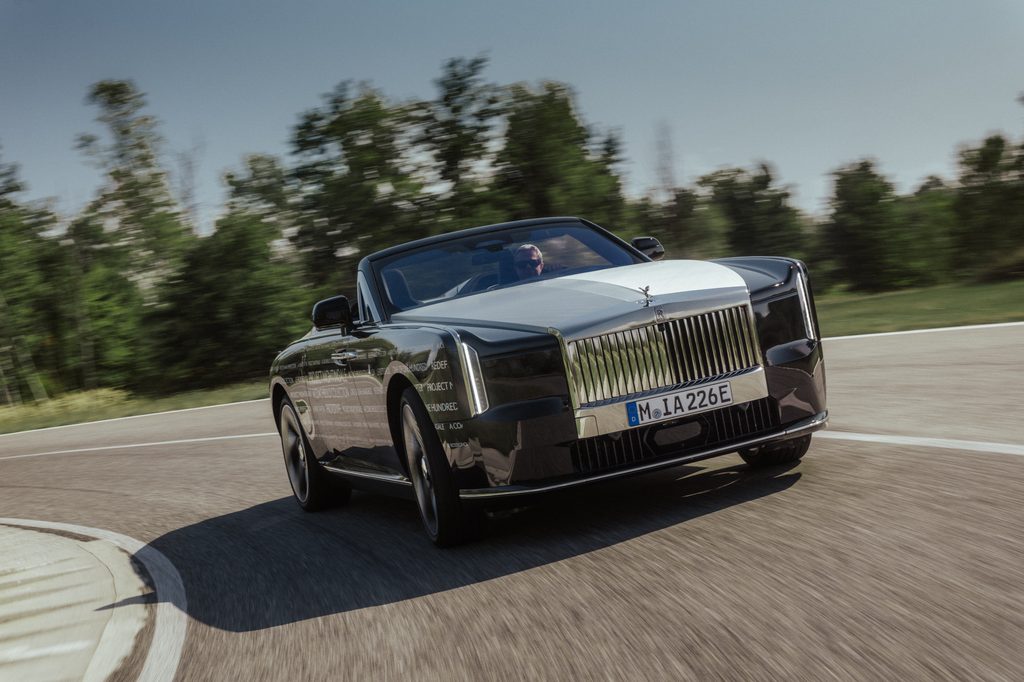
The decision to begin testing in Southern Europe carries particular significance for Rolls-Royce.
The region is where the marque established its approach to rigorous motor car development more than a century ago. In Southern France, Project Nightingale’s name also has a historical connection to Sir Henry Royce.
The name comes from Le Rossignol, French for “the nightingale”, which was the name of the house Royce built for his designers and engineers near his winter home on the French Riviera.
In the early 20th century, Rolls-Royce engineers used the area, alongside the marque’s test facility in Châteauroux, for speed and durability testing. They also conducted trials on roads between Monte Carlo and London.
More than 100 years later, Project Nightingale returns to these roads as it begins its own extensive development and validation programme.
1,430 Hours of Aerodynamic Testing
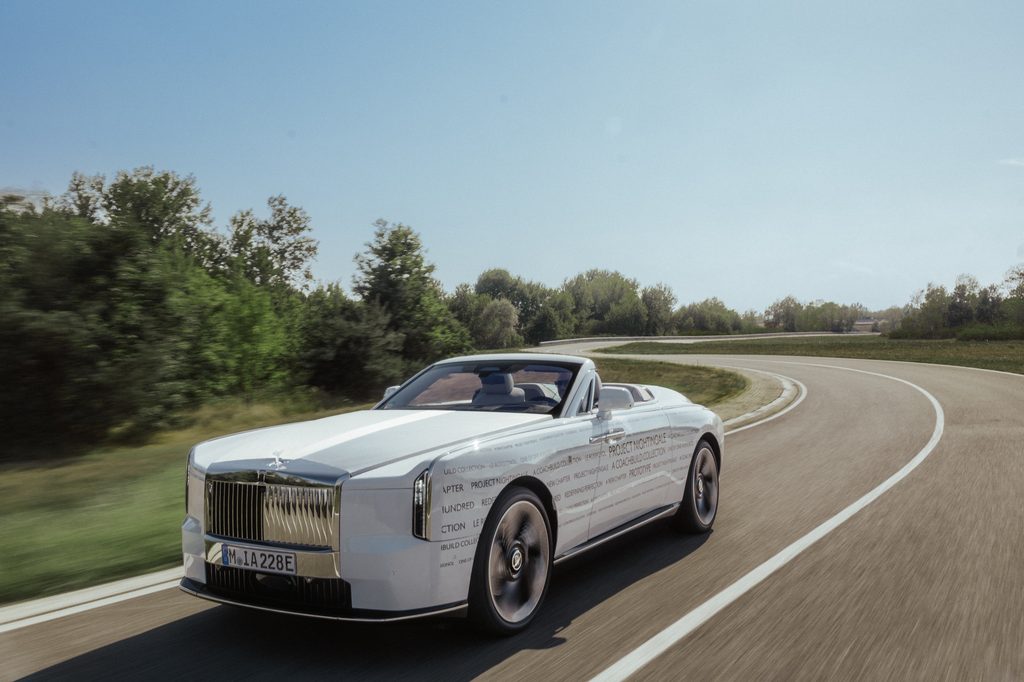
The on-road programme is the latest stage of a development process that began almost three years ago.
Static prototypes have already completed more than 1,430 hours of aerodynamic modelling, including advanced digital simulations and wind tunnel testing.
The results will now be validated at a private high-speed testing facility, where Project Nightingale will reach speeds of up to 155 mph, or approximately 249 km/h.
Engineers will also analyse the vehicle’s aerodynamic performance and work to reduce wind noise to barely perceptible levels, maintaining the combination of refinement, serenity and performance expected of a Rolls-Royce.
Engineering for Open-Top Driving
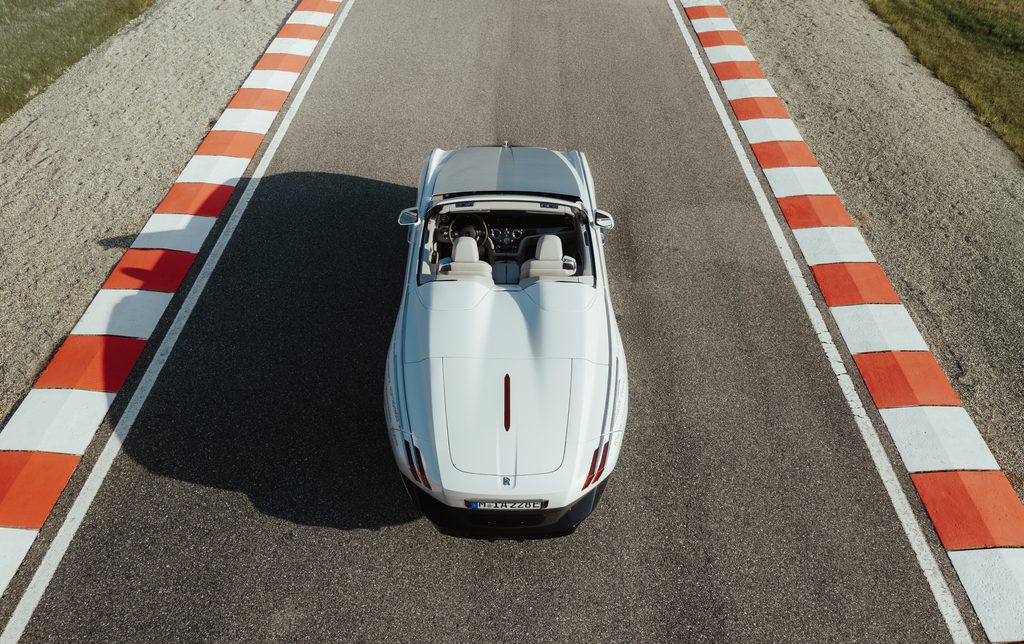
Project Nightingale features several engineering solutions developed specifically for its open-top configuration.
Among them is a fully electric wind deflector developed and patented by Rolls-Royce specifically for the motor car. The system is designed to prevent high-pressure air from circulating back into the cabin from behind.
During testing, the wind deflector will be assessed at different speeds to minimise interior turbulence while helping retain warmth when the vehicle is driven with its roof lowered in colder climates.
The roof itself will also undergo extensive testing. Lined with a sound-deadening material combining cashmere, fabric and high-performance composites, it will undergo 10 separate tests covering its fabric, closing mechanism and overall performance.
Testing will take place in temperatures of up to 80°C, reflecting the expectation that Project Nightingale’s commissioning clients may drive their vehicles throughout the year and across different parts of the world.
The Piano Boot Faces 15,000 Cycles
One of Project Nightingale’s most distinctive engineering details is the Piano Boot, a feature that has never previously appeared on a Rolls-Royce.
The boot opens sideways using a cantilever mechanism and will be subjected to up to 15,000 opening and closing cycles.
The testing is intended to ensure that repeated use does not compromise the smoothness, precision or effortless operation of the feature, preserving the experience for generations of use.
Refining Every Detail of the Coachbuild Collection
For Rolls-Royce Chief Executive Chris Brownridge, Project Nightingale reflects the same spirit of experimentation that influenced Sir Henry Royce’s development of experimental “EX” motor cars in the 1920s.
“Project Nightingale captures the same audacious spirit that drove Sir Henry Royce to build his experimental ‘EX’ motor cars in the 1920s: a desire to discover what Rolls-Royce is truly capable of, unconstrained by convention,” he said.
Brownridge said the testing programme would take the prototypes through the environments in which clients may eventually drive them, while refining the vehicle to an extraordinary degree.
“Nothing less would be worthy of the brand, or this truly exceptional motor car,” he said.
An Electric Future for Rolls-Royce Coachbuild
Project Nightingale brings together Rolls-Royce’s Coachbuild tradition with an all-electric powertrain and open-top design, making its development a significant exercise in combining bespoke luxury with new technology.
Limited to just 100 client motor cars, the collection is being subjected to extensive real-world testing before reaching its final form.
From aerodynamic simulations and high-speed testing to extreme temperatures, open-top airflow and thousands of boot cycles, the programme is designed to ensure that every element of Project Nightingale meets Rolls-Royce’s exacting standards.
The global testing programme will now continue across the climates and environments in which its future clients intend to experience the car.