


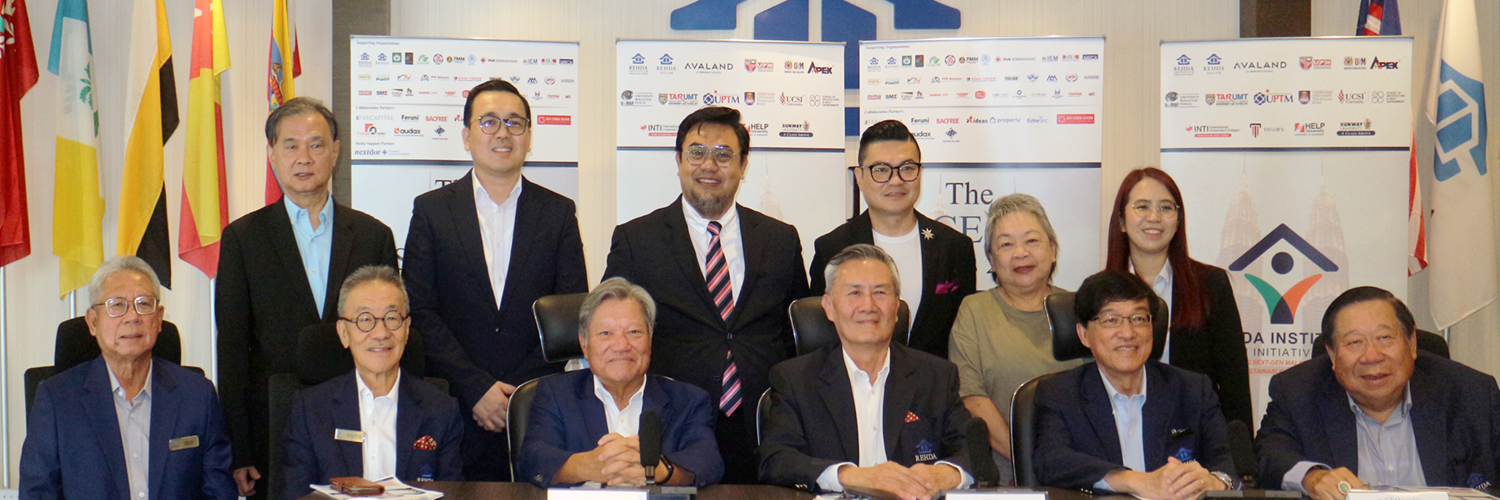
REHDA Institute announced that the CEO Series 2026 will convene an influential gathering of senior stakeholders from the government, banking, finance, manufacturing, construction, and real estate sectors. Attendees will gain unparalleled insights into the economic outlook for Malaysia and ASEAN in 2026, as well as its profound implications for the property sector. Discussions will pivot around critical themes such as attracting quality investment, unlocking the potential of recurring income streams and alternative asset classes, and how developers are strategically adapting to shifting capital preferences and demand patterns. Expert panels will also explore cutting-edge concepts, including rental living models, wellness and tourism-led developments, and experience-driven real estate that are shaping long-term asset performance.
The CEO Series 2026, REHDA Institute’s flagship annual conference, which is supported by more than 18 other associations, will be held on 15 January 2026 at Le Méridien Petaling Jaya, and will be officiated by Amir Hamzah Azizan, Minister of Finance II. The conference will serve as an early-year platform for industry leaders to assess economic conditions and policy signals shaping Malaysia’s business and investment environment in 2026.
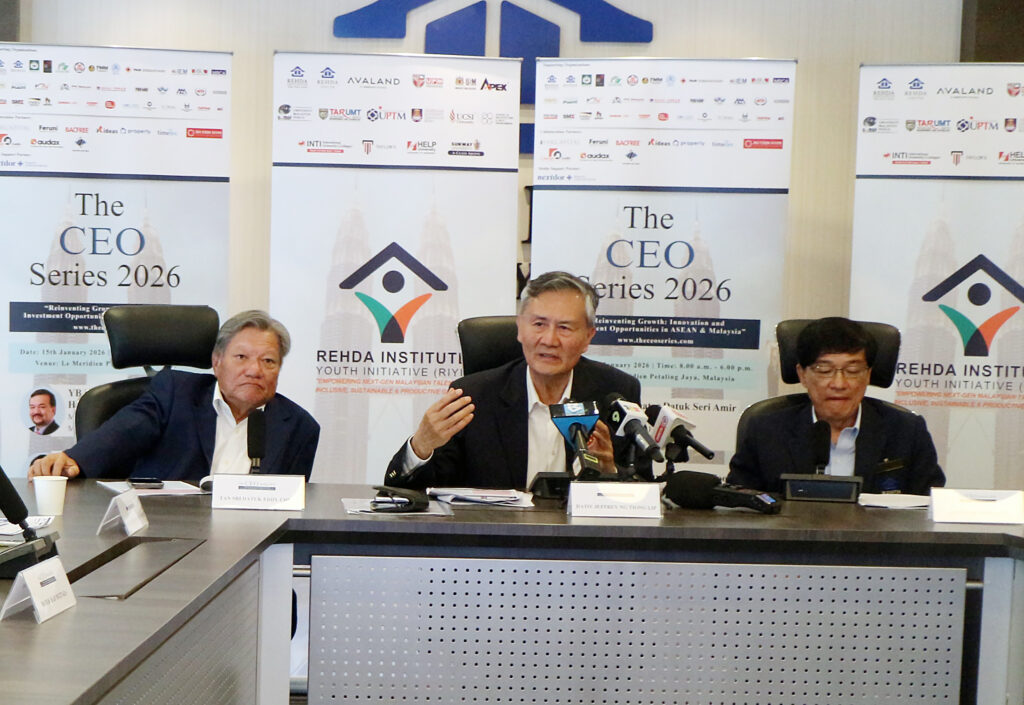
(from left) Tan Sri Datuk Eddy Chen, REHDA Institute Trustee,
Dato’ Jeffrey Ng Tiong Lip, Chairman of REHDA Institute and Datuk Ho Hon Sang, President of REHDA Malaysia.
Dato’ Jeffrey Ng Tiong Lip, Chairman of REHDA Institute, emphasised the interconnected nature of Malaysia’s economy.
“Beyond individual sector contributions to Malaysia’s GDP, the nation’s economic vitality and job creation are rooted in its dynamic, interdependent industrial ecosystem – including manufacturing, services, technology, infrastructure, construction and real estate. Crucially, the strength, innovation, and future potential of this intricate value web are fundamentally powered by the continuous cultivation and strategic deployment of our talent and human capital.”
Datuk Ho Hon Sang, President of REHDA Malaysia, added that adaptability will be critical as global capital becomes more selective.
“As capital becomes prudent and global demand shifts, our ecosystem’s competitiveness and adaptability require strategic investment. This includes infrastructure, technology, and robust human capital development (training and lifelong learning), crucial for long-term alignment and resilience against market trends”
Building on this, discussions at the conference will focus on how Malaysia’s and ASEAN’s economic outlook for 2026 is shaping strategic decision-making across industries, particularly in relation to capital allocation, business models and workforce requirements. The sessions will explore how these macroeconomic forces translate into practical challenges and opportunities for the real estate sector in a more competitive regional landscape.
The programme will also include a dedicated focus on Johor–Singapore integration and Johor Singapore Special Economic Zone (JSSEZ), examining cross-border industrial ecosystems, transit-oriented development and residential demand, as regional connectivity plays an increasingly important role in investment flows and economic activity. Dato Jeffrey Ng added that the Johor–Singapore dynamic has broader implications for Malaysia’s competitiveness.
“Cross-border integration is no longer just about geography or infrastructure, so it requires closer coordination between planning, policy and investment to ensure that economic spillovers translate into sustainable growth and long-term value creation.”
REHDA Institute Youth Initiative (RIYI)
Alongside the conference, REHDA Institute will officially launch the REHDA Institute Youth Initiative (RIYI), a structured human capital development corporate mentorship programme aimed at strengthening workforce readiness by bridging academia and industry. The initiative is designed to provide selected university students with early exposure to industry leadership, real-world decision-making and evolving career pathways within the built environment sector.
The RIYI programme will include a structured corporate mentorship component running through 2026, with mentors drawn from senior leaders across the property and built environment ecosystem, including leading property developers, financial institutions and related industries. Participating organisations include Avaland Berhad and corporate personalities cutting across various sectors.
Apollo Bello Tanco, CEO of Avaland Berhad, believes that the partnership reflects a shared commitment to youth development and community wellbeing, while reinforcing the company’s broader corporate social responsibility agenda.
“We are pleased to partner with Rehda Institute on the RIYI Programme at this timely moment, empowering youth with essential skills while reinforcing our CSR commitment to community wellbeing. As we expand our third-year health screening initiatives, we remain dedicated to uplifting communities and improving lives,” said Apollo Bello Tanco, CEO of Avaland Berhad.
The initiative will be launched during the CEO Series 2026 and officiated by Anthony Loke Siew Fook, Minister of Transport.
Dato’ Jeffrey Ng underscored the importance of early intervention in talent development.
“Effective talent development must begin proactively, upstream in the educational continuum. To merely address workforce challenges at the point of employment is to confront an already vast and often unmanageable skills gap. Therefore, embedding early industry immersion and structured mentorship, commencing at the university level, is not just beneficial but absolutely critical for cultivating a workforce capable of thriving in an increasingly complex, capital-intensive, and regionally competitive landscape.”
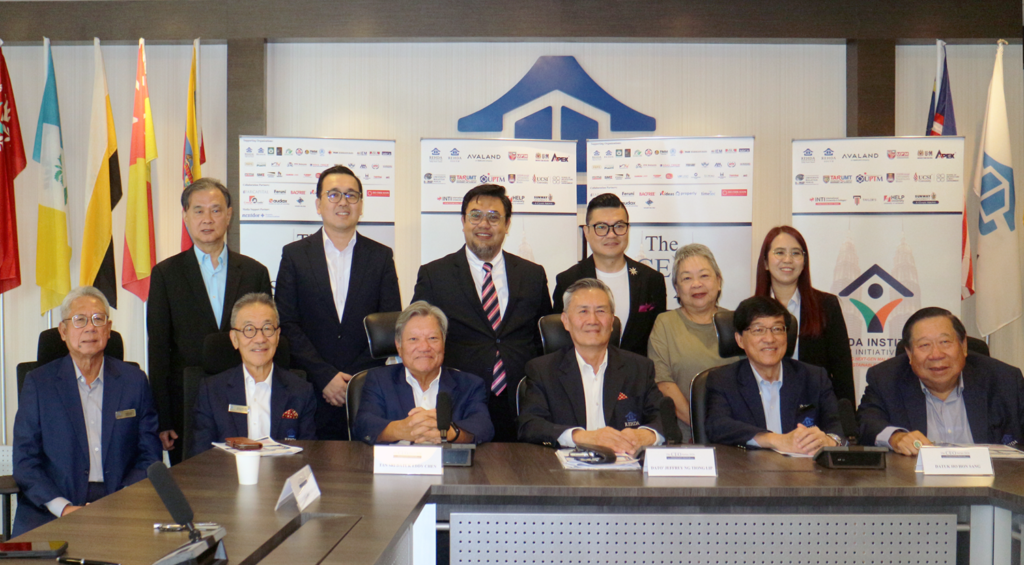
Nuriman Bin Abd Malik, Ar. Dextar Koh Yew Peng, Evelyn Lo and Esther Yeoh.
REHDA Institute emphasised that the parallel focus on economic strategy and talent development reflects the need for more integrated approaches to long-term resilience, as Malaysia competes for investment and skilled labour amid shifting global and regional conditions.