


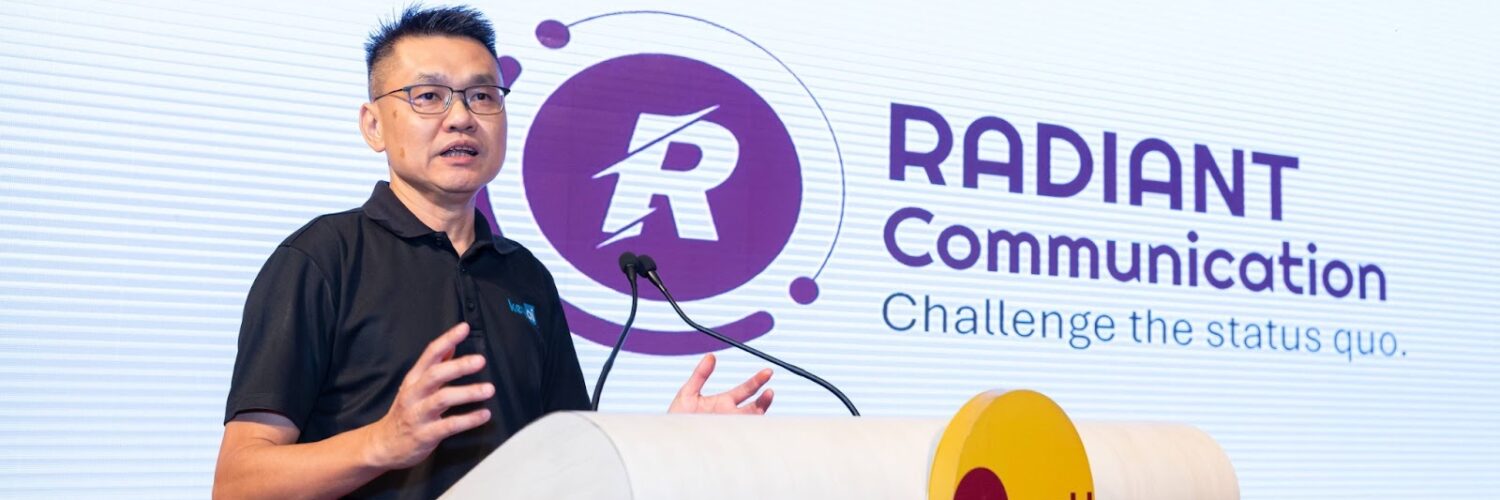
Today, Radiant works in a very different space: customer experience (CX). It helps organisations connect old systems, scattered data, and modern tools—so they can improve customer experience without spending so much that CX gets pushed aside.
At the centre of this transformation is Key Chang, Chief Executive Officer of Radiant’s software division. Since 2007, Key has led Radiant’s software journey for 18 years. From pioneering omnichannel deployments to enabling AI-supported service delivery, Radiant has built a name on consistency, patient engineering, and relentless practicality.
Omnichannel, The Shift That Changed the Game
Key’s first two years at Radiant were focused on building trust. That meant proving the team could effectively deploy omnichannel system integration solutions for its partner, Genesys.
He explained the omnichannel concept. “If you communicate with a customer service person via email today and the next day send a chat via the chatbox, the customer service personnel is not able to see on his or her screen both communication,” he said.
That is the frustration customers feel when they need to repeat themselves. It is also the frustration agents feel when they cannot see the full story. Omnichannel systems solve this by connecting customer interactions into one continuous journey.
“A customer might call, follow up via email, and later send a message through a live chat. With an omnichannel system, the agent would have the full extent and context of the communication at all times,” he added.
Radiant made the deployment of omnichannel solutions its core strength—and it became a key reason clients chose them.
The Deployment That Proved Radiant’s Speed
A major breakthrough came when Radiant won a contract with a large financial institution. The work was complex. The expectations were high. The timeline was aggressive. “The client wanted to unify all communication channels: voice, email, chat, social media, etc. And they needed it deployed fast,” Key said. Radiant delivered the full system in under three months.
That speed earned Radiant recognition from Genesys as the fastest complex deployment globally that year. But Key was clear: the real story was not only speed. The deeper achievement was how Radiant handled complexity—especially when legacy systems and scattered data stood in the way. And that challenge led directly to Radiant’s proprietary innovation: RedSquirrelTM.
Built for Real-World CX Value

Key described what Radiant implements for clients: “We deploy digitalisation for managing end-to-end customer and employee experiences in a contact centre environment. It unifies various communication channels, data, and a suite of powerful features into a single, cloud-native platform.”
But he added something important. “As with any digitalisation journey, things are never straightforward.” The biggest obstacle is often not the new platform. The obstacle is everything that already exists. Many organisations still depend on older systems. These systems may look outdated, but they hold valuable customer information collected over many years. The problem is that the data is often hard to access, scattered, and trapped in different places.
“We needed something that would be able to squirrel into the systems to find the hidden nuts (data),” Key said. That became the idea behind Red Squirrel. Inspired by the squirrel’s habit of storing and finding nuts, RedSquirrelTM was created to search across an organisation’s systems and pull out the customer data that matters.
Because in most companies, customer data is not stored neatly in one place. “Customer data isn’t stored in one neat place,” Key explained. “It’s scattered across core systems, CRMs, Excel files—even PDFs.” RedSquirrelTM is built to connect to those places, retrieve what is relevant, and bring it into one usable view.
In simple terms, it helps companies use the legacy systems they already have, instead of replacing everything just to move forward. It also meant that Radiant was enabling clients to fully leverage the potential of Genesys omnichannel solutions by building a 360 view of the customer.
Four Ways RedSquirrelTM Builds a 360 Customer Picture
Once RedSquirrelTM gathers data, it helps create a fuller view of the customer. Key described this across four dimensions.
1) The descriptive layer: “Who is this customer?”
This includes key details such as identity, location, demographic information, and account status. It forms the foundation for personalisation because the company can recognise the customer properly and respond accurately.
2) The behavioural layer: “What does this customer usually do?”
This looks at patterns over time. It shows how often a customer engages, what they usually buy, and when they tend to face issues. It helps businesses anticipate needs early and reduce problems before they escalate.
3) The interaction layer: “Where has the customer been engaging us?”
This maps the customer’s journey across channels—calls, emails, chatbots, and social media. It preserves context so the customer does not need to repeat the same story, and the agent can support them with continuity.
4) The attitudinal layer: “How does the customer feel?”
This layer captures signals of emotion, tone, sentiment, and loyalty. It helps agents respond with the right care and judgement—especially when the customer is upset, confused, or close to leaving.
“RedSquirrelTM provides the crucial connection needed to fully leverage CX digitalisation,” Key said. “It gives access to the data that matters and that ultimately ties back to solutions that deliver real CX value.”
What “Real CX Value” Means for Businesses
Key explained this in two clear ways.
1) Cost savings without replacing everything
RedSquirrelTM reduces that burden. It allows companies to access customer information in older systems and connect it to modern CX platforms. This helps businesses move forward without massive re-investment. It also makes it easier for decision-makers to prioritise CX, because the effort feels practical rather than overwhelming.
2) Better returns from CX investment
When customer data becomes visible and connected, the company can do more. It can improve outcomes—retention, trust, and targeted engagement—because decisions are based on a fuller customer picture. This would also mean that investment in CX systems such as Genesys is fully maximised.
Culture, Team, and Why Clients Stay with Radiant
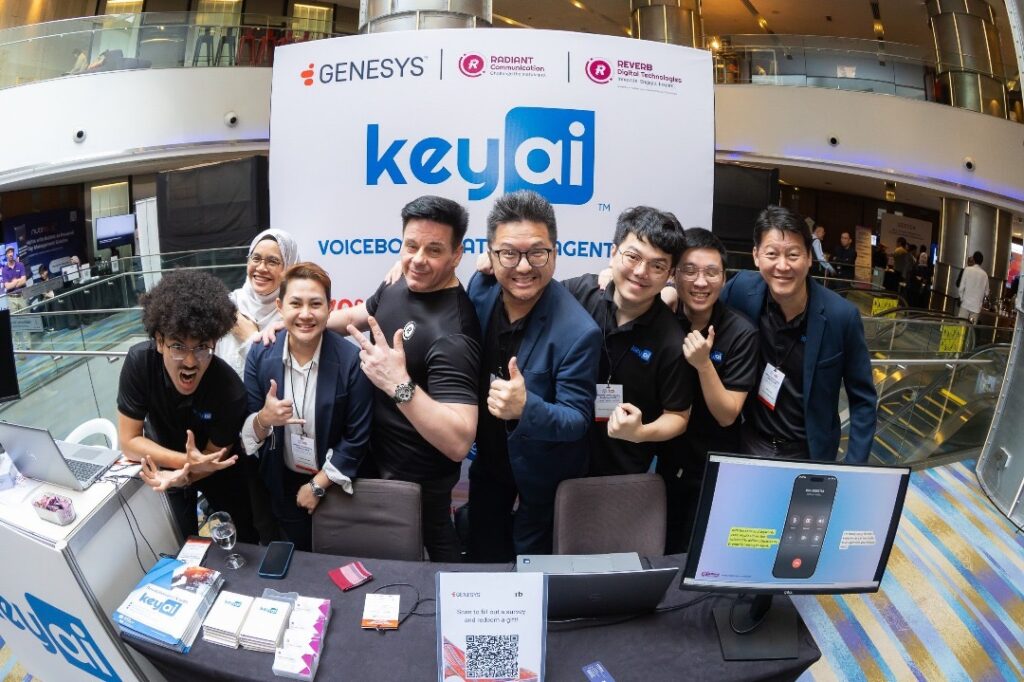
Radiant’s structure reflects its history and evolution.
Both hardware and software teams are based in Kuala Lumpur under Reverb Digital Technologies— fully owned by the Radiant Communications Group.
“We don’t have layers of bureaucracy. When our customers ask for something, we do it,” he said. “And if it really needs extra work, we discuss compensation honestly.”
That direct way of working has helped Radiant keep long-term clients—despite competition. Clients stay because Radiant is willing to support, adjust, and co-create.
Key Chang presented a keynote on Radiant’s RedSquirrelTM and Key.AI capabilities at the 10th Annual CX Summit 2025, organised by the Call Centre Association of Malaysia (CCAM), which brought together more than 600 leaders, innovators, and practitioners from across the Asia-Pacific region, reaffirming Malaysia’s growing influence as a hub for customer experience (CX) excellence. The State of CX in Malaysia 2025 report by CX Malaysia is now available online.