
Pahang is taking steps to strengthen its agricultural and technology ecosystem through a new public-private collaboration aimed at bringing artificial intelligence (AI), emerging technologies and smart agriculture closer to local communities.
The initiative was launched through the Smart Harvest Series: Durian Meets AI Agri-tech Summit, initiated by YB Dato’ Mohamad Nizar bin Dato’ Sri Mohamad Najib, Pahang State Exco for Investments, Industrial Development, Science, Technology and Innovation.
The summit, held in Pekan on 1 October 2026, focused on how AI and emerging technologies can be responsibly applied to empower communities, improve public sector efficiency and address real-world challenges in agriculture.
For YB Dato’ Mohamad Nizar, the initiative also reflects a commitment to grooming anak Pahang by giving local communities greater access to technology, knowledge and opportunities to participate in the state’s digital transformation.
Building a Pahang Technology Community
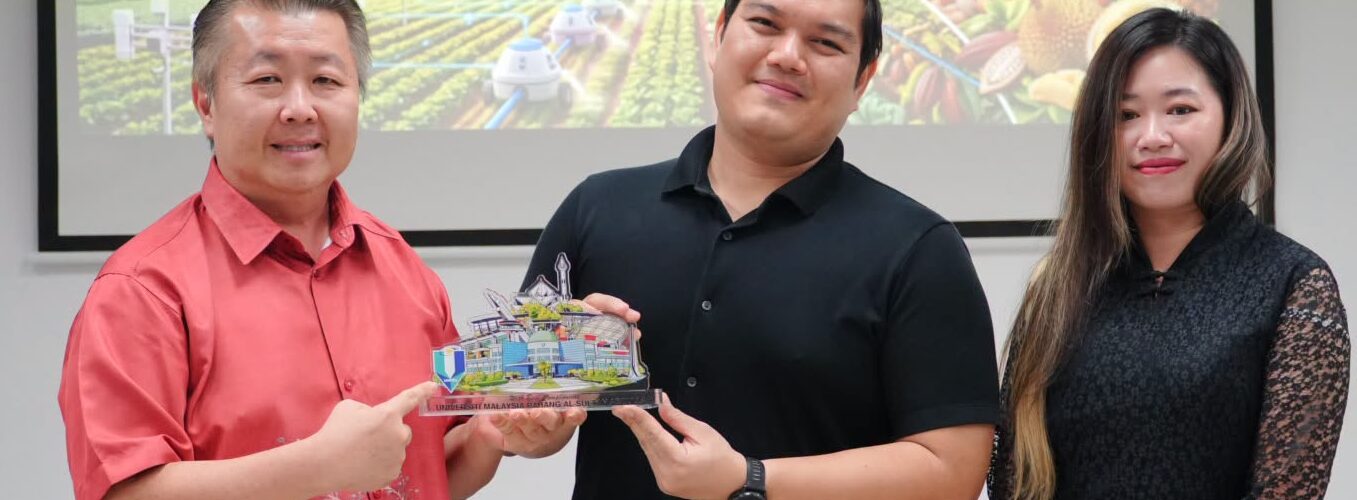
At the centre of the initiative is a public-private collaboration involving the Pusat Khidmat DUN Peramu Jaya, Universiti Malaysia Pahang Al-Sultan Abdullah (UMPSA) and Global Renaissance Sdn Bhd.
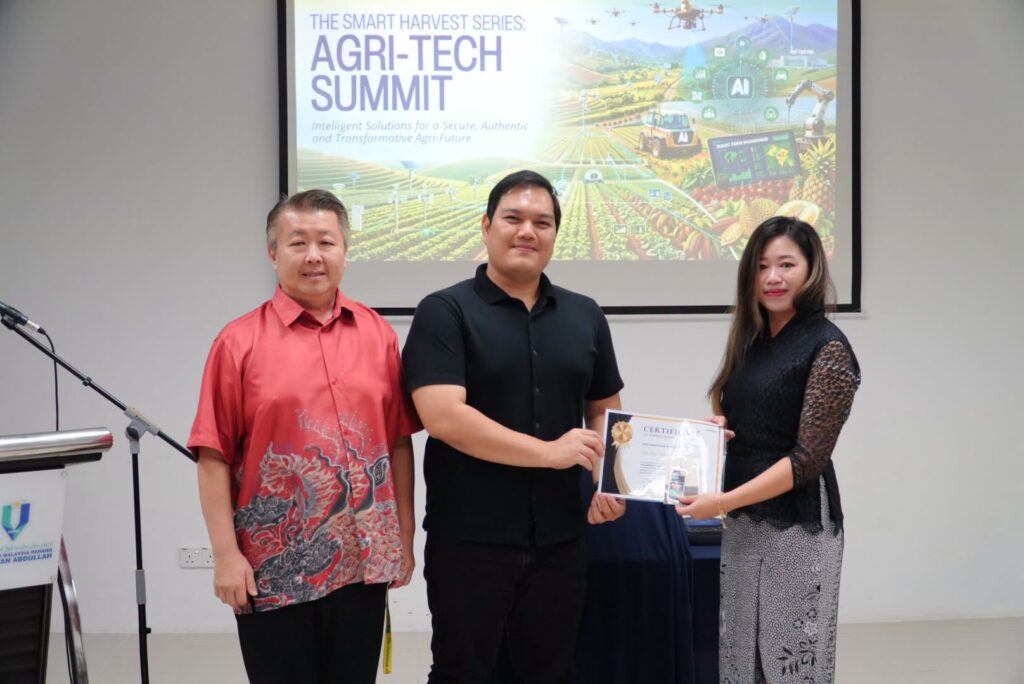
Ms Jane Teo, Managing Director of Global Renaissance, unveiled plans to build a dedicated Pahang Tech Community by connecting local talent with proven technologies, international experts and innovation models from overseas, including Silicon Valley.
The initiative aims to give Pahang’s SMEs and students access to local technology sandboxes where they can test, validate and refine technologies against real-world challenges.
By creating an environment where technologies can be experimented with locally, the collaboration seeks to bridge the gap between international technology models and the needs of Pahang’s communities and industries.
From Technology Concepts to Real-World Applications
The summit brought together experts from academia, agriculture, technology, business and professional services to discuss how digital transformation can move beyond theory and into practical applications.
Professor Chm. Dr Mohd Hasbi bin Ab Rahim, Deputy Vice-Chancellor of UMPSA, highlighted the need for stakeholders to move beyond theoretical concepts towards tangible and commercialised solutions.
The importance of real-world testing was reinforced by Muhammad Adlan bin Ma’arup, General Manager of Tanah Makmur Berhad, who discussed the challenges involved in adopting technology at farm level. He also offered a 95-acre segment of a farm as a testing ground for developers.
This creates an opportunity for technology providers and researchers to evaluate solutions under actual agricultural conditions rather than relying solely on demonstrations or controlled environments.
Linking Smart Agriculture with the Circular Economy
The summit also explored how emerging technologies could intersect with sustainability and the circular economy.
Assoc. Prof. Dr Chen Kai Hsien from Sinetics Accreditation International Ltd introduced a circular economy model linking local grain production with the creation of Sustainable Aviation Fuel.
Meanwhile, Alvin Tan Keng Yi, Senior Legal Associate of Daljit Singh Partnership, highlighted the legal considerations surrounding technology adoption and foreign investment.
He stressed the importance of robust contracts and urged local players to protect their data and intellectual property when engaging with foreign technology investors.
These discussions highlighted that smart agriculture is not simply about adopting new technology. Successful implementation also requires consideration of commercial, legal, data and intellectual property issues.
Putting AI Into Business Workflows
The role of AI in creating practical business value was another key focus of the summit.
John Pang, Solutions Engineer from Galaxy Software Services, demonstrated how AI needs to be incorporated into verifiable workflows and systems of record to generate meaningful business value while maintaining human accountability.
The summit also featured an Agentic AI Masterclass led by Thu Ya Kyaw, Senior DevRel Engineer from Google, who focused on building and simplifying generative AI solutions for developers and technology builders.
The masterclass introduced multimodal AI models and demonstrated how custom AI agents could be developed to address specific problems, including applications such as identifying durians using AI agents.
Data Quality Remains Critical to Smart Farming
While AI can offer new capabilities for agriculture, the summit also highlighted the importance of having reliable data to support those systems.
Assoc. Prof. Ir. Ts. Dr Roshahliza Binti M Ramli of UMPSA’s Center for Bioaromatic Research emphasised that AI cannot be effective without high-quality data from the field.
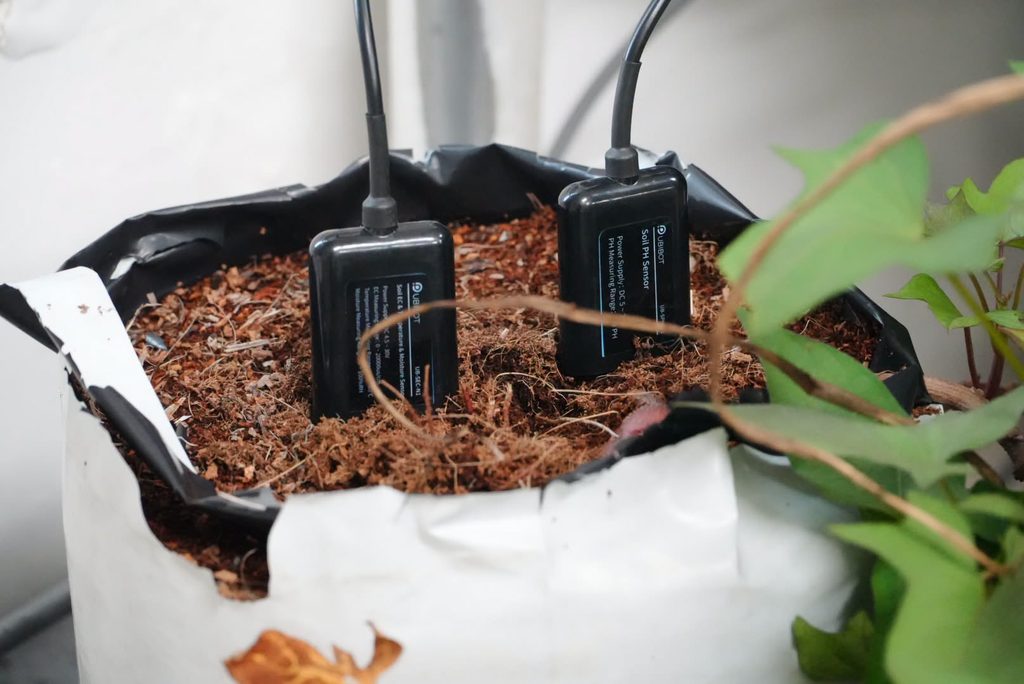
She advocated controlled pilot testing of Internet of Things (IoT) systems before large-scale deployment, reinforcing the importance of validating agricultural technologies under real operating conditions.
Professor Madya Dr Mohamed Ariff bin Ameedeen, research fellow of UMPSA’s Centre for Artificial Intelligence & Data Science, meanwhile shared practical experiences from the digital transformation journeys of startups.
His presentation demonstrated how academic research can be translated into deployable industry applications, strengthening the connection between research institutions and businesses.
Connecting Researchers with Agricultural Challenges
The summit also introduced an Agricultural Industry Reverse Pitching Session, allowing industry players to communicate their operational challenges directly to researchers and technology providers.
Rather than technology developers presenting solutions without first understanding industry needs, the reverse pitching approach gives agricultural businesses an opportunity to explain the problems they are actually facing.
The aim is to encourage researchers, developers and businesses to build solutions around genuine market requirements.
Affandi bin Mohd Isa, CEO of Pahang Go and representative of YB Dato’ Nizar, reinforced this approach by stressing that research and technology should move beyond demonstrations and be actively implemented to solve real industry bottlenecks.
Grooming Local Talent for Pahang’s Digital Future
The various initiatives presented during the summit reflect a broader ambition to build local technological capabilities alongside agricultural innovation.
Through the proposed Pahang Tech Community, local SMEs and students can gain opportunities to experiment with technologies, engage with international expertise and develop solutions for local challenges.
The collaboration between the Pusat Khidmat DUN Peramu Jaya, UMPSA and Global Renaissance provides a framework for connecting these local capabilities with international technology networks.
By combining YB Dato’ Mohamad Nizar’s state-level vision with Jane Teo’s international experience and networks, the initiative aims to give anak Pahang a more direct role in developing the technologies that could shape the state’s agricultural future.
Building a Smarter Agricultural Economy
The Smart Harvest Series ultimately positioned technology as a means of addressing practical agricultural and economic challenges rather than an end in itself.
From AI agents and IoT systems to field testing, academic research and international technology partnerships, the summit brought together different parts of the innovation ecosystem around a common objective: developing solutions that can work in the real world.
The public-private partnership is intended to help make Pahang’s agricultural economy smarter, more connected and more technology-driven, while creating opportunities for local students, SMEs, researchers and technology providers to participate in that transformation.
For Pahang, the ambition is not simply to adopt technologies developed elsewhere, but to give its own communities the opportunity to test, adapt and eventually build solutions around the challenges they understand best.