
by Aileen Anthony
“Let’s Go, Jalan Terus”
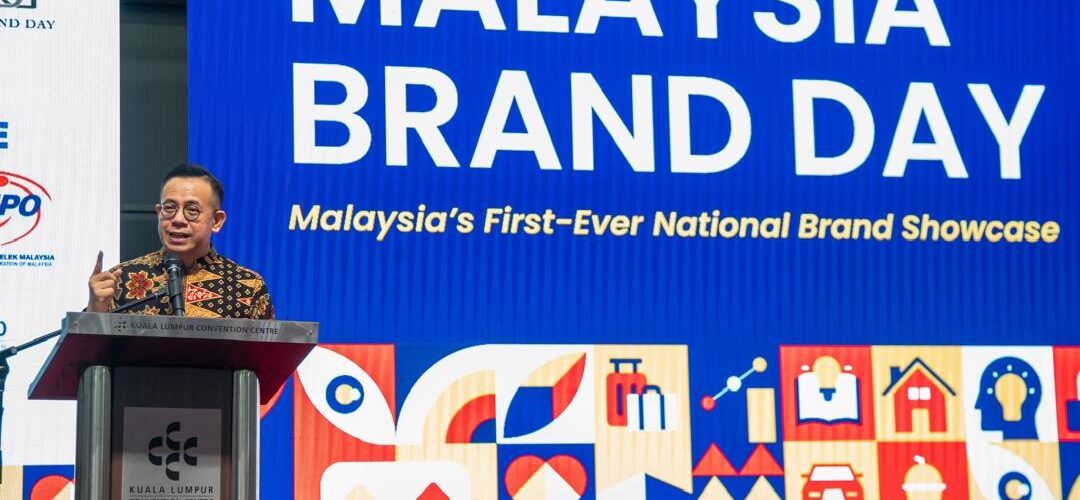
“For the last two years, I looked after employees, so much so that my friends who are bosses were scolding me. Now the Prime Minister has given me a new mission, to take care of employers as well.”
This blend of humour and honesty framed a speech that balanced gratitude with urgency and policy with purpose. With branding giants, SME founders, and iconic entrepreneurs in the audience, Sim offered a rallying call to protect Malaysia’s economic interests and to grow them through homegrown creativity, capability, and character.
Malaysia’s Brand Giants
As always, Sim’s speech was anchored in encounters. With an eye toward the past and a bold vision for the future, he spotlighted Malaysian brands that have earned global admiration through intervention, innovation, grit, and legacy.
“There’s a man in this room who is not just a person, but a brand,” Sim said of Datuk Professor Jimmy Choo. “The man is a brand—on the level of John Hancock, Walt Disney, and Ferragamo. His signature is his logo!” The crowd laughed, but the point was clear: Malaysia has already shown the world what is possible.
He went on to reference Eu Yan Sang, originally founded over 150 years ago to combat opium addiction among Chinese labourers in Malaya. Today, it stands as Southeast Asia’s largest traditional Chinese medicine retail brand. He also cited Ghee Hiang, famous for its “tau sar piah” and baby brand sesame oil, a Penang-born brand now in its 8th generation.
Sim wore a batik shirt to the event—not just for fashion, but to celebrate local craftsmanship. “This was made in Terengganu,” he shared, crediting a brand that began as two matriarchs sewing cheongsams and grew through the power of digitalisation.
He also pointed to more recent success stories, such as BloomThis, a florist founded by a mother in Penang that is now a flourishing e-commerce business run by her son and daughter-in-law.
“The society is right, the timing is right, and the geography is right,” Sim declared. “We are in the middle of global economic superpower zones—now we just need to get the strategy right.”
Ministerial Priorities
Then Sim outlined the ministry’s priorities for the next couple of years through a straightforward framework. Accelerate Productivity, “We want to help you—whether through talent, digitalisation, or automation—so you can increase productivity and move up the value chain.” Sim also pledged to simplify procedures, reduce red tape, ensure the government is not an obstacle but a partner, and enable access to financing; and to develop market access for businesses to expand locally and globally.
Beyond domestic initiatives, Sim urged businesses to consider the bigger picture: the shifting tides of the global economy. “We are facing twin geoeconomic challenges—intensifying global competition and extreme protectionism by superpowers,” he said.
Malaysia’s existing economic model, rooted in being a cost-competitive base for foreign manufacturing, had served the country well for five decades. “Some of you made your first pot of gold through this model,” he acknowledged. But now, the question is whether that same model can continue to drive Malaysia’s growth.
“If we are really honest with ourselves,” he said, “business as usual means businesses going out of business.”
Core National Initiatives
This transition from “Made in Malaysia” to “Made by Malaysia” was Sim’s central theme. “We don’t want to just be a cost centre—we want to be a value centre,” he said. It’s not enough to manufacture for others; Malaysia must begin creating, branding, and owning its own global products.
He echoed Vice-President of the Branding Association of Malaysia, Eden Yap’s sentiment that Malaysia must work towards becoming a recognised global brand. “2026 is the year to make Malaysian businesses great,” he declared.
Sim also pointed to key government initiatives: RM2.5 billion in additional SME financing, SST exemptions, tax refunds, infrastructure projects, and targeted consumption-boosting measures.
“It’s only my first week in office,” he reminded the audience. “We have already called in SME associations and representatives. We want to hear from you.”
“What I want to say is this: we want to send a clear signal. We’re serious about getting things right. We understand what’s hit you—we know where the pain points are. And we’re working to enable businesses to break through and thrive.”
“Let’s go! Jalan Terus!” he concluded.