

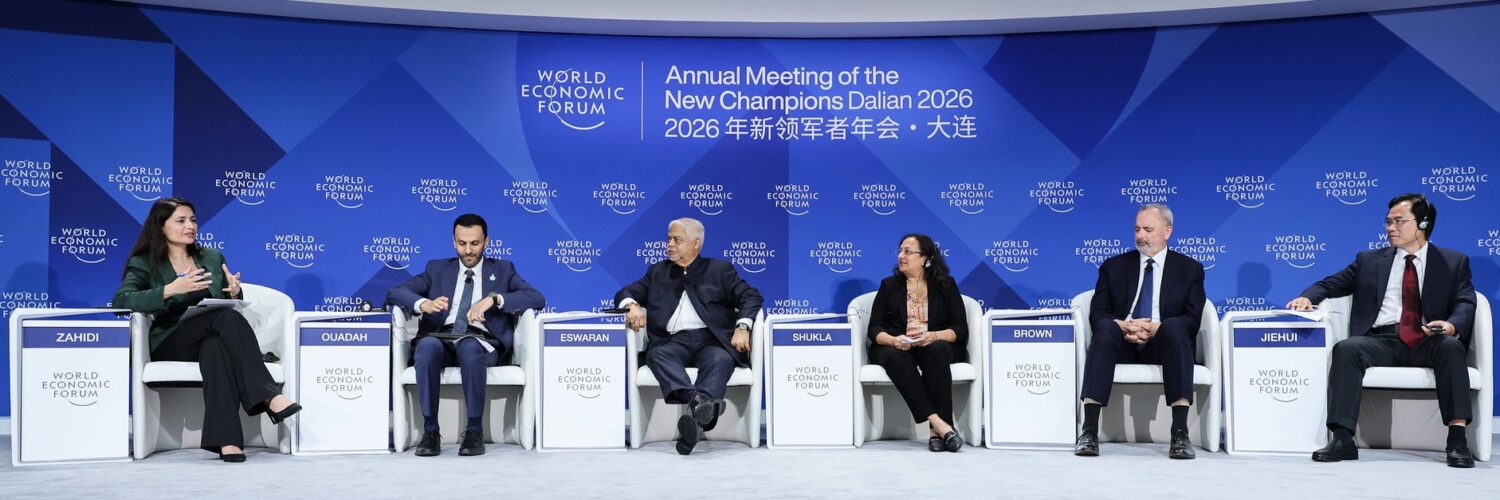
As artificial intelligence continues to transform industries, the question of where the next wave of jobs will come from is becoming increasingly urgent. Speaking at the World Economic Forum’s Annual Meeting of the New Champions 2026 in Dalian, China, Dato’ Sri Vijay Eswaran, Founder and Executive Chairman of QI Group, argued that entrepreneurship must be at the heart of the answer.
Participating in the panel discussion “The Next Billion Jobs”, Eswaran joined global policymakers, business leaders and workforce experts to examine how governments, businesses and entrepreneurs can create more inclusive and sustainable employment opportunities in a rapidly changing economic landscape.
The discussion comes at a time when the scale of the challenge is becoming impossible to ignore. According to the World Bank, 1.2 billion new workers in developing economies will compete for only around 400 million jobs over the next 10 to 15 years. Against that backdrop, Eswaran positioned entrepreneurship not simply as a business activity, but as one of the most scalable and sustainable engines of job creation.
Why Entrepreneurs — Not Algorithms — Will Create the Next Wave of Jobs
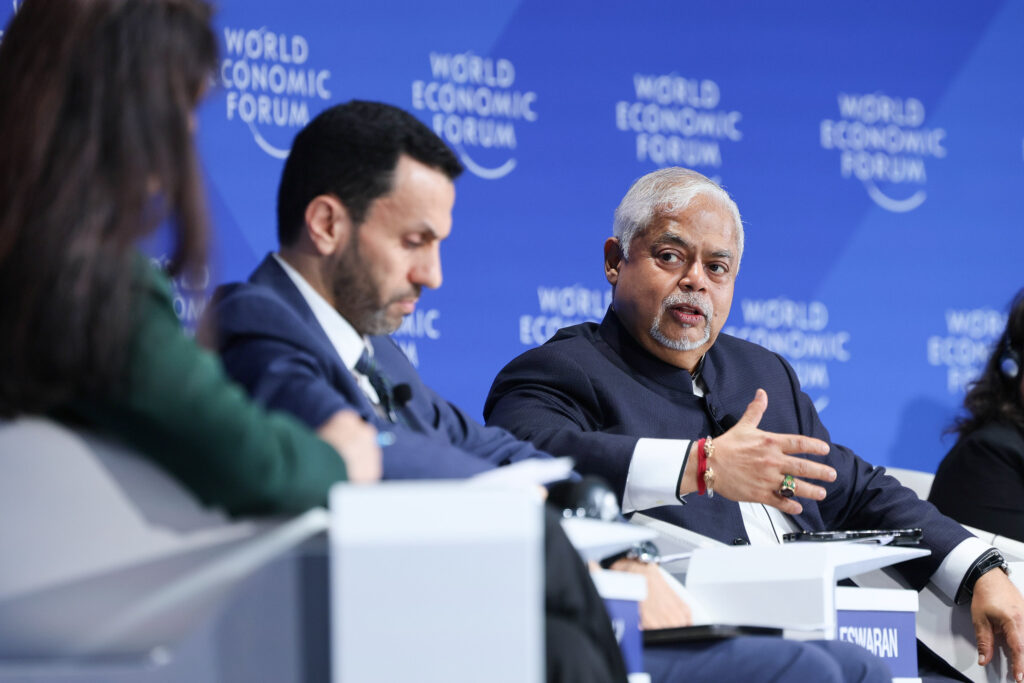
Building on the ideas outlined in his recent article, Why the Next Billion Jobs Will Be Created by Entrepreneurs, Not Algorithms, Eswaran stressed that while technology can unlock productivity and create new possibilities, long-term job creation ultimately depends on people.
For him, the future of employment lies not only in innovation itself, but in the individuals who can identify opportunities, build enterprises and create value within their own communities. Entrepreneurs, he suggested, are best placed to turn technological change into real economic participation.
He also pointed to Southeast Asia’s fast-growing entrepreneurial ecosystem as evidence that this shift is already underway. In markets such as Malaysia, Vietnam and Singapore, small businesses and emerging enterprises are increasingly using digital tools and AI technologies to launch new products, expand into new markets and generate employment.
Eswaran noted that SMEs, entrepreneurs and smaller enterprises are likely to drive much of this transformation, particularly in dynamic regional markets where innovation can move faster and respond more directly to local demand.
Southeast Asia’s SMEs Are Already Leading the Shift
One of the strongest themes from Eswaran’s remarks was the growing role of small and medium-sized enterprises (SMEs) in shaping the future of work. While larger corporations may be among the earliest adopters of new technologies, SMEs are increasingly demonstrating how digital tools can be translated into practical growth, agility and job creation.
Across Southeast Asia, smaller businesses are beginning to use AI and automation not just to improve productivity, but to strengthen competitiveness, reach new customers and create more resilient business models. For economies such as Malaysia, where SMEs form a critical pillar of national growth, this has major implications for employment, innovation and inclusive development.
In this context, entrepreneurship becomes more than a private-sector success story. It becomes a broader economic strategy — one that can widen access to opportunity, support local enterprise development and help economies respond to disruption more effectively.
Reskilling for an AI-Driven Future of Work
Eswaran also made clear that AI and automation will reshape work, but argued that the more important question is how societies respond to that change. Rather than treating AI as a threat to employment, he called for a stronger focus on how it can be used to expand opportunity — provided workers, entrepreneurs and institutions are prepared for the transition.
A major part of that response, he said, must be continuous reskilling.
As industries evolve and the gig economy expands, the ability to adapt, learn and acquire new skills throughout one’s working life will become increasingly essential. Eswaran argued that reskilling should no longer be viewed as a one-off intervention, but as a core part of long-term career development.
He also highlighted the importance of public-private collaboration in building a workforce that is equipped for the realities of an AI-enabled economy. Universities, students, start-ups, innovation ecosystems and businesses all have a role to play in ensuring that talent development keeps pace with technological transformation.
For organisations with entrepreneurship embedded in their culture, he suggested, the challenge is not only to adopt new technologies but to re-instil an entrepreneurial mindset into the next generation of workers — one that is more adaptive, opportunity-driven and open to reinvention.
Building the Foundations for the Next Billion Jobs
While AI is often framed as the defining force of the next economic era, Eswaran’s message in Dalian was that technology alone will not create inclusive growth.
Creating the next billion jobs, he argued, will require stronger ecosystems that support entrepreneurship and widen access to the fundamentals of economic participation. That includes education, digital infrastructure, access to capital, enterprise support and market opportunities.
He called on governments, businesses and educational institutions to work together more deliberately in building these foundations. Policymakers, in particular, should not focus solely on filling existing jobs, but on creating the conditions for more people to become entrepreneurs, innovators and job creators in their own right.
This people-centred approach to economic development is especially relevant for developing economies, where the scale of labour market demand requires more than incremental hiring. It requires systems that help individuals move from job-seekers to enterprise-builders.
A Broader Commitment to Entrepreneurship and Inclusive Development
Dato’ Sri Vijay Eswaran’s participation at the World Economic Forum’s Annual Meeting of the New Champions 2026 also reflects QI Group’s wider commitment to conversations around entrepreneurship, innovation and inclusive economic development.
As businesses and governments navigate a period of rapid technological and economic change, the discussion in Dalian reinforced a central point: the future of work will be shaped not only by machines or systems, but by people. The societies that invest in skills, entrepreneurship and opportunity will be the ones best positioned to turn innovation into long-term, inclusive and sustainable growth.
In an age increasingly defined by AI, Eswaran’s message was clear: the next billion jobs will not be built by algorithms alone. They will be created by people with the tools, support and confidence to build something of their own.