


By Melvin Phun, Country Manager of Jabra Malaysia
Jabra’s recent study, Cost of Bad Meetings, found that unnecessary meetings, technology failures and unclear outcomes are costing companies more than US$130 million a year in lost productivity. They call this problem “meeting debt”: the unrecorded time, energy and focus bad meetings take from people.
For Malaysian organizations, this matters more than ever. Hybrid work is now firmly part of how the country operates. Since 1 August, eligible civil servants have worked remotely two days a week under the Government’s new hybrid work policy, and much of the private sector settled into a similar rhythm long ago. That makes meetings, whether in a boardroom or at home, the place where most collaborations happen, and where bad meetings cost organisations the most.
Where Does the Wasted Time Go?
An average worker spends eight hours a week in meetings; and Jabra’s study shows that 58% of that time is unnecessary, adding up to roughly a full working month of lost productivity per person every year. The damage extends outside of meetings, with 66% of workers regularly leaving meetings with unclear action items. 59% need a follow-up meeting as a result, and end up doing extra work to sort out the confusion. One bad meeting leads to another, then a round of clarifying emails, then to work done twice.
Technology is a big part of the problem. 75% of hybrid meetings run into at least one technology failure, and each failure costs nearly 11 minutes per meeting; or about three working days per employee every year. Large meeting rooms lose 30% more time to technology failures than small ones. The boardroom, where many of the most important decisions are made, is often where meetings struggle the most.
The Effects of Inefficient Meetings
Bad meetings also take a toll on how people feel about their work. 87% of workers feel some level of dread about meetings proportional to the number of meetings on their calendar. Additionally, 42% of workers reach their energy limit within two hours of back-to-back meetings, and 83% within four. This leads to many workers running on empty, tired and lacking focus, and still being expected to contribute for the rest of the work day.
The effects of inefficient meetings aren’t equally distributed; and poor meeting technology makes the gap wider. Around half of remote guests are forgotten, talked over, or left out. ‘
Women experience this more; 59% are excluded from side conversations when joining remotely, and women report worse experiences than men on being talked over, hearing the room and seeing who is speaking.
Seniority matters too. Individual contributors are much more likely than those at C-suite level to be overlooked in meetings. As hybrid work spreads across both the public and private sectors, making sure the person onscreen is heard as clearly as the person at the table is a basic matter of fairness.
AI Cannot Fix a Broken Meeting, Purposeful Redesigning Can
Many organisations are looking to AI to fix this. Three in four workers have tried AI meeting tools such as transcription and automated summaries, but fewer than one in three use them regularly, due to trust and accuracy issues. AI is only as good as the meeting it listens to. Garbled audio produces a garbled transcript, and a meeting with an unclear decision produces an unclear summary. AI can improve a good meeting, but it cannot repair a broken one.
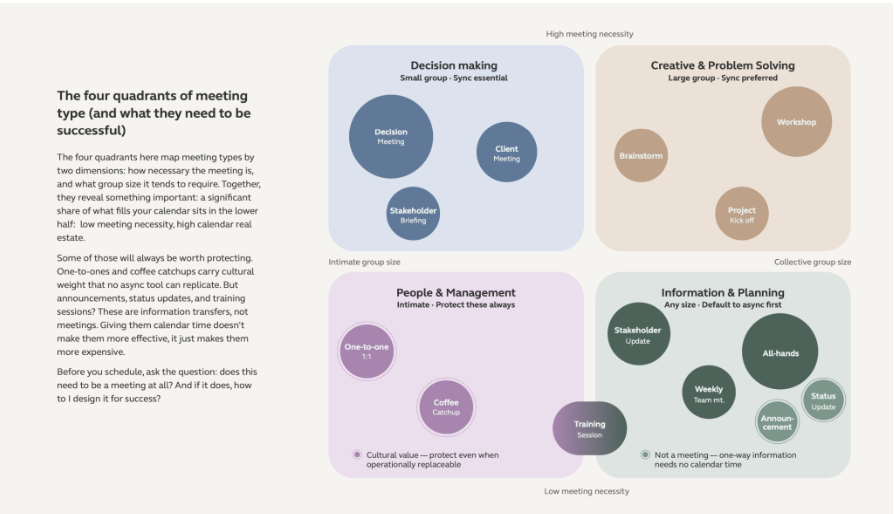
However, meeting debt can be fixed, and the first step is free. Jabra groups meetings into four types, with each one needing a different approach.
- Decision-making meetings should be small and focused, with a pre-read sent in advance.
- Creative and problem-solving sessions need a facilitator, a clear goal and the right tools, failproofed beforehand.
- One-to-ones and informal catch-ups build unmatched trust and culture.
- Announcements, status updates and routine information sharing are one-way communication. An email, shared document or short recorded update will often do the job better.
Before sending the next invite, ask: does this need to be a meeting at all? And if it does, what will make it work?
About the Author
Melvin Phun is the Country Manager of Jabra Malaysia, where he helps organisations build better collaboration experiences through professional audio and video solutions.