

The study of 3,000 respondents across Singapore, Thailand, Malaysia, Indonesia, Vietnam, and the Philippines showed that affordability dominated public concern during 2025. On average, 75% of Southeast Asians identified the cost of living as a key national issue.
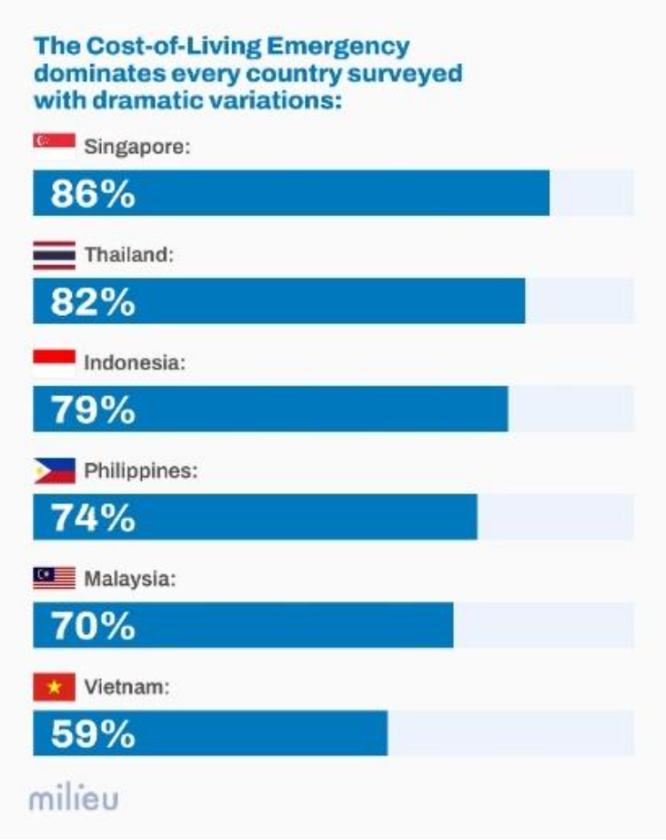
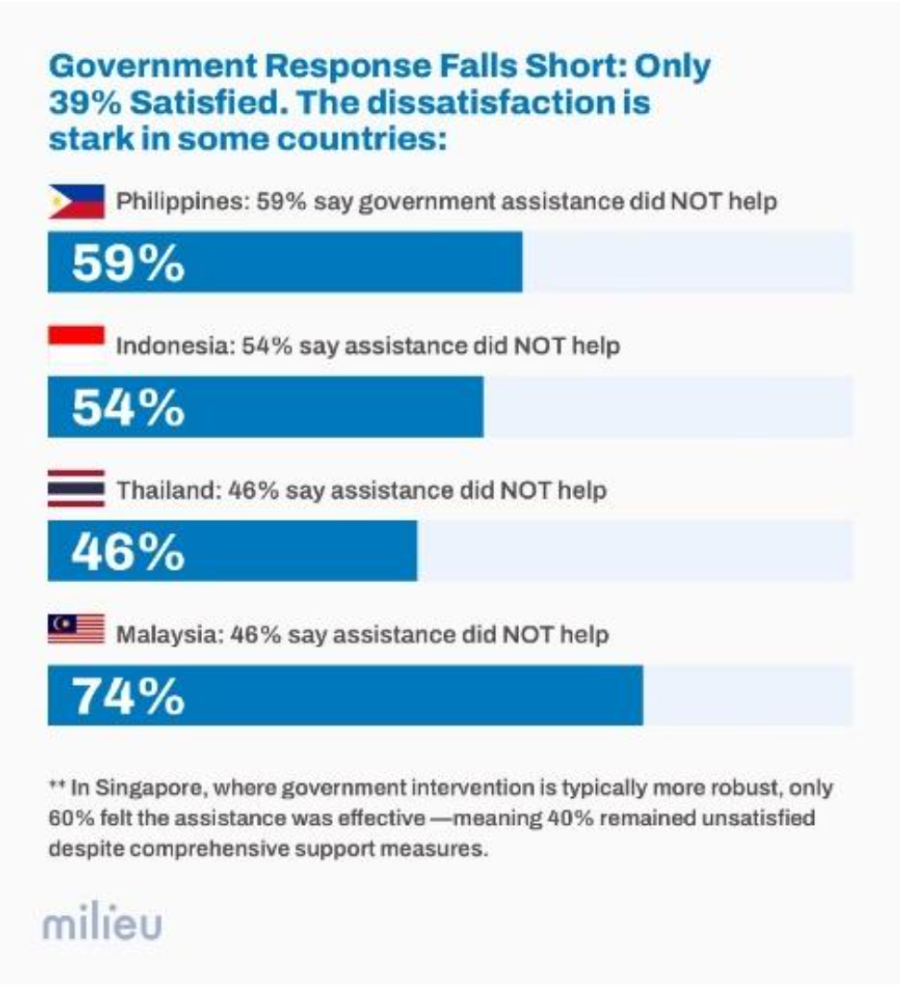
Concern was highest in Singapore (86%), followed by Thailand (82%), Indonesia (79%), the Philippines (74%), Malaysia (70%), and Vietnam (59%). Cost pressures were not viewed as a short-term inflation spike, but as forces reshaping household behaviour, priorities, and trust in institutions. Among those citing cost pressures, only 39% said government incentives or assistance helped them cope meaningfully, pointing to a persistent gap between policy measures and lived experience.
The findings showed that rising prices, employment uncertainty, and health-related anxieties reinforced one another during 2025. Households prioritised essential spending on food, transportation, utilities, healthcare, and education. Housing affordability added further strain, with 47% of Singaporeans and 43% of Vietnamese respondents identifying access to affordable housing as a major concern.
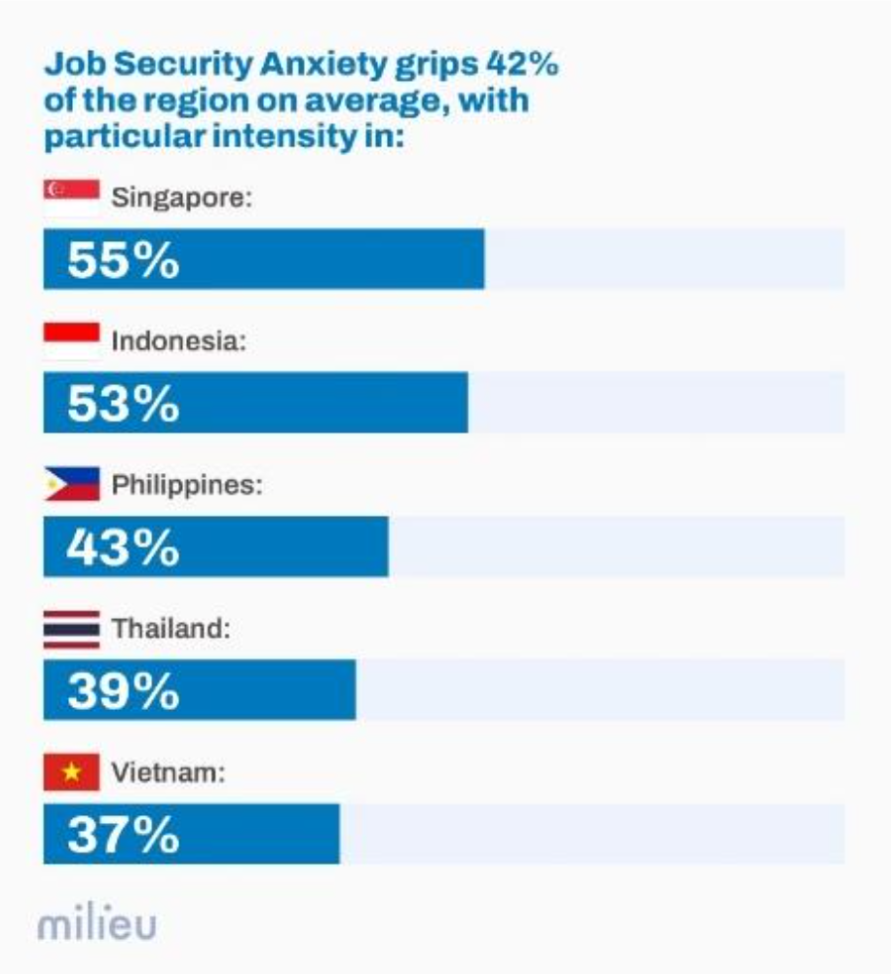
Employment insecurity intensified vulnerability, with 42% of Southeast Asians reporting concerns about job stability, led by Singapore (55%) and Indonesia (53%). Health-related anxiety remained elevated, cited by 42% of respondents regionally and 52% in Singapore, where 51% identified medical expenses as a major national issue.
Dissatisfaction with government support was most pronounced in the Philippines (59%), followed by Indonesia (54%), Thailand (46%), and Malaysia (46%). Even in Singapore, 40% remained unsatisfied, underscoring a widening perception gap between policy intent and lived experience.
Against this backdrop, the study identified a shift toward personal mental wellness during 2025. Seven in ten Southeast Asians reported actively working to better understand their own mental health, with engagement highest in Thailand (86%), followed by the Philippines (82%), Malaysia (80%), Vietnam (76%), Indonesia (57%), and Singapore (62%).
In addition, 67% sought information or education related to mental health through online resources, courses, or learning materials. While only 21% cited mental health as a top national issue, individual action rates were substantially higher, suggesting mental wellness had become part of everyday self-care.
“Across Southeast Asia, people are under pressure, but they’re not standing still,” said Sundip Chahal, CEO of Milieu Insight. “When support doesn’t land, households adapt fast. We’re seeing mental well-being move into the mainstream as a practical way people cope. In 2026, the organisations that respond to these shifts will earn trust, and the ones that don’t risk being left behind”
Overall, the study presented Southeast Asia in 2025 as a region shaped by affordability pressures, employment uncertainty, and health-related anxieties, alongside limited confidence in government solutions. As the region moved into 2026, the findings suggested that the legacy of 2025 was defined not only by economic strain and policy gaps, but also by how individuals adapted by building resilience and prioritising mental well-being amid prolonged uncertainty.