

By Aileen Anthony | MALAYSIA SME
Key Takeaways for Malaysian SMEs
Datuk Seri Johari’s address carried a clear message for Malaysian SMEs: the next phase of economic growth must go beyond attracting foreign investment to developing domestic capabilities and enabling local businesses to participate in higher-value global supply chains.
- Move up the value chain, not just expand production. Invest in advanced engineering, research, design and specialised manufacturing so that competitiveness rests increasingly on expertise and innovation, not cost alone.
- Position for French industrial supply-chain opportunities. Explore local procurement, precision engineering and technical services linked to French companies operating in Malaysia; supplier readiness and quality standards will matter.
- Look beyond rare earth extraction. Watch for opportunities across processing, advanced materials, permanent magnet manufacturing and recycling as Malaysia’s proposed value chain develops.
- Build capabilities in emerging technologies. Develop AI, cybersecurity, semiconductor-related and applied-research expertise that can improve productivity and create specialised offerings.
- Prepare for potential European market access. Understand EU market requirements and regulatory standards while the Malaysia–EU Free Trade Agreement remains under negotiation.
- Treat resilience as a growth strategy. Diversify customers, markets and supply chains to reduce vulnerability without retreating from international trade.
- Turn partnerships into long-term capabilities. Use supplier relationships and foreign investment to gain technical knowledge, develop talent and improve international competitiveness.
A Shared Commitment to Move Forward
KUALA LUMPUR, 17 November 2026 — Against a backdrop of geopolitical uncertainty, technological disruption and changing global trade dynamics, Malaysia is looking to strengthen its economic resilience by developing greater industrial capabilities and deepening strategic partnerships with trusted international partners.
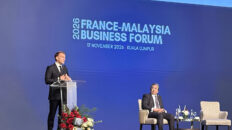
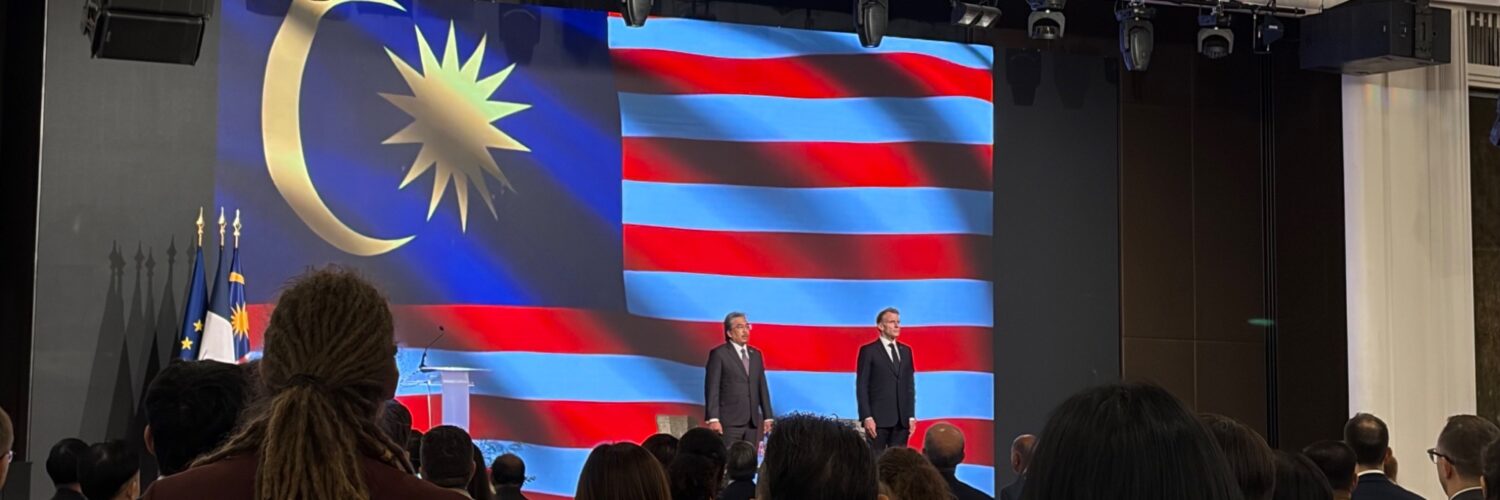
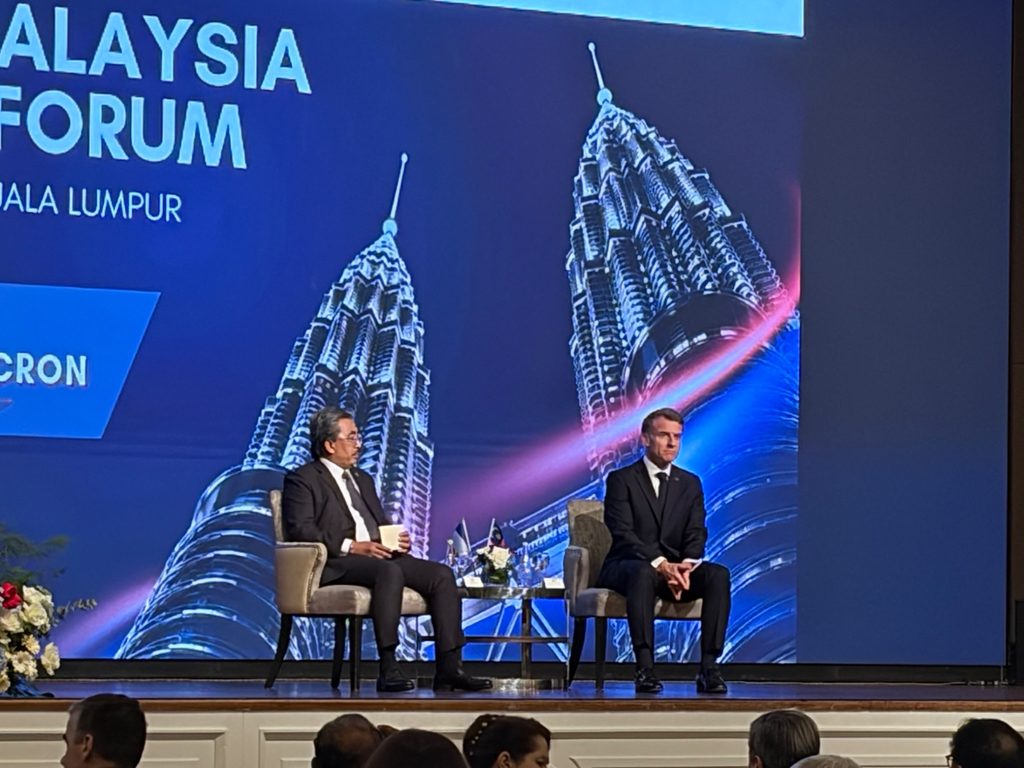
This was the central message delivered by Minister of Investment, Trade and Industry Datuk Seri Johari Abdul Ghani at the France–Malaysia Business Forum 2026, held at The Majestic Hotel Kuala Lumpur.
In his address, Datuk Seri Johari welcomed His Excellency Emmanuel Macron, President of the Republic of France and the French delegation, describing the visit as a reflection of the bilateral relationship and the countries’ shared commitment to advancing economic cooperation. “Your presence here reflects the importance of our bilateral relationship and our shared commitment to taking this partnership forward,” he said.
A Changing Global Economy: The Need for Greater Resilience
“We meet at a time of profound uncertainty in the global economy,” Datuk Seri Johari said. He highlighted geopolitical tensions, heightened strategic competition and rapid technological disruption as forces reshaping the international economic environment.
For Malaysia, these developments carry particular significance given its deep integration into international trade and production networks. He cited total trade of RM3.061 trillion in 2025 and a trade-to-GDP ratio of about 137%, illustrating how national prosperity remains tied to international markets.
“We therefore have a strong interest in preserving an international economic environment that is open, predictable, and governed by fair rules,” he said. At the same time, Malaysia must diversify its commercial relationships, strengthen domestic industry and develop capabilities in strategic, high-value activities.
He distinguished resilience from protectionism: ‘Economic resilience should not mean retreating into protectionism, but building stronger and more diversified economies that reduce vulnerability while creating new opportunities for growth.’ Malaysia’s economic future, in this framing, lies in becoming more competitive within international markets, not withdrawing from them.
France: A Trusted Partner in Malaysia’s Economic Development
Datuk Seri Johari highlighted more than 660 French companies operating in Malaysia and collectively providing over 30,000 employment opportunities. Their investment and expertise span semiconductors, aerospace, energy, advanced materials and engineering. He referenced companies including STMicroelectronics, Airbus, Safran, Air Liquide and Technip Energies as contributors to Malaysia’s industrial ecosystem.
Their contribution extends beyond jobs to technical capabilities, domestic supply chains and links to international production networks. “Our priority in the next phase of our relationship is to create greater value and more opportunities for Malaysian companies to participate in sophisticated global value chains.”
Rare Earths: Developing Capabilities Across the Value Chain
Rare earth elements were among the strategic opportunities highlighted. Demand from electric vehicles, renewable energy technologies and advanced electronics has sharpened interest in reliable and diversified supplies of these minerals.
He outlined Malaysia’s ambition to develop capabilities across the rare earth value chain, from responsible extraction and processing to advanced materials, permanent magnet manufacturing and recycling. The objective is to capture greater value through processing, manufacturing and technology rather than resource extraction alone.
Datuk Seri Johari welcomed French expertise and investment to support these capabilities, while stressing that environmental safeguards and sustainable practices must remain central to industry development. For Malaysian businesses, a broader ecosystem could eventually create opportunities in engineering, processing technologies, specialised manufacturing and environmental services.
Aerospace: Moving Towards Higher-Value Activities
Malaysia has established capabilities in aerostructures, advanced composites, precision engineering and maintenance, repair and overhaul services. French aerospace companies have helped develop this industrial base.
Datuk Seri Johari saw scope to expand into advanced engineering, design, research, and proprietary technologies. “I encourage French aerospace companies to enhance their engagement with Malaysian suppliers, expand local procurement, and help develop a more comprehensive domestic aerospace ecosystem.”
“This partnership must create opportunities for Malaysian companies to acquire the capabilities necessary to compete internationally,” he added.
Artificial Intelligence and Cybersecurity: Combining Complementary Strengths
Datuk Seri Johari called for deeper collaboration in emerging technologies, particularly artificial intelligence and cybersecurity. He pointed to France’s technological expertise and Malaysia’s foundation in digital infrastructure and semiconductor manufacturing as complementary strengths.
Combining these capabilities could support applied research, technology development, cybersecurity solutions and highly skilled talent. The opportunity for Malaysian companies extends to software, digital services and specialised technology solutions, and must translate into practical capability building.
The Malaysia–EU Free Trade Agreement: Market Access and Predictability
Beyond bilateral initiatives, Datuk Seri Johari highlighted the ongoing Malaysia–European Union Free Trade Agreement negotiations. He acknowledged outstanding differences over market access and regulatory requirements but emphasised the potential value of a comprehensive and balanced agreement.
Such an agreement, he said, would give businesses greater market access, improve regulatory predictability, and strengthen the foundation for trade and investment. It would also send a constructive signal amid increasing protectionism and economic fragmentation.
Towards 70 Years of Diplomatic Relations: A New Chapter
Looking towards the 70th anniversary of Malaysia–France diplomatic relations in 2027, Datuk Seri Johari said the relationship had developed considerably over the past seven decades, but that the opportunities ahead were greater than ever.
For Malaysia, the next chapter offers a pathway to stronger domestic industries, more advanced technological capabilities and greater participation in international value chains. For SMEs, the opportunity is to translate this strategic direction into practical investments in skills, innovation, standards and partnerships.