
UOB Malaysia and Invest Selangor Berhad have facilitated more than RM3 billion in investments into Selangor. Through this collaboration, both organisations aim to attract high-value projects and strengthen the state’s industrial ecosystem. The initiative also supports the goals of Rancangan Selangor Kedua (RS-2).
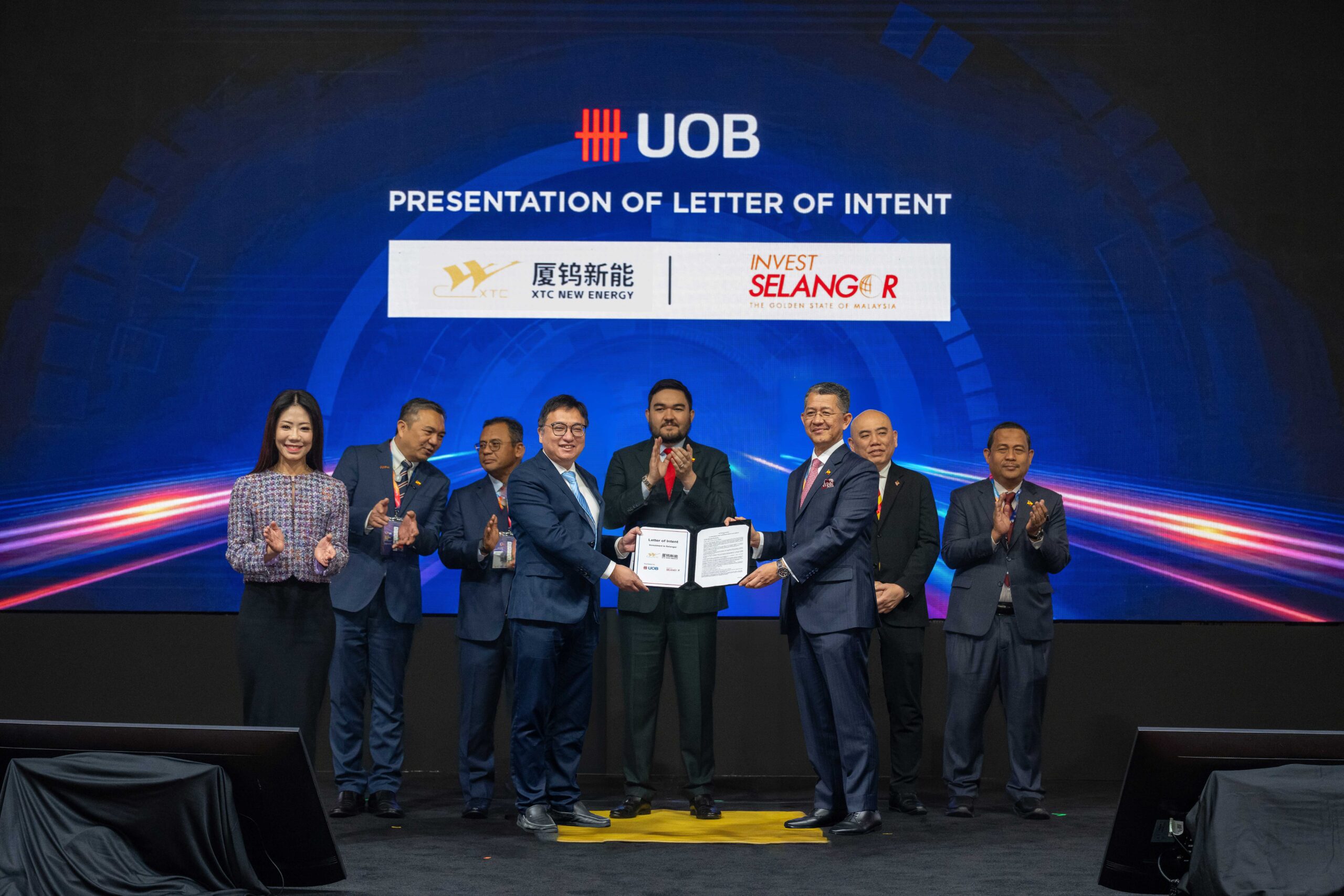
At the opening ceremony of the Selangor International Business Summit (SIBS) 2026, the two organisations announced four letters of intent (LOIs). These agreements span artificial intelligence (AI) data centres, biotechnology, emission-control technology and advanced battery materials.
Together, the proposed projects could create opportunities for technology transfer, talent development and local supply chains. In particular, Malaysian small and medium enterprises (SMEs) could benefit by supplying goods and services to these expanding industries.
Four Industries Targeted For Investment
The four LOIs cover different areas of advanced manufacturing and technology.
First, Galaxy DC Pte Ltd plans to develop AI-focused hyperscale data centre infrastructure. As demand for AI computing grows, such facilities could strengthen Malaysia’s position in the regional digital economy.
Meanwhile, Shenghui Biotechnology (Malaysia) Sdn Bhd will focus on corn deep-processing and specialty ingredients. Its proposed activities include starch-based products and sweeteners, which serve a range of industrial and manufacturing needs.
In addition, Wuxi Weifu Environmental Catalysts Co Ltd will focus on emission-control catalysts for automotive and industrial applications. These technologies support efforts to manage emissions across different sectors.
Finally, XTC New Energy Materials (Xiamen) Co Ltd will focus on advanced battery materials. These materials serve electric vehicle and energy storage value chains, which continue to create opportunities for manufacturers and suppliers.
Although the projects target different industries, they share a common objective: to bring higher-value activities into Selangor. As these industries develop, local businesses could gain opportunities to join supply chains, while workers could access new skills and technical expertise.
Strengthening Selangor’s Investment Ecosystem
The collaboration builds on an agreement that UOB Malaysia and Invest Selangor signed in November 2025. Under this partnership, both organisations connect international investors with business opportunities across ASEAN.
In turn, the partnership helps multinational companies explore market entry and expansion opportunities. It also aims to link investors with the local business networks and industrial capabilities they need to operate in the region.
Selangor Menteri Besar Amirudin Bin Shari highlighted the importance of directing investment towards productive economic activities. He also emphasised financing, resilient supply chains and the creation of high-value jobs as priorities for the state.
Similarly, UOB Malaysia chief executive officer Datuk Ng Wei Wei underscored the bank’s role in connecting global investors with opportunities in Malaysia. By working with Invest Selangor, UOB aims to help translate international business interest into broader economic benefits.
Invest Selangor chief executive officer Dato’ Hasan Azhari also highlighted the state’s investment ecosystem. Its connectivity, talent pool and business environment can help attract investors seeking a base for regional growth.
Creating Opportunities For Malaysian SMEs
Beyond attracting investment, the collaboration could help local companies participate in emerging industries. For example, SMEs may find opportunities in logistics, equipment, technical services and other supporting activities, depending on each project’s requirements.
Moreover, stronger links between multinational investors and local suppliers could encourage knowledge sharing. Over time, this may help Malaysian businesses improve their capabilities and compete for more complex contracts.
However, the extent of these benefits will depend on how the proposed projects progress and how effectively local firms connect with investors. Businesses will need to meet relevant quality, technical and operational requirements to participate in these supply chains.
The four LOIs therefore signal potential opportunities for Selangor’s industrial ecosystem. As the state continues to pursue high-value investment, partnerships between financial institutions, investment agencies and international companies could help connect global capital with local business growth.
The collaboration’s reported investment pipeline exceeds RM3 billion. However, the organisations have not specified how that amount is distributed across the four LOIs. Further project details will help clarify the investment commitments and the potential benefits for local industries.