

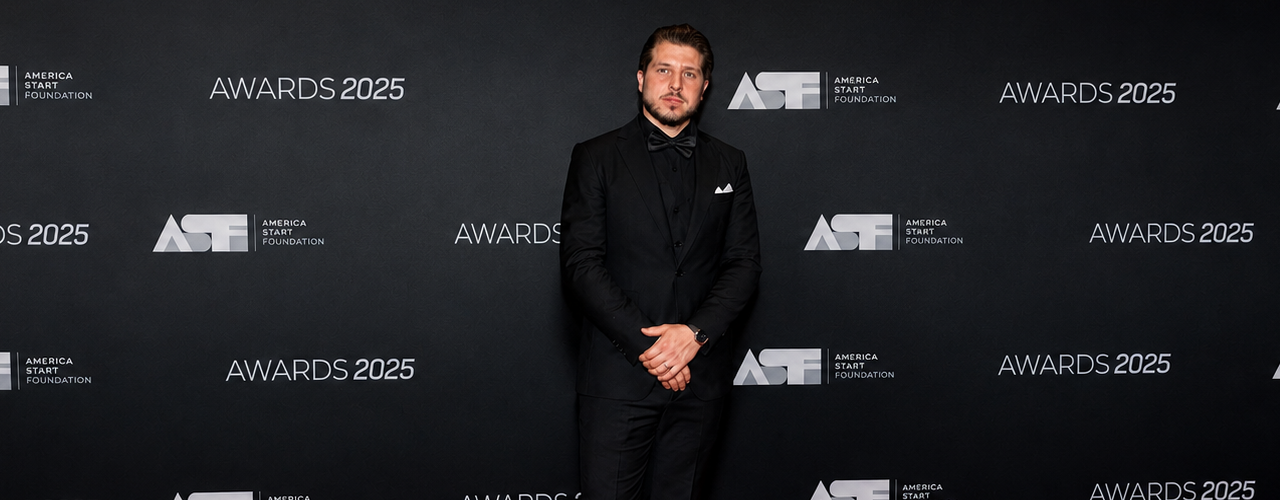
By Lucas Assimos
That is usually where the record starts to weaken.
The problem is not always a lack of discipline. Often, the workflow itself asks people to remember too much after the context has already changed. The employee has moved to the next task, another customer has called, a supplier has replied, or a different problem has taken priority. By the time the notes are written, details that were obvious in the moment are no longer obvious at all. A better approach is to document at the natural checkpoints of the work rather than at the end of the day.
For a service business, that does not mean turning every employee into a full-time note taker. It means identifying the few moments when the state of the job changes and capturing only what the next decision depends on.
The first checkpoint is the starting condition.
What is the customer actually asking for? What was observed before anyone changed anything? What information is confirmed, and what is still an assumption?
This matters because teams often lose the original problem once the work begins. A customer may arrive with a conclusion instead of a symptom. A staff member may receive a verbal instruction that becomes simplified as it passes to someone else. Recording the starting condition gives the business a stable reference point.
The second checkpoint is the decision point.
Before money is spent, a part is ordered, a configuration is changed, or a commitment is made, the record should show why that decision was reasonable at that moment. This does not require an essay. A few lines can be enough: what was verified, what option was selected, who approved it, and what the expected next step is.
That creates something more useful than a list of completed tasks. It preserves the reasoning behind the work.
The third checkpoint is verification.
After the action is complete, the business should record what changed and how the result was checked. This is especially important in technical and professional services, where completing an action is not the same as proving the outcome.
A job marked “done” without a verification note can create confusion later. If the same problem returns, the team may have to repeat checks simply because nobody can see what was already confirmed.
The fourth checkpoint is the handoff.I
If the job is waiting on a customer, supplier, specialist, approval, payment, document or future appointment, the next person should not have to investigate the entire history to understand what happens next.
A useful handoff record answers five simple questions:
- What is the current state?
- What changed?
- What has been verified?
- What are we waiting for?
- Who owns the next action?
Those five questions are often more valuable than a long paragraph written from memory at the end of a busy day.
Documentation should match the risk of work
Routine jobs do not need the same level of detail as unusual, high-value or disputed work. A small business can create a light standard for normal activity and require more evidence when a job becomes complicated. That keeps documentation useful instead of allowing it to become another administrative burden employees learn to avoid.
Managers can also test the quality of their system in a practical way: if the original employee became unavailable, could another competent person understand the current state of the work without calling them first?
If the answer is no, the business has not preserved enough operational memory.
This is where documentation becomes a management issue rather than a paperwork issue.
When knowledge exists only in one person’s head, the company becomes dependent on that person being available. The owner gets interrupted more often. Employees repeat questions. Customers receive inconsistent updates. Small delays turn into larger ones because nobody is completely sure what has already happened.
Good documentation reduces that dependency, but only if it is designed around the work itself. For small and medium-sized businesses, the simplest improvement is often to stop asking, “Did everyone finish their notes?” and start asking, “At what moment should this fact have been captured?”
Move the record closer to the event. Keep the required information small. Capture the state before the context disappears. Documentation then stops feeling like a second shift after the work and becomes part of how the work moves forward.
About the Author:
Lucas Assimos is an automotive specialist and entrepreneur based in Florida. He runs a technical automotive business and writes about service operations, diagnostics, workflow and small-business management.