
As we close out the year, this feature marks our final story for 2025—a powerful reminder of what’s possible when Malaysian innovation meets grit, purpose, and community. We look forward to celebrating even more groundbreaking stories in 2026.
“Isn’t it supposed to be zero to one?”
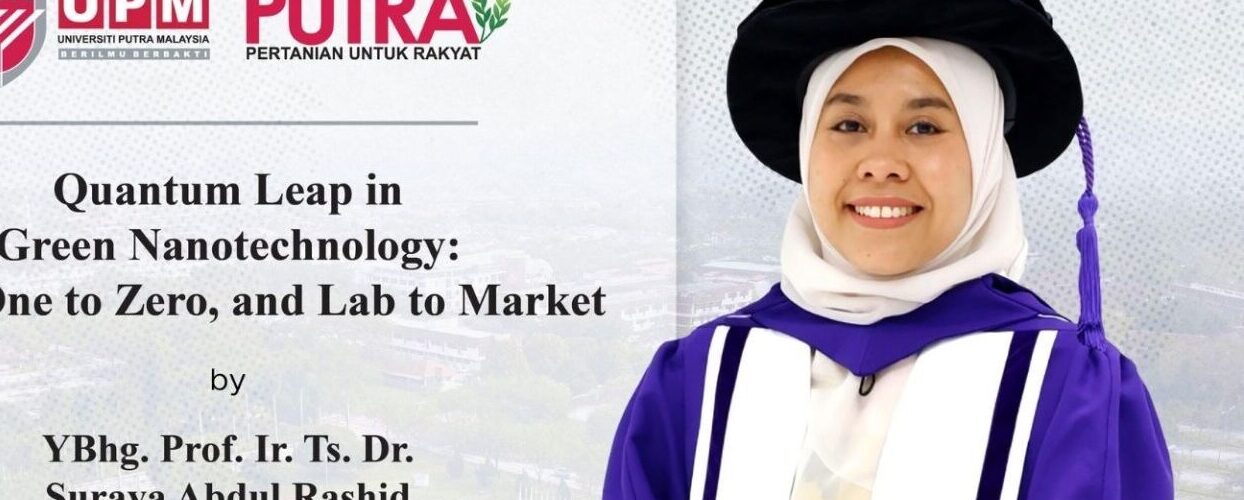
When I was asked about the title of my inaugural lecture—“Quantum Deep Invention of Technology: From 1 to 0 and Lab to Market”—some were puzzled. “Why from one to zero?” they asked. “Isn’t it supposed to be zero to one?” That question captures exactly why I wanted to tell this story—because what I experienced wasn’t linear innovation. It was a transformation in direction, purpose, and identity. And like many fellow founders, I had to make bold pivots in the face of complexity.
This is my journey of how a decade-long academic pursuit in nanomaterials took a quantum leap—from the lab, to impact, to market.
Understanding Nanotechnology—and What Makes It Green
Let’s start simple: nanotechnology is working at the scale of the unimaginably small—one nanometre is one-billionth of a metre. To put it in perspective, if Earth were one metre in diameter, one nanometre would be a small ball. That’s the scale we operate in.
Green nanotechnology, meanwhile, merges this advanced science with sustainability. It’s about applying the principles of green chemistry and engineering to ensure minimal environmental harm. Whether it’s safer production methods, reduced waste, or biocompatibility for agriculture or medicine, the goal is clear: create impact without compromise.
As a chemical engineer, I place great emphasis on three things: safety, scalability, and economic feasibility. These aren’t just technical terms—they are the foundation that makes science practical and meaningful.
From 1D to 0D: Why “1 to 0” Matters
In 2004, I returned to Malaysia after my PhD and dedicated the next ten years to studying carbon nanotubes (CNTs)—string-like, 1D nanomaterials ideal for lightweight, strong composites. These were great for aerospace, sports, and automotive, but the journey to commercialisation was overwhelming. The industry was costly and conservative. For years, I was stuck in the loop of “technology push,” hoping someone would pick up the invention.
But in 2014, I made a strategic pivot. Instead of continuing with 1D CNTs, I moved towards graphene, a 2D material popularised by the Nobel Prize win in 2010. I was intrigued by its sheet-like structure and new possibilities.
From graphene, I stumbled upon graphene quantum dots, which are even smaller—classified as 0D. This marked the complete transition: from one-dimensional (1D) to zero-dimensional (0D). The move from “1 to 0” wasn’t just scientific—it was deeply symbolic. It was about letting go of something I had invested a decade in, to pursue something more promising. That is why I call it a quantum leap.
Innovation Through Safety: The Birth of Carbon Quantum Dots
Initially, creating graphene quantum dots required harsh chemicals—risky and unsafe. My students were experiencing mini lab explosions, and that’s not okay. We needed something better. That need drove us to innovate a green, acid-free process to produce carbon quantum dots (CQDs).
What’s magical about CQDs? Under normal light, they look like plain water. Under UV light, they glow a beautiful blue. They are photoluminescent, biocompatible, and sustainable—perfect for agriculture.
In 2015, I received funding to explore their applications. And then, a question struck me: could this light-responsive material enhance photosynthesis? Photocatalysis and photosynthesis both occur under light—what if we applied our quantum dots on leaves?
We ran experiments with the Faculty of Agriculture. The results were clear: CQDs enhanced photosynthesis significantly. This discovery laid the foundation for QarboGrowTM, our green nanotech solution to improve crop yields, shorten cycles, and potentially reduce reliance on fertilisers.
From Lab to Market: Harvast, QarboGrowTM, and the Solo Founder Years
As an academic, commercialisation isn’t easy. But I wanted to overcome the challenges.
In 2017, I received a grant from UPM’s InnoHub to do market validation. That led to Harvast, our minimum viable product (MVP) for the home gardening community. People started using it, giving feedback, and some plants even came back from the brink of death. One neighbour’s curry leaf plant miraculously revived after Harvast—this kept me going.
In 2018, I incorporated Qarbotech. But traction was slow. By 2019, the grant had dried up. Then came the MCO in 2020—and suddenly, everyone became a plant parent. I redesigned the packaging, started Harvast’s Instagram, and turned my own front yard into a research garden. I didn’t know how to garden—I learned everything from scratch.
This was my solo founder era. It was lonely, but it was mine.
A Turning Point
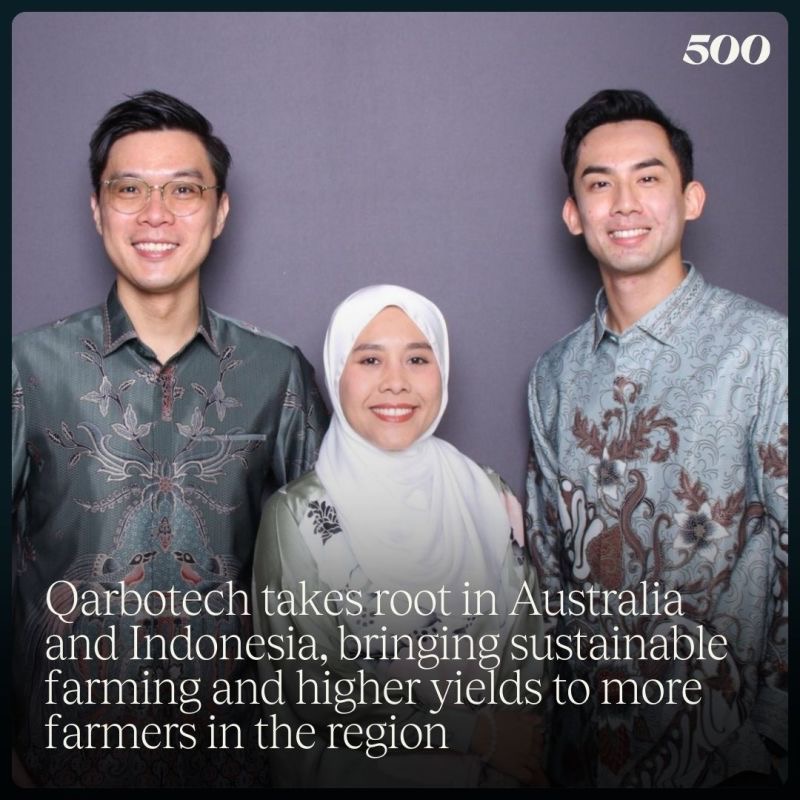
In 2021, I met Chee Hoe, who later became my co-founder and CEO. We met through a student project. He had the right energy. I invited him to join me for the Tech Planter competition—and we won. For the first time, our work was validated internationally. That same year, an investor from Singapore came on board. We had funding, a small team, and a dream.
In 2022, we signed the exclusive license with UPM for our patent. But despite the excitement, going to market was tough. People still thought we were “just another fertiliser.” B2B agricultural trials were delayed by floods; results were inconsistent. With only one month of runway left, it felt like we were about to collapse.
What Doesn’t Kill You…

Then came 2023, our breakthrough year.
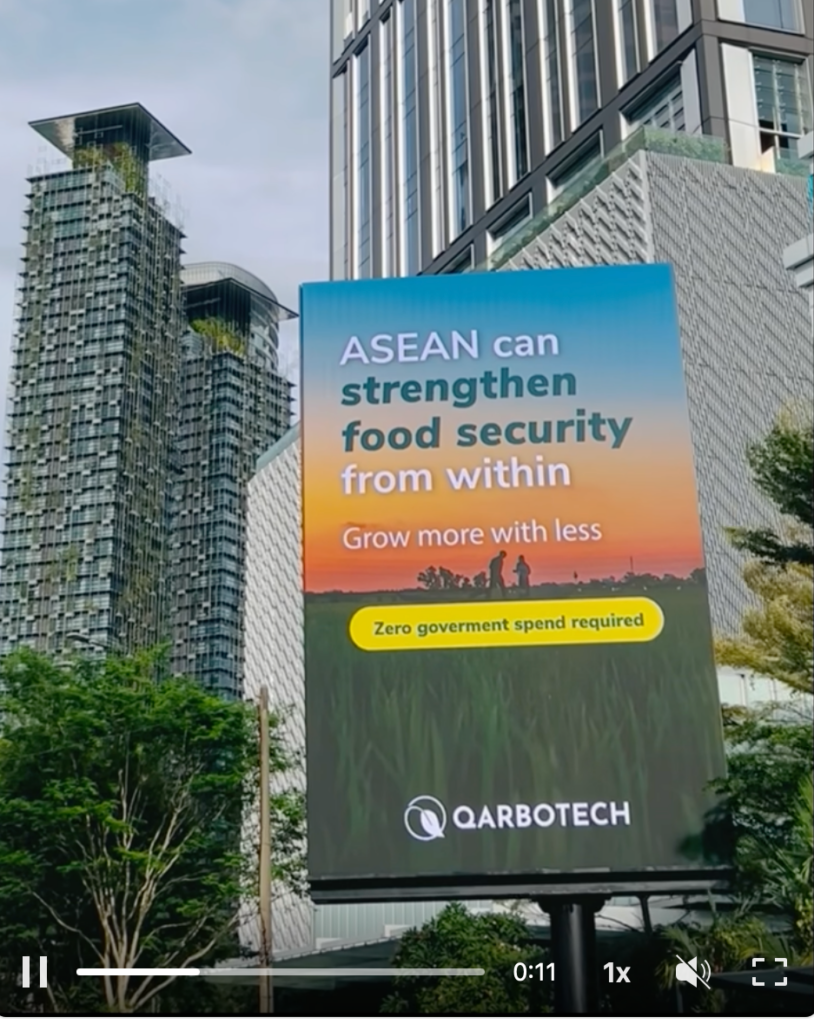
We received an angel investment, joined the Petronas FutureTech 3.0 accelerator, Qarbotech was named as the company to watch out for in “100 Ways to Fix the Future” by Norrsken Foundation. It was a proud moment to see the Qarbotech name featured on the Nasdaq Tower in Times Square, New York City.
And won awards—including, Malaysia Commercialisation Year 2022 – Emerging Innovator Award, Temasek Foundation Singapore Startup Challenge, Khazanah Dana Impak Malaysia grant, EQT Foundation Sweden grant and USD 500,000 seed funding from 500 Global.
We welcomed our second co-founder, Amirul Merican, a seasoned entrepreneur and mechanical engineer. He now oversees our factory in Puchong, and together, we scaled production and moved out of the UPM lab.
By 2024, we were conducting large-scale trials in Indonesia, exporting to Thailand and Vietnam, and gearing up for even greater impact.
2025: Our Homecoming
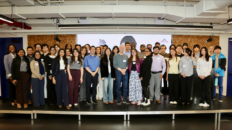
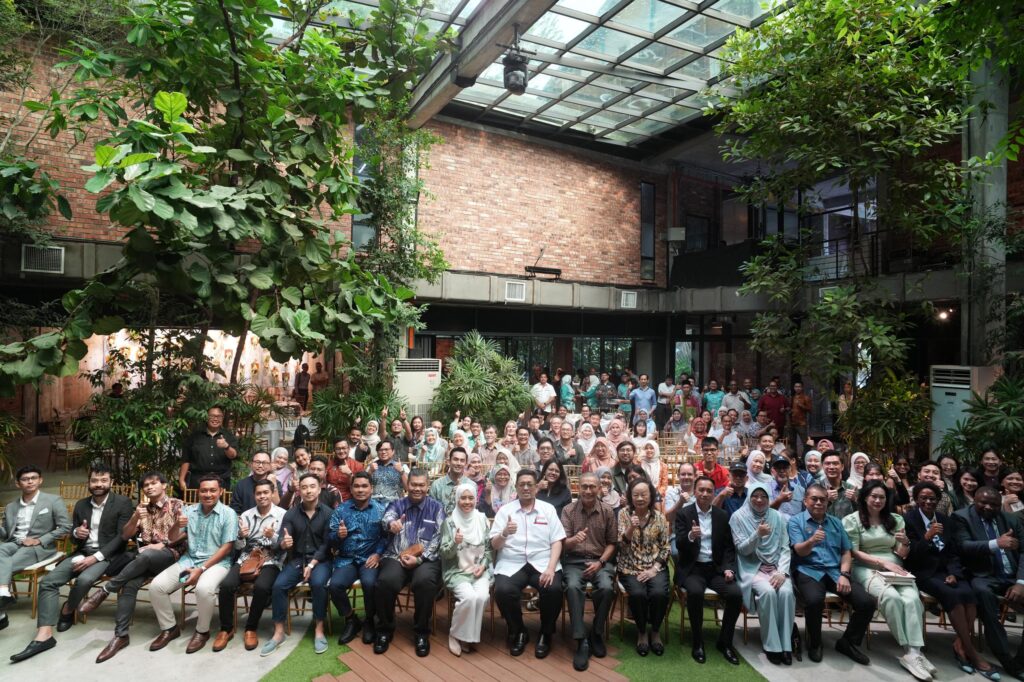
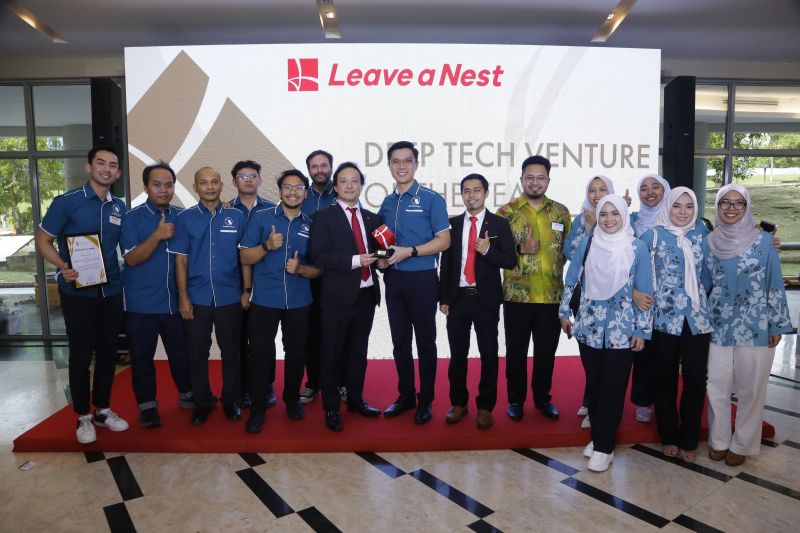
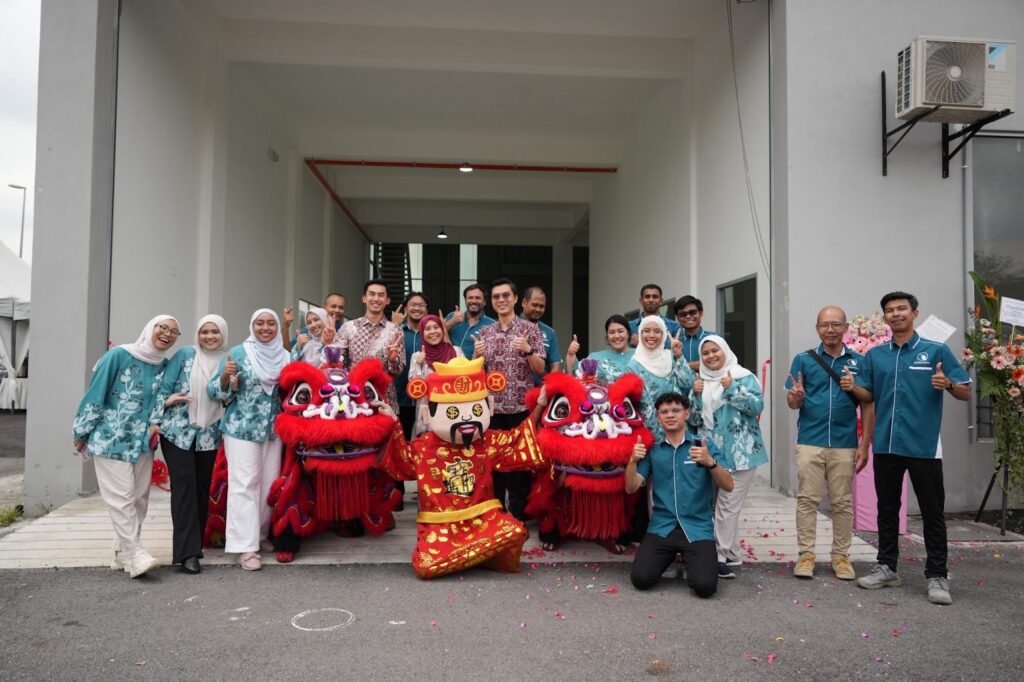
This year is our homecoming. We launched our new 100,000-litre manufacturing facility and celebrated with UPM, our mentors, and supporters. We were awarded Deep Tech Venture of the Year by Leave a Nest—the same group that believed in us back in 2021. We secured a 2,000-hectare paddy project in Pulau Pinang, and we represented Malaysia in Silicon Valley as finalist at the Startup World Cup 2025. We are the first Malaysian company selected to join the Breakthrough Energy Fellows programme.
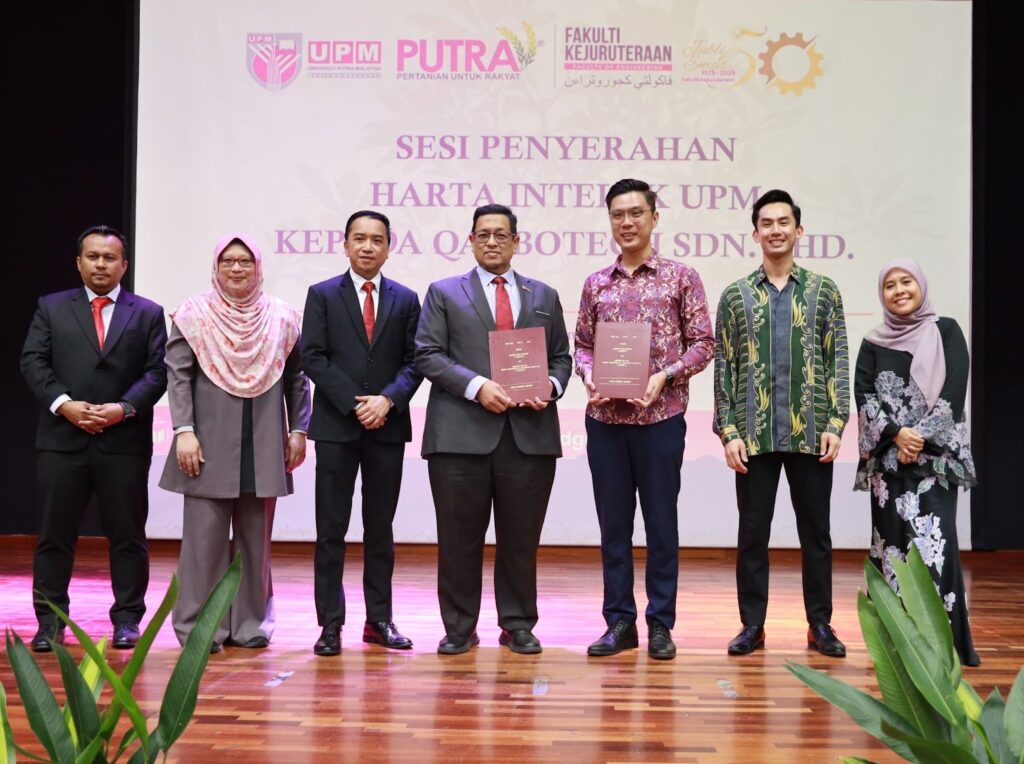
We’re not stopping. At Qarbotech and UPM, we’re exploring:
- Agriculture: Photosynthesis enhancement, AI integration, and omics research
- Environmental remediation: Better sensors, photocatalysts, and filters
- Energy: Next-generation supercapacitors and solar devices
Final Reflections: Character, Strategy, Action
I leave you with three reflections:
- Character: How you do one thing is how you do everything. The values of ihsan (excellence), agency, and berilmu berbakti (knowledge with service) from UPM are embedded in me—and I hope in you too.
- Strategy: Don’t just ask “What can I invent?”—ask, “What problem can I solve?” Innovation must be human-centric.
- Action: Be a change maker. Whether you’re a researcher, funder, policymaker, SME, or gardener—Malaysian innovation needs Malaysian champions.
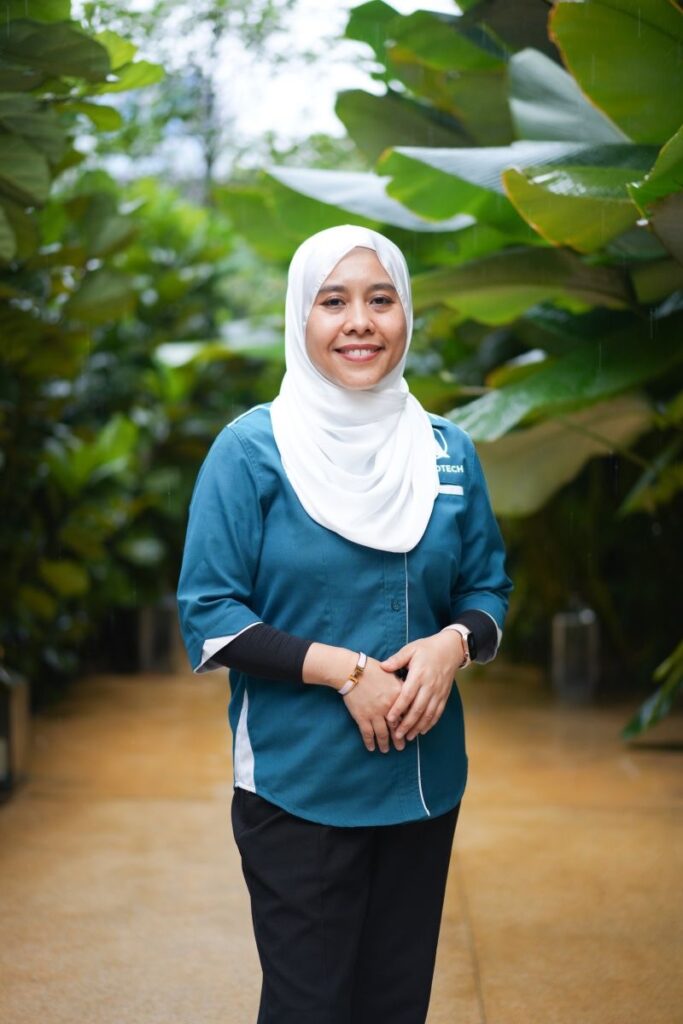
Thank you for being part of my story. May it inspire yours.
Prof. Ir. Ts. Dr. Suraya Abdul Rashid