

Progress was accelerated through the adoption of advanced sustainable farming methods and molecular breeding biotechnology by YHL Aquatic Sdn. Bhd. (YHL Aquatic), a company under Bioeconomy Corporation’s Bio-based Accelerator (BBA) programme, which operated a sustainable aquaculture model producing high-value shrimps, molluscs, and fish in Bio Desaru, Johor.
Bioeconomy Corporation’s facilitation enabled YHL Aquatic to establish and operate Malaysia’s first shrimp Nucleus Centre and genetic Broodstock Multiplication Centre in Tanjung Resang, Mersing, where it developed and bred YHL Phi-Tik, a unique genetic line of Pacific white shrimp. The selective breed demonstrated improved resistance to common diseases, stronger adaptability to high temperatures and higher ammonia levels, and the ability to grow 19 to 40 per cent faster than conventional shrimp strains.
With the growing global focus on sustainable and self-sufficient food systems, Bioeconomy Corporation Chief Executive Officer Mohd Khairul Fidzal Abdul Razak said that YHL Aquatic’s biotechnology initiatives – supported by MOSTI and Bioeconomy Corporation – were helping to boost local productivity and reduce dependence on imports. He added that this positioned Malaysia’s aquaculture sector as a key driver of national food security and economic growth, in line with the blue economy priorities under the 13th Malaysia Plan 2026–2030.
According to Mohd Khairul, YHL Aquatic’s molecular breeding technology represented regenerative propagation, one of the six high-value, high-growth biotechnology sub-sectors that Bioeconomy Corporation was prioritising over the next five years to contribute to the National Biotechnology Policy 2.0 goals and to strengthen Malaysia’s position as a regional leader in home-grown biotechnology innovation.
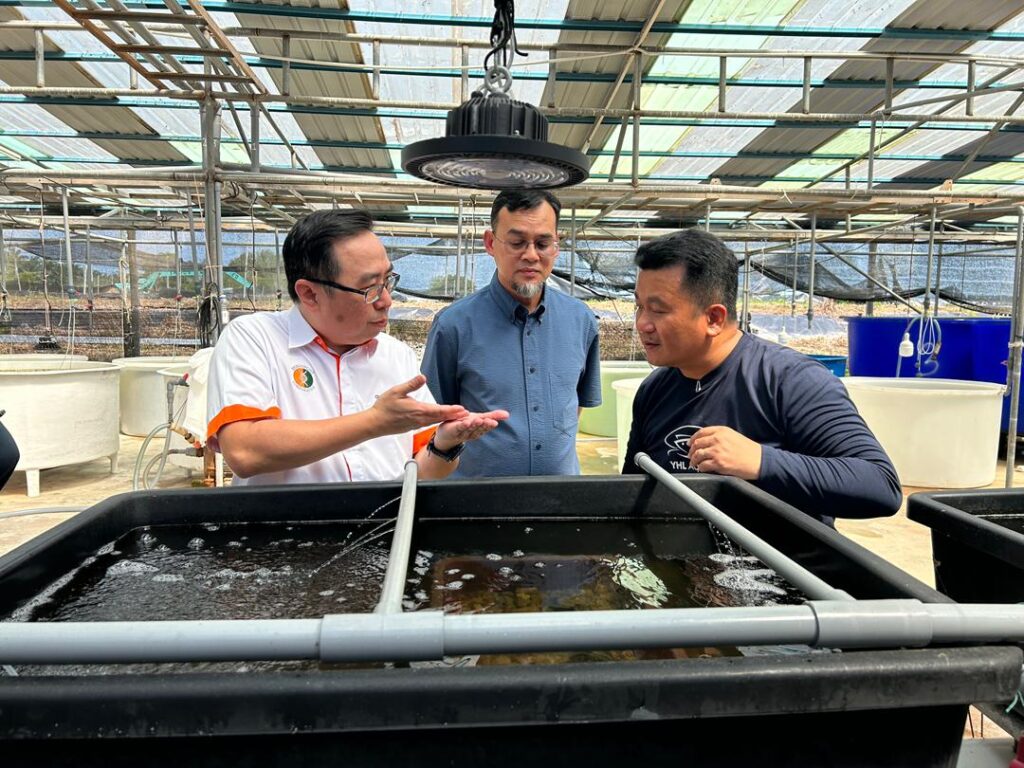
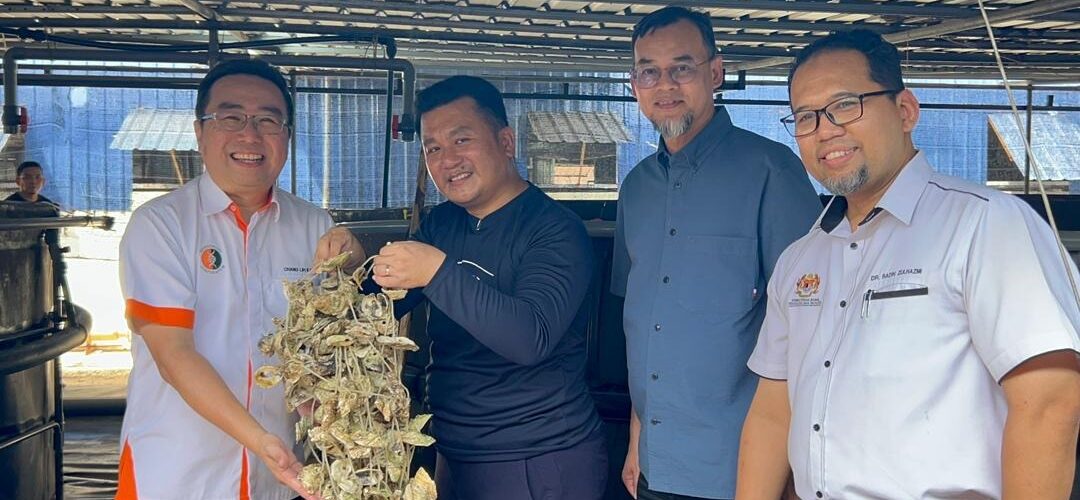
“The key challenge in regenerative propagation – particularly in the molecular breeding of shrimp and oysters – is fragmented supply chains. In supporting YHL Aquatic, Bioeconomy Corporation is working to link and integrate the entire industry, from breeders to farmers to markets, so the system operates more smoothly and efficiently,” said Mohd Khairul, after accompanying Minister of Science, Technology and Innovation, Tuan Chang Lih Kang, during a work visit to YHL Aquatic’s 357.3-acre farm on 16 January 2026.
During the visit, Chang Lih Kang and Mohd Khairul also witnessed YHL Aquatic’s Integrated Multi-Trophic Aquaculture (IMTA), Malaysia’s first and largest such operation spanning nine acres, which addressed aquaculture pollution by reducing nutrient runoff, preventing eutrophication, and converting waste into usable biomass.
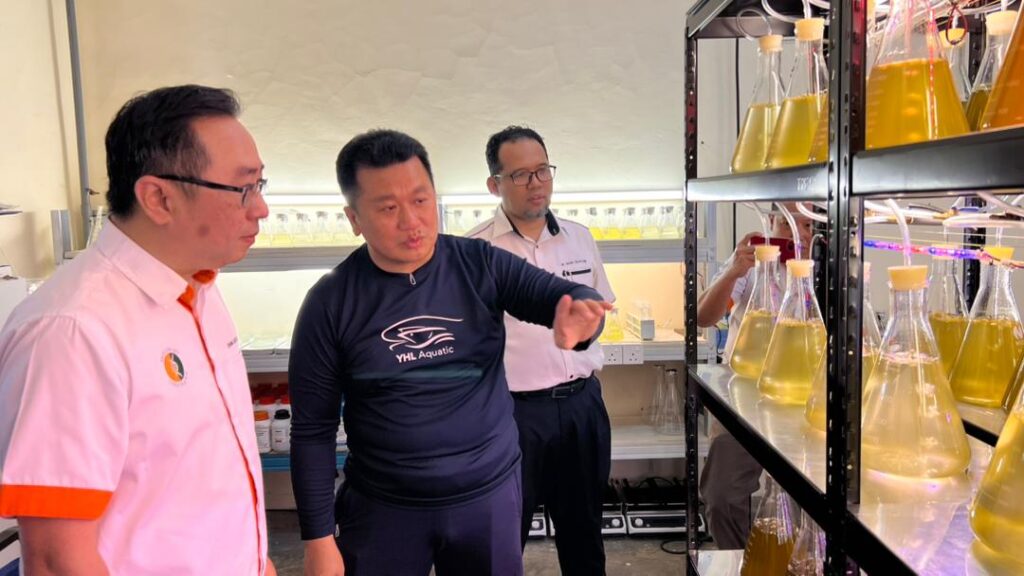
YHL Aquatic also housed one of the largest oyster hatcheries in Southeast Asia, which integrated microalgae cultivation in oyster farming to reduce carbon emissions, enhance biodiversity, support water quality and strengthen the IMTA system in contributing to a circular, zero-waste system.