

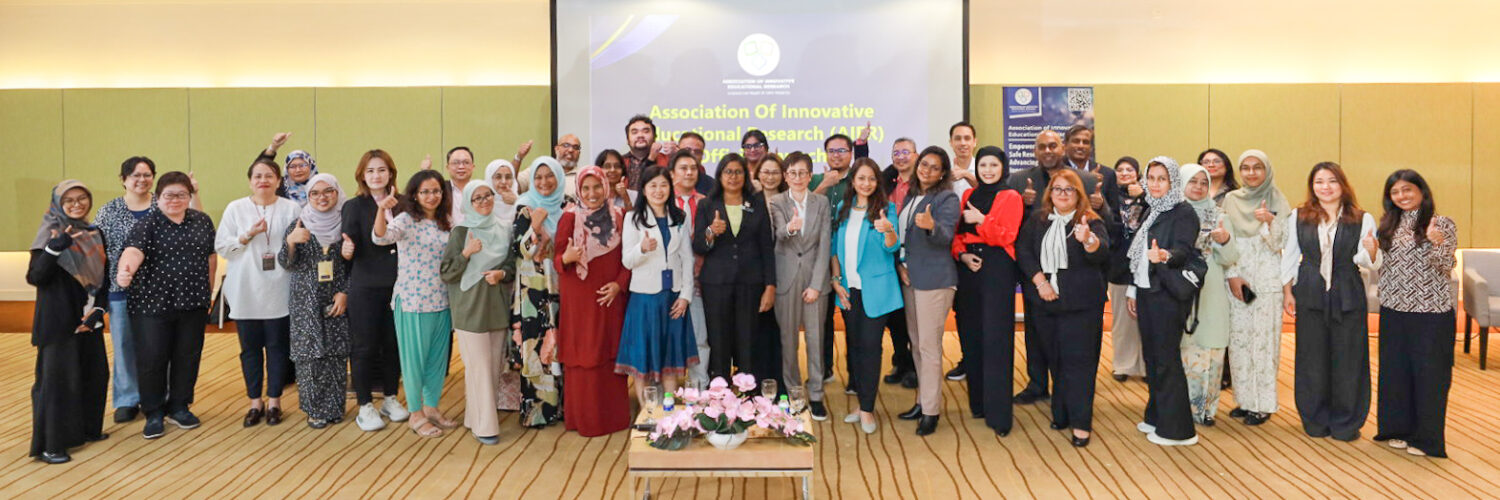
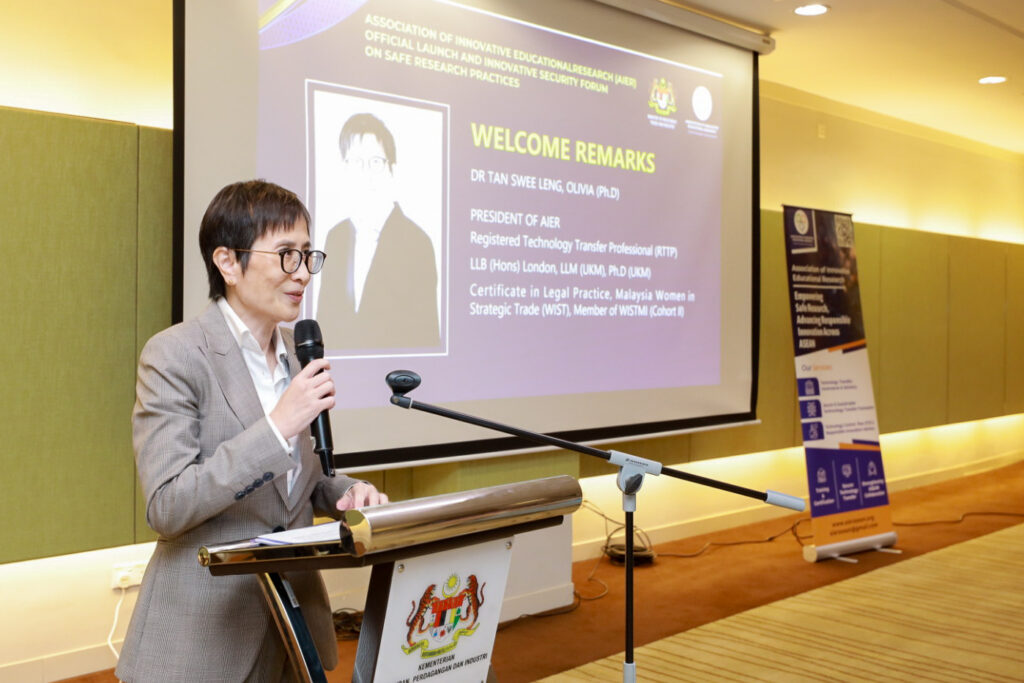
In her opening remarks, Dr. Olivia Tan Swee Leng, President of AIER, emphasised that AIER’s formation marks the beginning of a collaborative movement to balance fundamental research with national security interests, responsible technology transfer, and ethical innovation.
“Today marks the formal kick-off of a collaborative journey—one that unites academia and industry to advance innovative, safe, and responsible research that can shape a resilient and prosperous future for our nation,” said Dr. Olivia.
A Platform to Embed Security into Innovation
Established on 24 July 2024, AIER aims to support safe, secure, and ethically sound research within academia, while actively promoting productive and responsible collaboration between the public and private sectors.
Dr. Olivia outlined AIER’s focus areas, including:
- Embedding security by design in research programmes from the outset,
- Bridging fundamental research and real-world impact,
- Promoting dual-use risk awareness in research and development,
- Facilitating responsible technology transfer with appropriate safeguards, and
- Building knowledge ecosystems that protect sensitive information and nurture national capabilities.
She also announced a joint initiative between AIER and MITI’s Strategic Trade Secretariat (STS) that provides the opportunity to align research agendas with Malaysia’s national development goals and build long-term research security capacity.
MITI: Strengthening Malaysia’s Role as a Trusted Innovation Hub
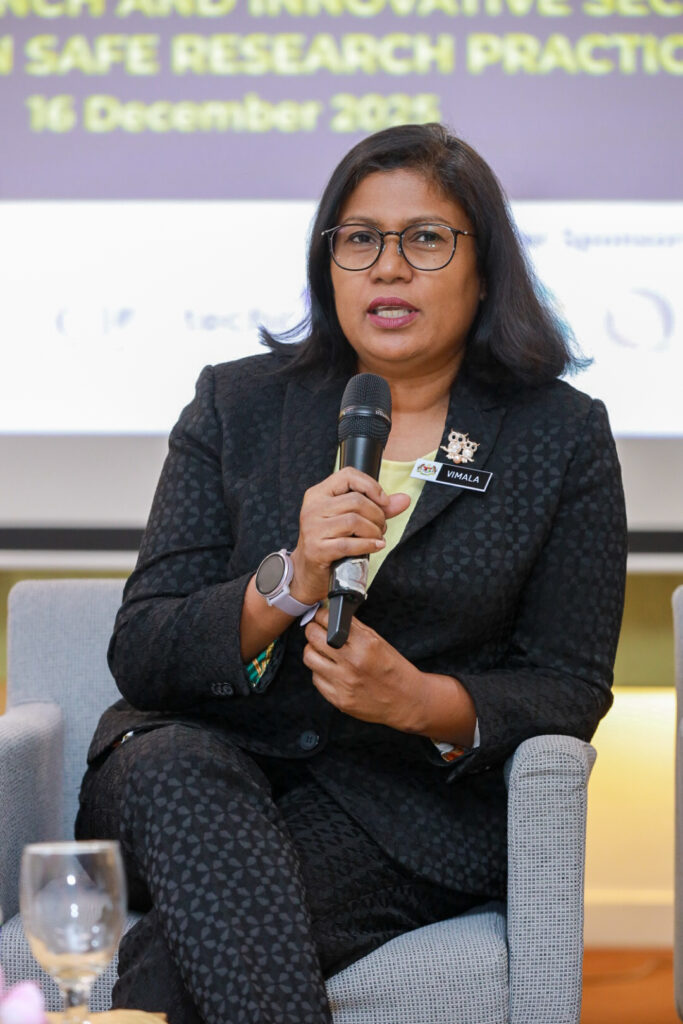
Delivering the keynote address, Puan Vimala Murugan, Strategic Trade Controller, Strategic Trade Secretariat (MITI-STS), expressed her appreciation for the formation of AIER and its potential to bridge longstanding gaps between academia, research offices, and regulatory authorities.
“This is a very special day. What began a few months ago as an idea has now become a reality. AIER represents a breath of fresh air—and we hope this collaboration continues for a long time,” said Puan Vimala.
Puan Vimala acknowledged the critical need for academic engagement in national security dialogues, noting that many emerging risks originate in research environments before reaching the commercial sector. She underscored the importance of outreach, education, and shared language among MITI, academic institutions, and industry.
“This collaboration with AIER will help shape Malaysia into a global benchmark for responsible research and transfer,” she said.
Collaborative Impact, National Priority
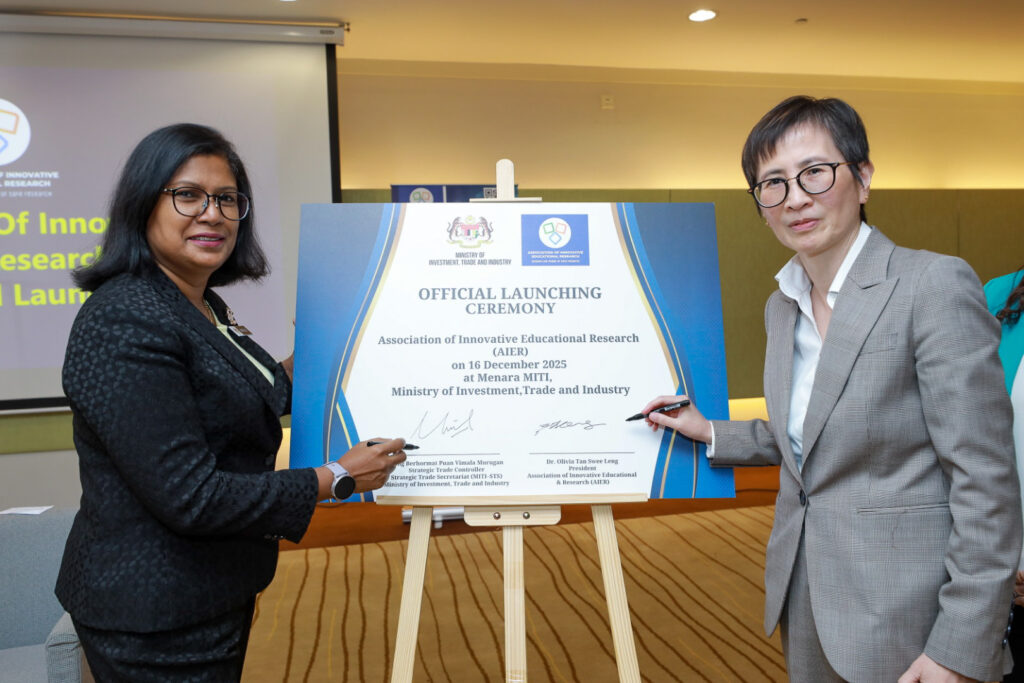
AIER aims to operationalise its mission through: Risk-aware research design programmes; Security-conscious publishing guidelines; Dual-use screening protocols; Capacity-building workshops, fellowships, and certifications; and measurable impact indicators for compliance, innovation, and public benefit.
The platform will serve as a national and regional reference point for safe research practices, ethical innovation governance, and resilient knowledge transfer systems, aligned with international best practices.
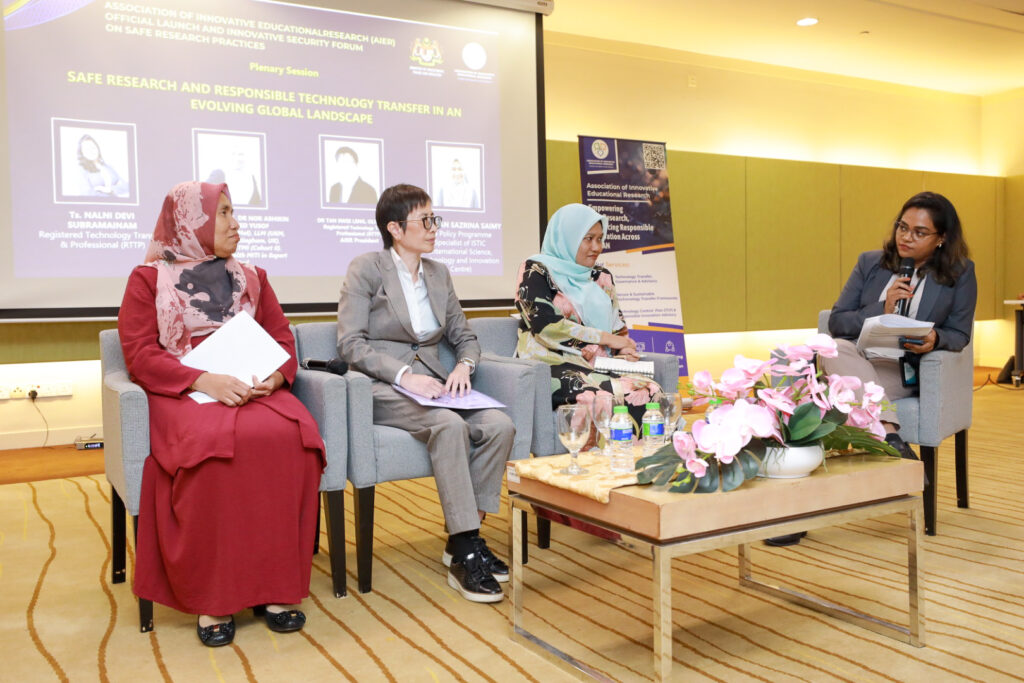
The launch also featured a Plenary Briefing, “Safe Research and Responsible Technology Transfer in an Evolving Global Landscape”, by panel speakers Dr Olivia Tan Swee Leng, President, AIER, Prof Dr. Nor Ashikin Bt. Mohamed Yusof, Secretary, AIER, and Dr.Intan Sazrina Saimy, STI Policy Programme Specialist, International Science, Technology and Innovation Centre (ISTIC), and moderated by Nalni Devi Subramaniam, AIER.
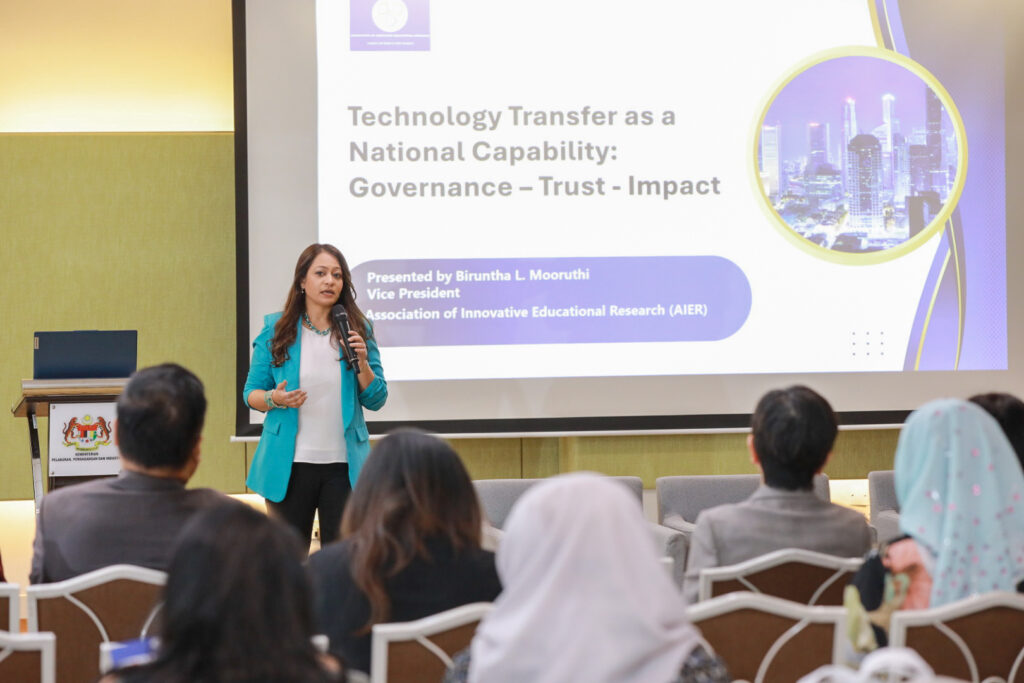
In their sharing sessions, Mr Tan Jin, Director of One Hypernet, Singapore, emphasised the “Importance of Risk Assessment for Technology and IR4.0 Industries”, Dr Olivia Tan Swee Leng spoke on “Best Practices for Safe Research in Academia & Industry” and Ms Biruntha L. Mooruthi, Vice-President of AIER, presented on positioning Technology Transfer as a national capability to build governance, trust, and impact.
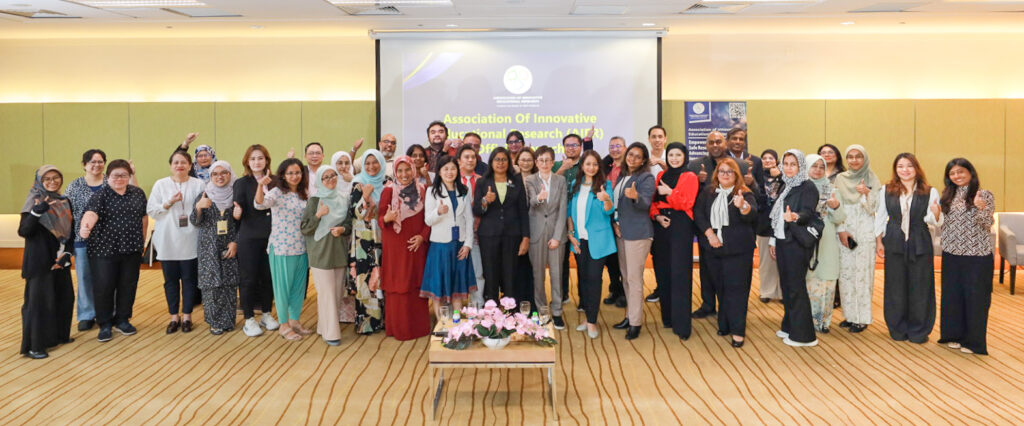
The AIER launch was supported by corporate sponsors—TechCom Ventures, OneHypernet, NirvaSoft, Ciptatech, Gravitas Global, Empowering Business Enabling Growth, QuickStop Solution, and JLINspire.
AIER has collaborative partners across Southeast Asia, including Singapore, Indonesia, and the Philippines.
A Call to Action
“Let us embrace collaboration, vigilance, and optimism,” said Dr. Olivia. “Together, we will unlock the transformative potential of emerging technologies—responsibly, securely, and for the benefit of all citizens.”
“Let’s keep talking, let’s keep working together,” Puan Vimala concluded. “And let’s ensure Malaysia is not just on the map—but ahead of the curve.”
The AIER Strategic Intent
AIER is committed to setting a gold standard for technology transfer—one that ensures research is strategically aligned, ethically governed, and sustainably managed, while building trusted partnerships across industry, academia, and government. Central to this is the integration of a formal Technology Control Plan (TCP) within organisational innovation and research management frameworks. Through tiered access controls, TCP-aligned NDAs, and robust digital traceability, AIER enables secure collaboration while safeguarding institutional and national interests.
Beyond compliance, AIER champions responsible innovation by embedding ethical review of emerging and frontier technologies, assessing societal, environmental, and geopolitical impacts, and aligning innovation outcomes with the UN Sustainable Development Goals, ESG commitments, and national innovation policies. Together, these principles position organisations as credible, trusted, and future-ready innovation partners on the regional and global stage.