
By Stefan Pertz, Contributor, Asian Trucker
Key Takeaways
Multiple Energy Pathways Are Emerging—Hydrogen and Electric Lead the Way There’s no one-size-fits-all approach to decarbonisation. Battery electric trucks suit short urban routes, while hydrogen-powered trucks—both combustion and fuel cell—are emerging as viable solutions for long-haul and high-power applications. Innovations like subcooled liquid hydrogen (sLH₂) are pushing the boundaries of range, refuelling, and cost viability.
Data-Driven Maintenance and Predictive Quality Are Now Industry Standards Advanced command centres and predictive analytics are allowing fleet managers to anticipate breakdowns, reduce downtime, and ensure parts integrity across global supply chains. Earthquake simulation and AI-powered diagnostics show the industry’s growing emphasis on proactive reliability.
Malaysia is Well-Positioned to Benefit Through Hap Seng’s Role Hap Seng Trucks Distribution Sdn. Bhd.’s signals a strong commitment to bring future-ready transport solutions to Malaysia as the official distributor of FUSO trucks in Malaysia. By enabling access to next-gen vehicles and smart logistics tools, Hap Seng provides local SMEs mobility solutions for cleaner, more competitive operations.
Human-Centric, Digitally-Connected, Sustainable
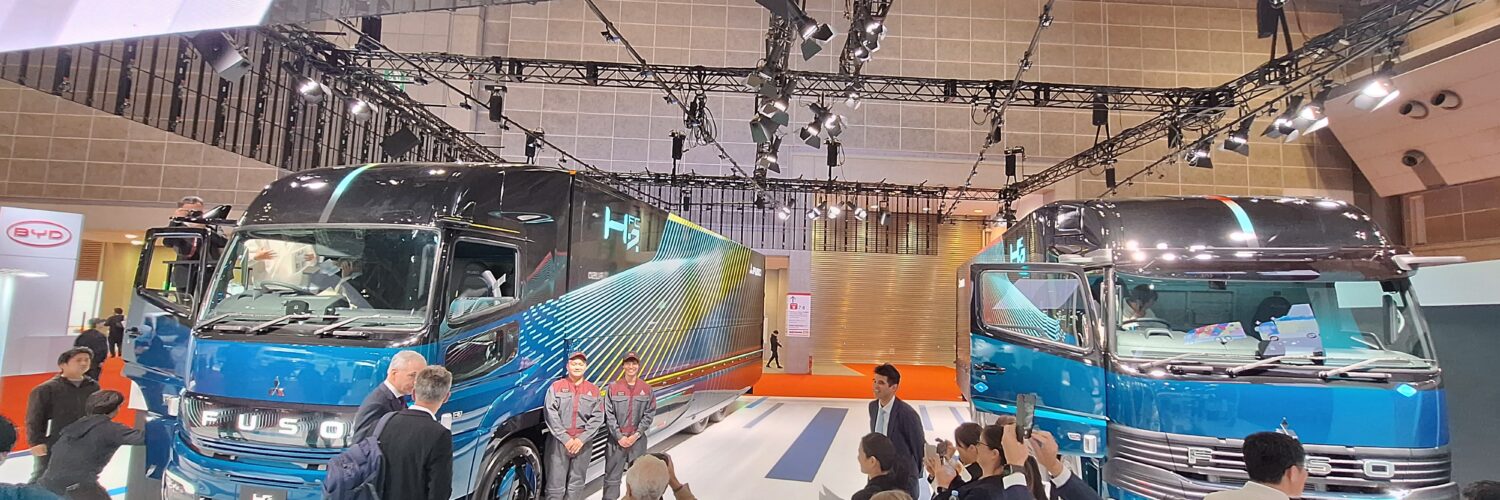
The Japan Mobility Show 2025 (JMS 2025), held from October 30 to November 9 at Tokyo Big Sight, delivered a clear message to the global transport industry: the future of mobility is already here—and it’s being shaped by rapid innovation, sustainability imperatives, and user-first design philosophies.
Featuring global and regional transport brands, JMS 2025 was more than just an exhibition—it was a forward-looking forum exploring how commercial mobility will evolve in an era defined by digital integration, energy transition, and workforce transformation.
From Product-Centric to User-Focused
One of the strongest themes to emerge was a decisive shift from product-centric engineering to user-focused design. From layout and live demos to interactive displays, exhibitors embraced a dynamic, problem-solving approach. Manufacturers are no longer just producing vehicles—they’re co-creating mobility ecosystems that support operational efficiency, driver well-being, and sustainable logistics.
This shift was anchored in three pillars:
- Logistics optimisation
- Energy transition
- Digital integration
Together, these trends underscore the importance of partnerships between manufacturers, technology providers, and fleet operators.
Next-Gen Logistics: Smart Load Bodies and AI Integration
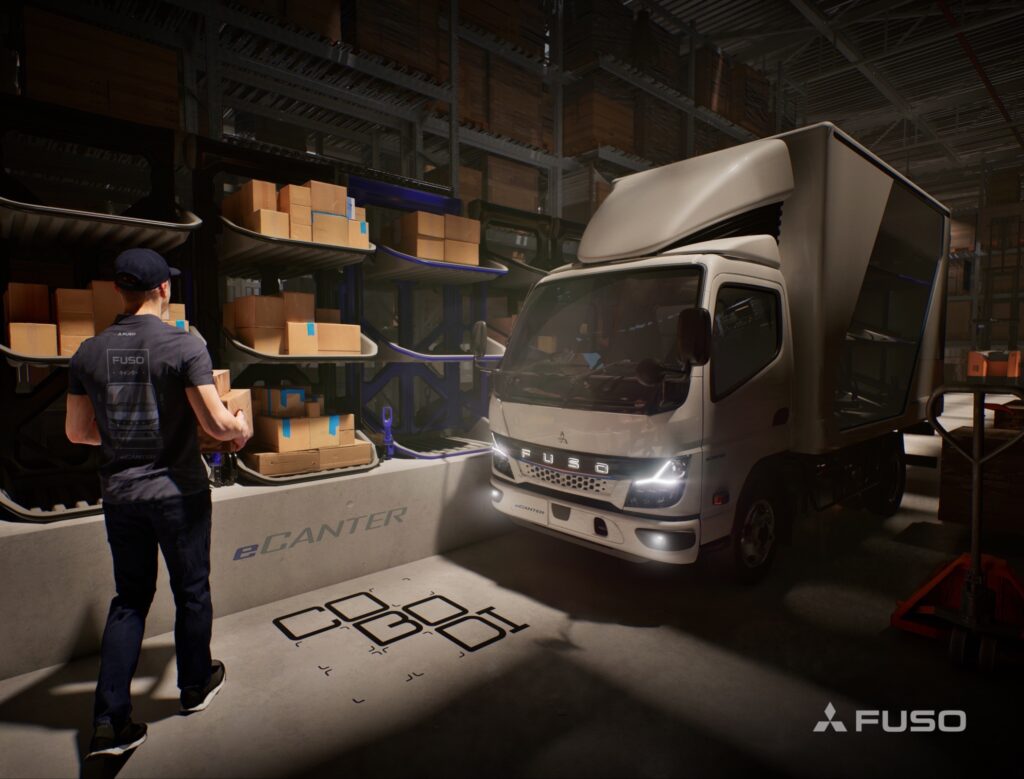
With driver shortages and operational pressures intensifying globally, smart logistics solutions took centre stage. Concepts like Connected Load Bodies (COBODIs) demonstrated how intelligent vehicle bodies can interface with AI-powered dispatch systems to streamline loading and routing, reduce downtime, and improve last-mile delivery.
Live demonstrations showcased how these AI-integrated systems—often powered by platforms like Wise Systems—can transform urban logistics into efficient, driver-friendly experiences that adapt to real-time conditions.
Hydrogen, Battery, and the Energy Spectrum
Another key highlight was the diversity of new energy solutions on display. From battery electric vehicles (BEVs)suited for urban routes to hydrogen-powered trucks designed for long-haul and heavy-duty applications, manufacturers showcased a spectrum of decarbonisation pathways.
Two notable concepts stood out:
- Hydrogen Internal Combustion (H2IC) vehicles, which use compressed hydrogen in modified diesel-like engines—ideal for high-power tasks such as construction.
- Hydrogen Fuel Cell (H2FC) models featuring subcooled liquid hydrogen (sLH₂) storage, enabling a range of up to 1,200 km on a 15-minute refuelling cycle.
These technologies are not merely conceptual. Collaboration between truck makers, industrial gas suppliers, and infrastructure providers is accelerating commercial readiness, with attention paid to standardisation, safety, and cost efficiency.
Digitalisation as the Backbone: Software-Defined Vehicles and X-By-Wire
Beyond fuel type, the software-defined vehicle (SDV) revolution is reshaping how trucks are built and operated. SDVs decouple software from hardware, allowing manufacturers and operators to upgrade features through over-the-air (OTA) updates—much like smartphones.
Coupled with X-By-Wire (XBW) systems that replace mechanical controls (like braking and steering) with digital equivalents, these innovations pave the way for:
- Lighter vehicles
- Better energy efficiency
- Enhanced integration with ADAS and autonomous driving systems
Collaborations between established OEMs and tech players are bringing these digital chassis and platforms closer to market, offering modular, scalable, and customisable transport solutions.
Predictive Maintenance and Quality Assurance
The future of fleet management lies in predictive analytics and real-time monitoring. Exhibitors showcased AI-enabled command centres that go beyond GPS tracking, tapping into warranty claims, service history, and live diagnostics to preempt failures before they occur.
Such systems enable:
- Condition-based servicing to minimise downtime
- Component failure mapping across entire fleets
- Proactive recalls and interventions that improve safety and customer satisfaction
Notably, these data-driven strategies are being paired with advanced testing environments. Earthquake-simulating pendulums, accelerated aging simulations, and microscopic component analyses are now part of standard vehicle testing—ensuring reliability in a global supply chain.
Sustainable, Supportive Services for Fleet Transition
Transitioning to zero-emission vehicles (ZEVs) requires more than just new trucks. It demands a shift in operational mindset—and support ecosystems that ease the path forward.
Several booths featured hands-on experience centres offering:
- Route planning software
- Charging infrastructure guides
- Smart service planning tools
- Financial calculators to estimate total cost of ownership
These tools are designed to support fleet managers, drivers, and logistics planners in making informed, frictionless transitions to cleaner transport modes.
No One-Size-Fits-All: Adapting to Regional Realities
A clear takeaway from JMS 2025 was that energy transition strategies must be localised. What works in densely urbanised, short-distance markets may not translate to countries with long-haul-heavy networks or limited charging infrastructure.
Energy policy, regulatory environments, and infrastructure readiness all influence the commercial viability of each solution—be it BEVs, hydrogen, or hybrid approaches. The industry is moving away from silver-bullet thinking, embracing flexibility and regional adaptation as core design principles.
Mobility Transition in Malaysia
Importantly, Malaysian distributor Hap Seng Trucks Distribution Sdn. Bhd. sent a contingent of staff to JMS 2025, in order to ensure the forward-thinking promise to delivering these transformative solutions to the Malaysian market is kept by assessing new technologies first hand and to transfer knowledge from the source. Hap Seng distributes FUSO, a brand under Mitsubishi Fuso Truck and Bus Corporation (MFTBC).
As a bridge between global innovation and local industry needs, the distributor is helping to bring next-generation trucks and technologies to Malaysian roads and to support SMEs in their transition toward smarter, greener, and more efficient operations.
Building Roads to the Future
The Japan Mobility Show 2025 delivered a powerful vision of commercial mobility that is smarter, cleaner, and more collaborative. The innovations on display weren’t futuristic fantasies—they were real, tested solutions that reflect the industry’s readiness to confront urgent challenges in transport logistics, energy use, and digital transformation.
Whether through hydrogen-powered trucks, intelligent load systems, predictive analytics, or software-defined platforms, JMS 2025 showed that the future of transport is not just being imagined—it’s being built today, with users at the centre.As the industry looks ahead, the message is clear: mobility is no longer about moving goods—it’s about moving smarter, together.