
By Aileen Anthony, Executive Editor, MALAYSIA SME
Editorial Note: This article is long, but this is a sort of a story that leads to a story to a story
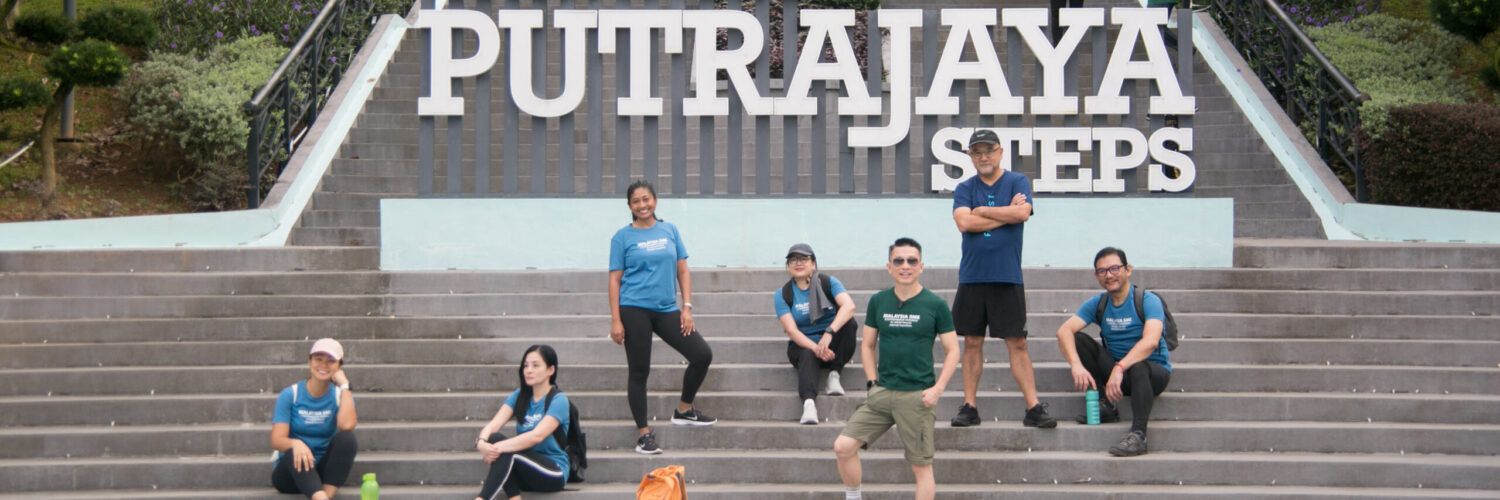
On a Saturday morning, I found myself looking up at the blue hues of Tangga Putrajaya. In front of me must be at least a 200-step flight of stairs. Wayne Lim, founder of Malaysia SME and Chairman of the organising team for the expedition, announced that we would climb those stairs for 2 hours. At that point, I just blocked out the numbers and got on with it.
Two hours later—surprisingly still lucid, thanks to Wayne’s tips on how to go up and down, yes, there’s a technique, and after ten trips (I’ll let you do the maths), we were off to Bug’s Paradise Farm, a community give-back initiative by BMS Organics, sponsor for the expedition.
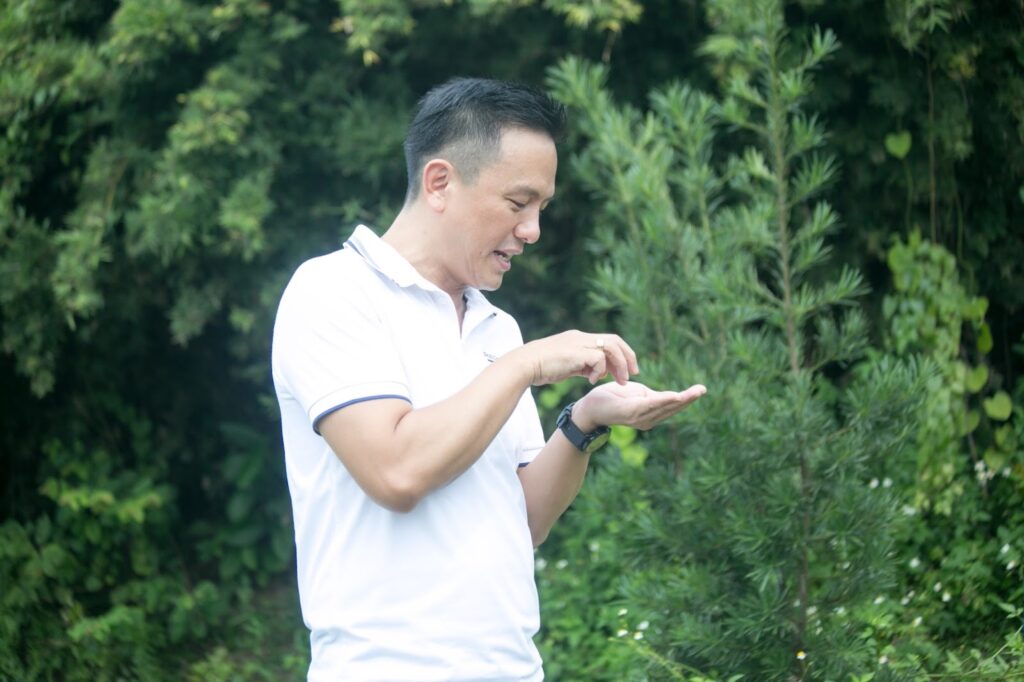
As we were settling in for lunch, who turned up? Terry Lee, one of the two founders (the Lee brothers) of BMS Organics. Then, followed by an eye-opening introduction to proper planting and sustainable farming and a mouth-watering, delicious and nourishing veg-inspired steamboat lunch.
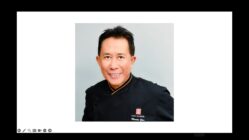
I was slurping down the last of the soup when Chew Han Tah, our expedition documentary producer, nonchalantly mentioned he was heading to the airport to pick up Chef Martin Yan. And turning to Samantha Eng, fellow expedition member, who runs Melaka’s Jonker Street’s oldest café, he said, “I might bring Chef Yan over to your place for dinner.”
At that exact moment, I had flashbacks of Yan Can Cook, featuring Martin Yan, who dazzled with his knife skills, humour, no-measure cooking style, and signature sign-off, “If Yan Can Cook, So Can You”. The 1990s cook show was the opposite of the sterile, formulaic shows of the time.
There was no way I was going to miss this opportunity.
Next to me, Samantha was still trying to find her voice.
Limau Limau Magic
The Wednesday after, I found myself at Limau Limau—kebaya in tow—not quite sure what to expect, only that Samantha was preparing dinner for the six of us. As I’ve said, there’s a story around every corner, and Limau Limau is no exception. When you hear phrases like “feels like home” or “home-cooked,” they often sound clichéd. But here, those words fall short—this café just takes “home” to another level.
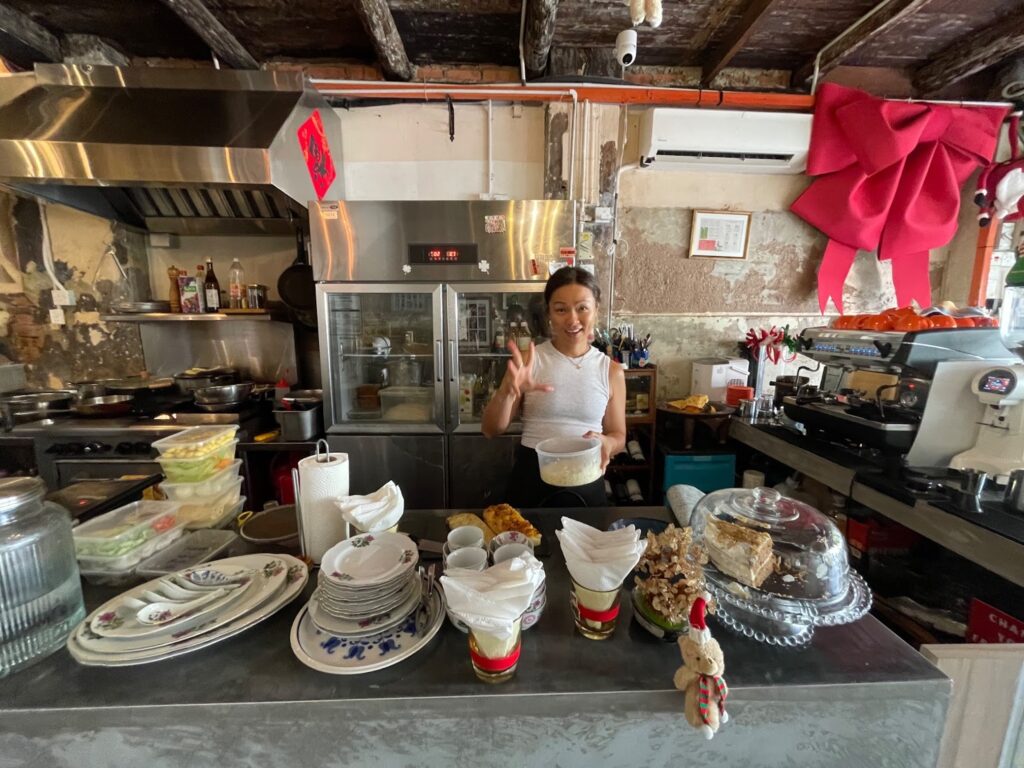
Built quite literally by Samantha and her father, she is the third owner of the space. The restaurant has been around for 20 years, located in the heart of Jonker’s Jalan Hang Lekiu, right next to the 1748-built Masjid Kampung Keling. Samantha bought over the business in 2019, a few months shy of the pandemic.
“For the next two years, we barely heard footsteps along the street,” she recalled. During those difficult months, Samantha, alongside her father, restored the space, laying the upstairs floorboards by floorboard, manually sawing wood, hammering the joints, sanding it all down, and doing the paintwork, with only elbow grease.
“I had hired staff, I still had to pay their salaries,” she said, dipping into her savings from her 20 years in Ireland, where she worked in hospitality prior to coming home to Malaysia. “Working with our hands during that time to put the place together was what kept me sane.”
When you walk into Limau Limau and see the open kitchen, the chandeliers, the curated décor, the antique plates, the ‘Every Breath You Take’ era music choice – everything tells a story – handmade and heartfelt, down to the last detail. And if Samantha can catch a breath in between making her famous Portuguese egg tarts and panini sandwiches, she’s to shower you with hospitality, in true Samantha Style.
But this evening, Samantha was understandably nervous. She was about to host a chef who had won the James Beard Lifetime Achievement Award for bringing the ‘joy of Chinese cooking to a global audience’ and the International Association of Cooking Professionals Lifetime Achievement Award for his impact on the culinary profession —and who, notably, is the only chef active from the generation of masters like Julia Child.
If I said there was no pressure, I’d be lying.
Are you hungry?
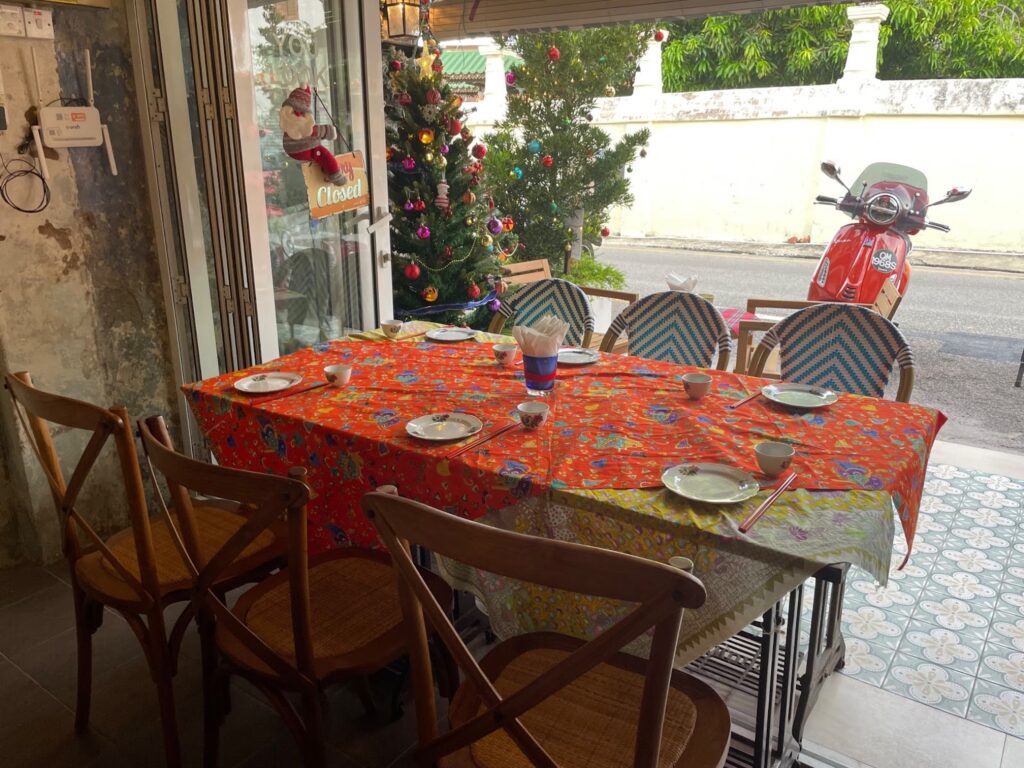
The table was laid with two of Samantha’s most treasured kain batik. Chef Yan arrived, it was raining, and it had been a long day of filming for the upcoming series Passportto Malaysia, exploring food, travel, and culture.
Not a hair out of place, he settled in like an old friend joining us for dinner. To further entrench a point, Samantha casually waved a ‘hello’ to a patron, who happened to be passing by, who was at the cafe earlier in the evening and Chef Yan called out, “Come and join us for dinner,” So Jim did, and as the stars would align, Jim lives 15 minutes away from Chef Yan in Seattle.
“Are you hungry?” Samantha asked, in her usual straightforward fashion, with a wink. “Yes” was the chorus.
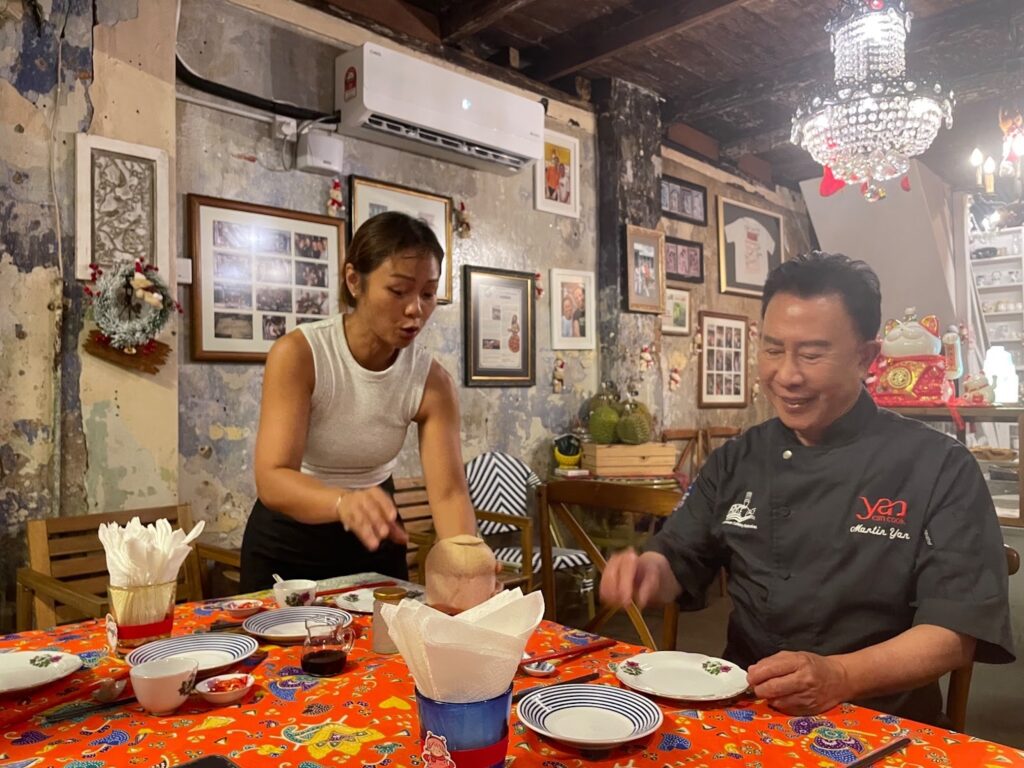
And so began ‘SAM’S nine-course meal’.
We started with coconut with bird’s nest, which Chef Yan called a clever way of turning a beverage into a dessert.
Next came Itik Tim, a duck soup simmered in a base of pickled vegetables, dried tamarind slices, and preserved plum. Chef Yan noted immediately that the sourness was “done just right.”
Then came the Nyonya achar, and from the look on his face, I could tell this was one of Chef’s more enjoyable dishes of the night.
The chicken steamed with Chinese herbs followed, and he had only one word for it: “Perfection.” From there, he launched into a story about how herbs have long been used to balance and rebalance the body.
Ayam Sioh ensued, a tangy and sweet chicken stew inspired by the traditional Nyonya “rempah chin’ dish. Chef Yan admired how well the chicken had been braised and how subtle yet outstanding the spice mix was.
The steamed pomfret was simple on the surface, but ironically, one of the hardest dishes to get right. Chef Yan was right to say that the secret lay in the soy–garlic sauce.
Then the steamed prawns, so delicate they melted on the tongue.
The showstopper mud crab, the roe so rich it had Chef Yan scooping every last bit, and apparently, this species of crab is not available in the US.
Just when we thought the curtain was about to come down, Samantha brought out sambal sotong with petai—the belacan aroma filling the room, dizzying in the best possible way.
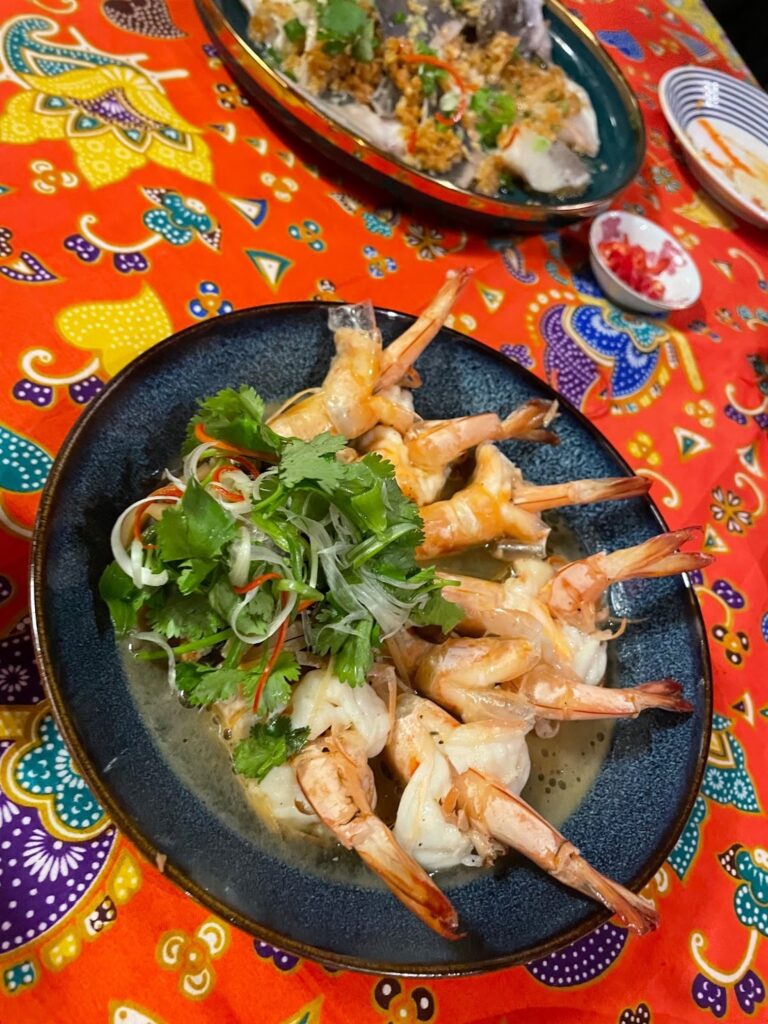
I took barely any pictures of the food. I’m not usually that type, but I snapped a photo of the steamed prawns.
“You can’t fake this,” Chef Yan declared. “Flavour like this comes from passion.”
That, he told us, is what’s carried him through life.
In Between Dishes
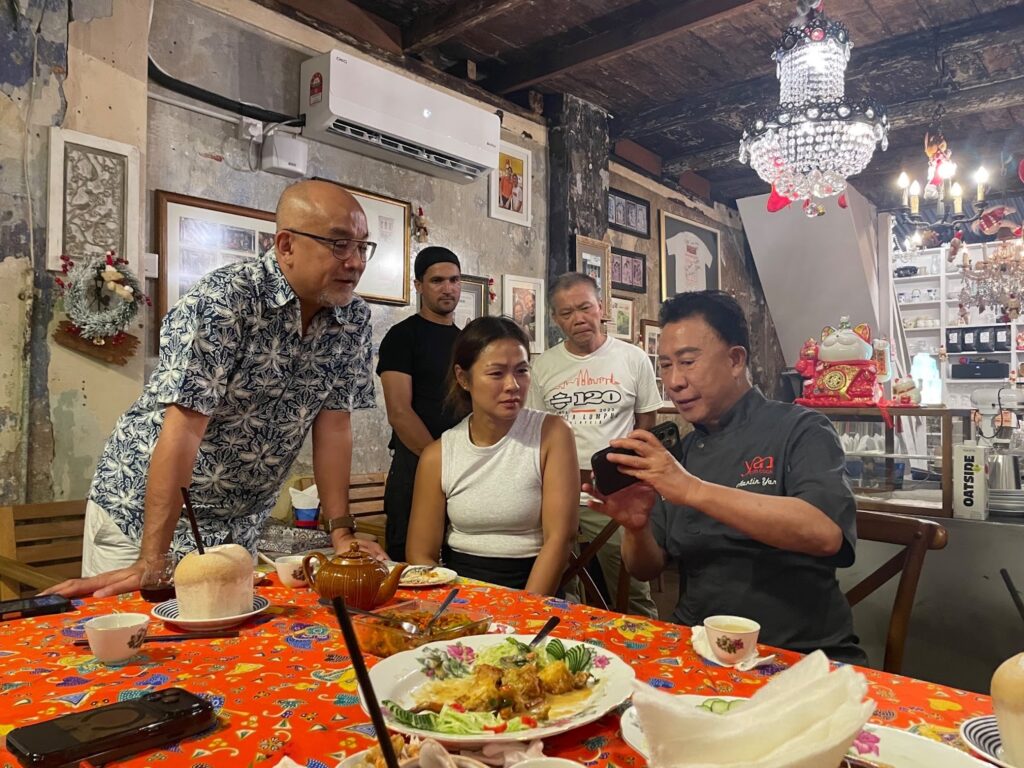
I asked whether education or experience shapes a chef and their cooking. His answer was simple: “Food is not only an art, not only a skill… food and food preparation is a science.”
A food technologist by training and a UC Davis graduate, Chef Yan values both theory and practice.
“In the old days, before cooking schools, you learned from the master; it became part of your family.”
Still, he emphasised the importance of understanding the why. “The more you understand the science, the more intense the flavour, the better the dish.”
We also talked about the hospitality industry—then and now.
“In the old days,” he said, “people got into restaurants because they were from poor families, or had too many siblings. The parents couldn’t manage, so they sent them to a restaurant to work—at least they’d be fed.”
“I was born at a time when China had nothing. It was the most turbulent time in modern Chinese history.”
Chef is 76 this year.
“Today, people go into the industry because they’re interested. So there’s a difference.” But regardless, he shared, “Love what you do. It’s not about fame or fortune.”
Since hosting the first Asian-American cooking show, Yan Can Cook, in 1978, he hasn’t stopped.
“I work every day. I meet people full of energy and passion—these things you can’t teach.
“In hospitality, it’s about passion. You can’t train that. And without it, it’s hard to survive. It’s dirty work. Long hours. It’s stressful. No holidays. And when others are on holiday, you wish you were too.”
What keeps him going now, he said, is meeting the next generation.
“I’m not running restaurants these days,” he said. “Now I travel to meet young people. When I meet talent like Samantha, I get ‘hungry’ again.” During the conversation, it also came up that Malaysia’s Chef Wan was a student of Chef Yan. “Chef Wan is one who speaks his mind,” said Chef Yan in admiration for a friend he often visits whenever he is here.
Passport to Malaysia
Seated next to me was Mark Chew, Chef Yan’s producer, who told me about the many projects on Malaysian cuisine and culture that Chef Yan has undertaken.
“We’re working on Passport to Malaysia now,” he explained. “Ten years ago, we did Taste of Malaysia. That aired in the US and across Asia.
“It’s humbling working with Chef Yan,” said Mark, who is also joining us for the Kinabalu climb—along with his father, Chew Han Tah.
Before long, Samantha stood and said, “Shall we have dessert?”
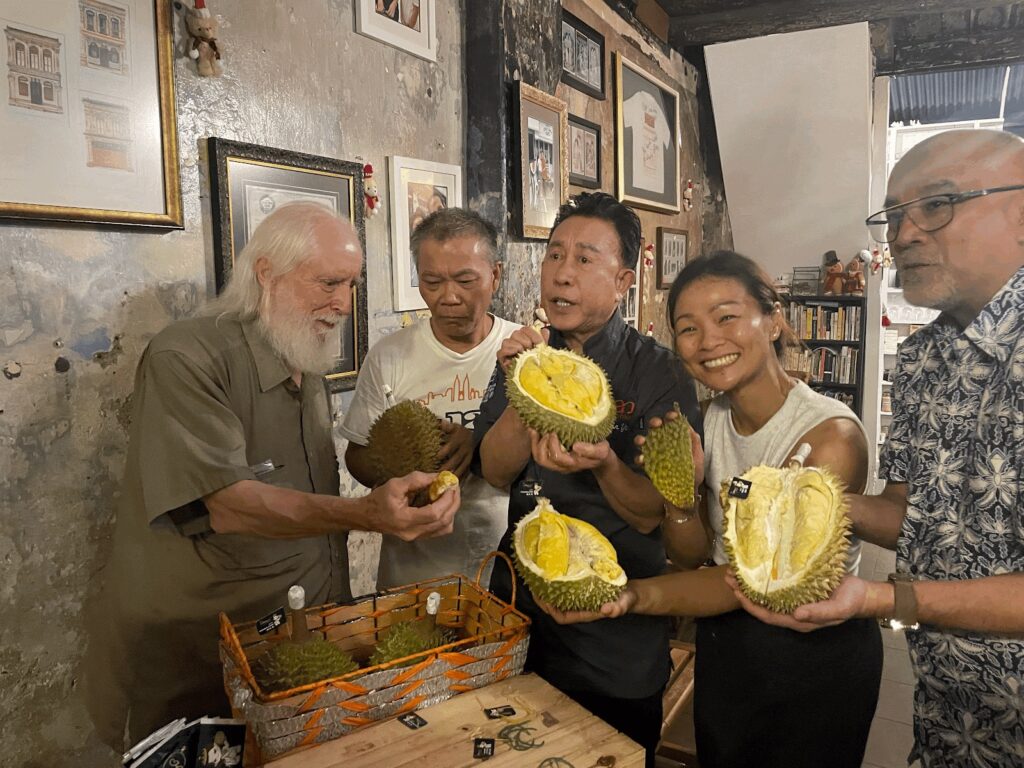
Enter: durian.
Chef Yan loves durians. He appreciates the different types, the textures, the aroma.
“Malaysian durians are still the most revered in the world.”
And coming from someone who’s been everywhere, I’d take his word for it.
Two hours that flew by
Heartfelt conversations, the kind you don’t expect. A world-renowned chef not only eats with us but also serves food across the table like a friend.
It reminded me of why he always introduced his guests as friends.
Because at the end of it all, it comes down to one thing:
Be who you are. Be yourself.
Well … technically all stories lead to a last para 🤭 BUT one with a message!
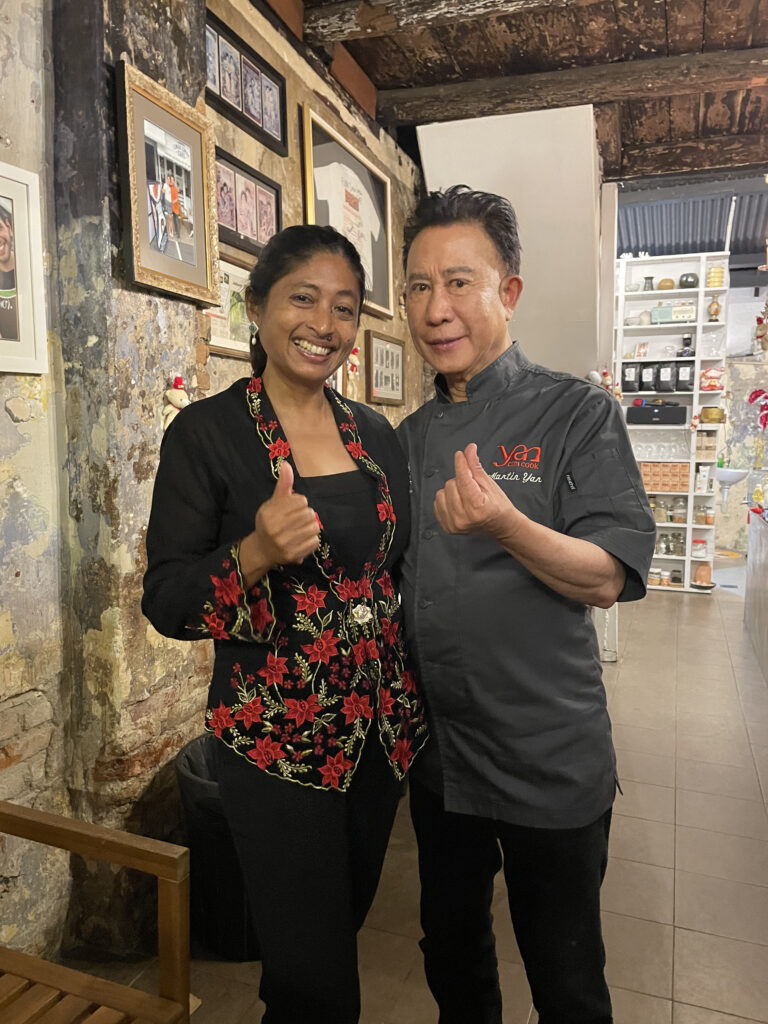
“Take care of your mind, your heart, your soul,” he said. “And share—no matter how much or how little you have. Because in a world filled with hardship, the best thing we can offer one another is the comfort of presence.”
I’m told we’ll be seeing more of Chef Martin Yan.
And I look forward to wherever the next sojourn leads.
……………………….
MALAYSIA SME’s 12th instalment of the MALAYSIA SME Congress will take place at Panalaban of Mount Kinabalu, 3,272 meters above sea level, in June 2026. Stay tuned for more updates.