

As industries across Southeast Asia increasingly turn to automation to improve operational efficiency, the challenge is no longer simply about introducing advanced technology. It is also about making that technology practical, accessible and adaptable to existing working environments. For businesses operating in laboratories, cleanrooms and specialised production facilities, space limitations, workforce pressures and the complexity of integrating new systems can make automation particularly challenging.
Recognising these realities, Epson has introduced its first-ever collaborative robot, the AX6, to Southeast Asia. Designed to work alongside human operators, the AX6 combines a compact structure, intuitive programming and advanced safety capabilities to support more flexible and scalable automation.
The introduction comes as Southeast Asia’s Industrial Automation and Process Control market continues to expand. According to SkyQuest Technology Consulting, the market is projected to grow from US$10.06 billion in 2025 to US$17.54 billion by 2033. Against this backdrop, Epson’s latest innovation reflects a shift towards automation solutions that are not only technologically capable but also easier to deploy and operate.
Making Automation Fit Existing Operations
One of the practical challenges businesses face when adopting automation is accommodating new equipment within existing facilities. Laboratories, cleanrooms and specialised manufacturing environments often operate within constrained spaces, making significant modifications to production layouts and infrastructure difficult.
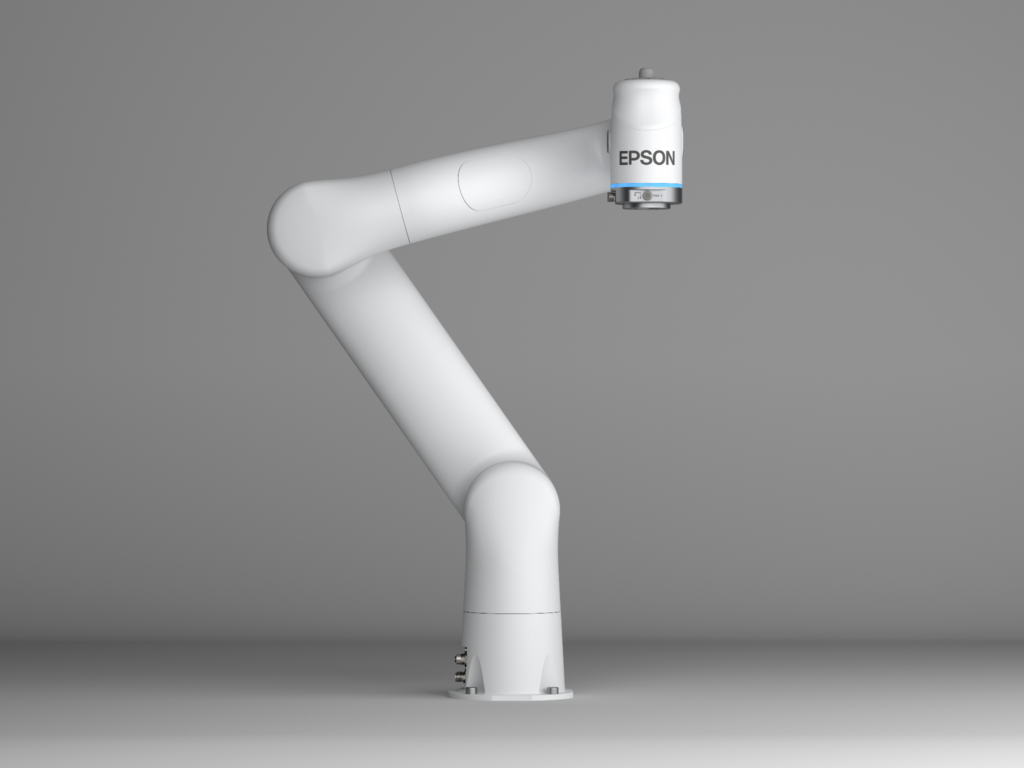
The AX6 addresses this challenge through its lightweight, compact carbon-body arm manipulator. Weighing just 17 kg, it is described as the lightest collaborative robot in its class, allowing businesses to introduce automation into space-constrained environments more easily.
Its compatibility with both AC and DC power supplies provides additional installation flexibility, while support for autonomous mobile robots (AMRs) and automated guided vehicles (AGVs) allows it to be integrated into different automation applications. These capabilities are particularly relevant to industries such as pharmaceuticals, logistics, automotive manufacturing and electronics, where businesses must balance operational efficiency with the practical limitations of their working environments, and is designed to support integration into existing operations.
Lowering the Barriers to Automation
Beyond physical space, another consideration in automation adoption is the technical expertise required to operate and manage robotic systems. As labour shortages and growing operational demands place increasing pressure on logistics operators and healthcare professionals, repetitive manual tasks can divert valuable human resources from more specialised activities.
Epson has designed the AX6 with ease of operation in mind. Its hand-guided teaching functionality allows operators to train the robot manually by setting physical points and workflows. This is complemented by easy block programming, enabling entry-level users to create automation workflows without relying solely on complex programming methods.
For organisations requiring more advanced robotic functions, the AX6 also supports widely used development tools, including Python and the Robot Operating System (ROS). This combination of intuitive operation and advanced programming compatibility accommodates different user skill levels and operational requirements. By simplifying how robotic workflows are introduced and configured, the AX6 supports organisations in automating repetitive processes while allowing personnel to devote greater attention to research, analysis and specialised clinical work.
Designed for Cleaner and Safer Environments
In sectors such as life sciences and healthcare, automation must address more than productivity. Maintaining hygienic conditions and ensuring safer human-machine interaction are equally important. The AX6 is screwless, with an easy-to-clean exterior; together with internal wiring and tubing, it is designed to minimise contamination risks in environments where cleanliness is critical.
The robot comes standard with an ISO Class 5 cleanroom classification and IP54 dust and splash protection, supporting its deployment in cleanroom settings. At the same time, its collaborative safety capabilities are intended to facilitate safer operations alongside human personnel. These include Power and Force Limiting (PFL), Safe Operating Stop (SOS), Safe Limited Speed (SLS) and Safe Limited Position (SLP).
Towards More Sustainable and Accessible Automation
As organisations increasingly consider sustainability alongside operational performance, automation solutions are also being evaluated for their long-term efficiency and usability. The AX6 incorporates efficient motor mechanics designed to minimise downtime, including in challenging operating environments. Its development also reflects Epson’s focus on energy-saving performance and responsible automation adoption.
“We are seeing a clear shift in how organisations approach automation, and it is no longer just about capability, but about ease of adoption and real-world usability,” said Seiichi Ito, Regional Director – Robot, Epson Southeast Asia.
“The AX6 Collaborative Robot, which is Epson’s first ever collaborative robot, reflects this innovation, making automation more accessible through its compact form, easy teaching functions and collaborative safety features that support seamless integration into existing operations.”
The AX6 is now available for purchase in Malaysia, with availability and configurations varying by market.