

For many small and medium enterprises (SMEs), the transition towards sustainability is not necessarily about a lack of willingness. It is also about knowing where to begin, identifying initiatives relevant to their operations and understanding how these efforts can translate into measurable business benefits.
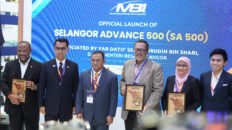
Recognising that businesses are at different stages of their sustainability journey, CIMB Bank Berhad and CIMB Islamic Bank Berhad (collectively CIMB) have introduced enhanced Sustainability-Linked Financing (SLF) structures to make sustainable financing more accessible and practical, particularly for businesses operating in the oil palm and real estate sectors.
The initiative also extends to companies seeking to acquire or upgrade existing properties into green-certified buildings.
Building on CIMB’s RM3 billion SLF programme and GreenBizReady™ proposition, the enhanced offerings aim to simplify the sustainability transition by connecting sector-specific initiatives with measurable performance targets and financial incentives.
Making Sustainability a Business Opportunity
One of the key features of CIMB’s enhanced SLF programme is its approach to rewarding businesses for achieving predetermined Sustainability Performance Targets (SPTs). These include reductions in greenhouse gas (GHG) emissions, while businesses in the real estate sector can also use Building Energy Intensity (BEI) as an alternative performance measure. BEI allows businesses to demonstrate improvements in the energy efficiency of their buildings, providing another way to measure progress towards lower-carbon operations.
Importantly, CIMB has introduced additional incentives for businesses implementing sustainability initiatives relevant to their operations, including renewable energy, energy efficiency, waste and water management, and recognised sustainability certifications. Under the enhanced structure, eligible businesses can receive financing rebates of up to 0.50% per annum, subject to meeting the programme’s requirements. This creates a more direct connection between sustainability improvements and financial benefits, encouraging businesses to undertake initiatives that contribute towards longer-term emissions reductions.
Ahmad Shazli Kamarulzaman, Co-Chief Executive Officer, Group Commercial Banking, CIMB, emphasised that the enhanced structures recognise the different levels of sustainability readiness among businesses. “We recognise that businesses are at different stages of their sustainability journey,” he said.
He explained that the new SLF structures widen access to sustainable financing across the oil palm and real estate sectors, while supporting companies looking to acquire or upgrade properties into certified green buildings. The programme also extends beyond oil palm plantation companies to include palm oil mills, enabling more businesses across the value chain to participate.
Supporting Sustainability Across the Oil Palm Value Chain
For businesses in the oil palm sector, sustainability initiatives can take different forms depending on their operations. Under CIMB’s enhanced SLF programme, eligible initiatives include methane capture, biomass utilisation, circular economy practices, water management, lower-carbon agricultural practices and the adoption of green vehicles. These initiatives are intended to support emissions reductions while improving resource efficiency across the oil palm value chain. The sector-specific approach is particularly relevant because businesses within the industry are not necessarily at the same stage of sustainability adoption.
Dr. Mohd Hefni Rusli, Acting Deputy Director General (Research & Development) of the Malaysia Palm Oil Board, highlighted the importance of practical and progressive sustainability measures. “The palm oil value chain is at different stages of sustainability maturity, making practical and progressive approaches to sustainability important,” he said.
He added that sector-specific initiatives provide businesses with a structured pathway to strengthen their sustainability performance while supporting more sustainable and resilient industry operations. Rather than prescribing a single approach, the financing structure recognises different sustainability initiatives that businesses can undertake according to their operational needs.
Helping Building Owners and SMEs Make the Green Transition
The enhanced programme also addresses sustainability opportunities within the real estate sector, including building owners, property buyers and businesses upgrading existing properties. Eligible initiatives include installing solar panels and battery energy storage systems, improving energy efficiency, obtaining recognised green building certifications, conducting energy audits, and implementing energy management or monitoring systems.
These measures provide businesses with practical options for improving the sustainability performance of their properties. A particularly significant feature for SMEs is the introduction of an entry-level option for businesses that have not yet started measuring their emissions. Through this option, eligible SMEs can receive rewards for measuring and reporting their emissions for the first time.
CIMB also provides subsidised carbon measurement tools, hands-on assistance and emissions verification as part of the support package. This is important because emissions measurement establishes a starting point from which businesses can track improvements and demonstrate progress. Once businesses begin measuring their emissions, they can work towards reductions in subsequent years and qualify for further rewards.
Ir. Ashwin Thurairajah, Executive Director of GreenRE Sdn Bhd, acknowledged the collective role of building owners in advancing the real estate sector’s sustainability transition. “Malaysia’s real estate sector’s transition to a lower-carbon future depends on the collective efforts of many building owners, including SMEs,” he said.
He added that recognising practical sustainability improvements through financing solutions can encourage more businesses to invest in sustainable building practices.
A More Practical Starting Point for SMEs
For SMEs exploring sustainability, CIMB’s enhanced financing structures present several practical considerations. Businesses do not necessarily have to undertake the same sustainability initiatives as larger corporations. Instead, the programme recognises sector-relevant improvements, allowing eligible companies to focus on measures that are material to their operations.
For oil palm businesses, this could involve improving water management or adopting lower-carbon agricultural practices. For building owners, it could mean conducting energy audits, installing solar panels or implementing energy monitoring systems. Meanwhile, SMEs that have yet to measure their emissions can begin with measurement and reporting, supported by tools and assistance under the programme.
Connecting Sustainable Growth with Financial Incentives
The introduction of CIMB’s dual-SPT structure reflects a broader effort to make sustainable financing more accessible to businesses of different sizes and sustainability readiness levels. Supported by GreenBizReady™, the enhanced SLF programme is designed to help businesses translate sustainability commitments into practical initiatives, measurable improvements and potential financial rewards. It also forms part of CIMB’s broader commitment to mobilise RM300 billion in sustainable finance by 2030.
For SMEs in the oil palm and real estate sectors, the development reinforces an important message: sustainability need not begin with large-scale transformation. It can start with initiatives relevant to existing operations, supported by appropriate financing and measurable targets. By linking these improvements to financial incentives, CIMB is giving businesses another avenue to pursue responsible long-term growth while progressing toward a lower-carbon economy.