
The term Neue Klasse, German for “New Class”, occupies a unique place in BMW’s history. Although deceptively simple, the designation has appeared only twice in the company’s century-long history. Each time, it has marked more than the arrival of a new vehicle—it has represented a complete reimagining of what a BMW can be.
On 29 July 2026, BMW Group Malaysia reflected on the legacy of the original Neue Klasse while introducing the philosophy behind its modern successor, ahead of the Malaysian debut of the first Neue Klasse model on 6 August 2026.
A Turning Point in BMW History
To understand the significance of Neue Klasse, it is necessary to look back to Frankfurt in September 1961.
During the 1950s, BMW’s product portfolio was divided between two extremes. On one side were premium luxury models such as the BMW 501, BMW 502 and BMW 503. On the other were compact microcars, including the BMW Isetta, BMW 600 and BMW 700, powered by motorcycle engines.
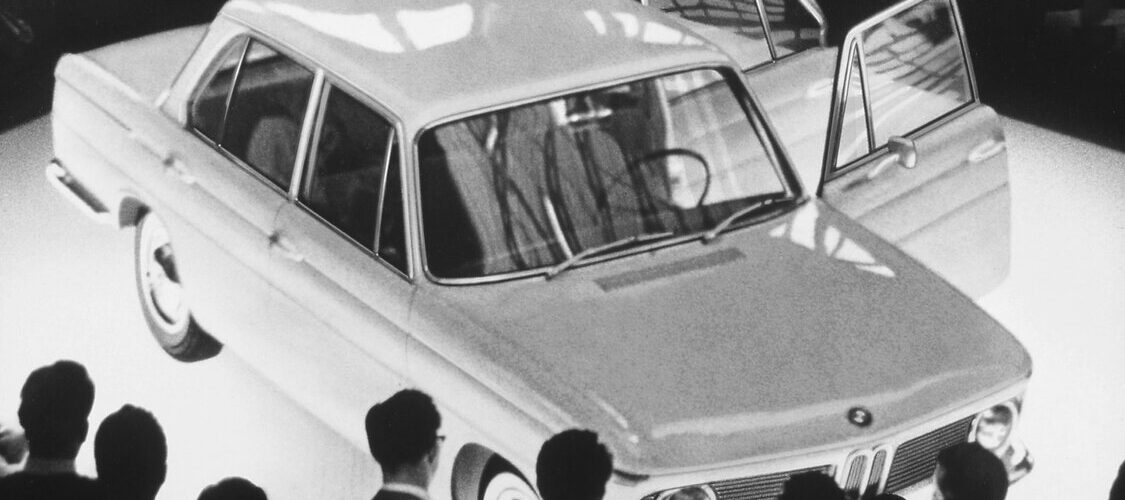
The unveiling of the BMW 1500 at the Frankfurt International Motor Show changed the company’s direction entirely.
Designed by BMW’s Chief Designer Wilhelm Hofmeister in collaboration with Italian designer Giovanni Michelotti, the BMW 1500 departed from the ornate styling of earlier BMW models in favour of cleaner lines, aerodynamic proportions and a balanced design that combined elegance with sporting intent.
While the signature BMW kidney grille remained, the model introduced what would become one of the brand’s most recognisable design features—the Hofmeister kink, the distinctive angle where the rear roofline meets the C-pillar. Beneath its body, the BMW 1500 featured an all-new four-cylinder engine, independent suspension and unit-body construction, making it one of the most technically advanced vehicles in its class.
The response was immediate. Crowds gathered around the vehicle at Frankfurt, demand exceeded expectations, and BMW expanded production by constructing a new manufacturing hall in Munich while recruiting around 3,000 skilled workers to support production. The BMW 1500 officially entered production in 1962.
The Birth of the Neue Klasse
Although the BMW 1500 laid the foundations, the name Neue Klasse was not officially used until 1963, when the more powerful BMW 1800 joined the range.
BMW’s then Board Member for Sales, Paul Hahnemann, described the growing family of sports saloons as an entirely “new class” of BMW. The term subsequently appeared in the company’s advertising in 1964, reflecting BMW’s confidence that it had created something unique within the automotive industry.
According to Marc Thiesbürger, spokesperson for BMW Group Classic, the company believed it had developed “a new class that was unique and unmatched.”
More Than a Model Line
The original Neue Klasse quickly expanded beyond the BMW 1500 to include the BMW 1600, BMW 1800 and BMW 2000.
Each model reinforced the same philosophy: delivering the driving dynamics of a sports car within a practical everyday saloon.
Together, they established a blueprint that would define BMW for decades. Beyond introducing a new product segment, the Neue Klasse redefined the medium-sized sports saloon by combining performance, practicality and driving enjoyment.
It was during this period that BMW also introduced its now-famous slogan, “Aus Freude am Fahren”—translated as “For the pleasure of driving”—capturing the essence of the brand’s engineering philosophy.
Fueling BMW’s Global Growth
The commercial impact of the original Neue Klasse was transformative.
Between 1960 and 1970, BMW tripled its vehicle sales, while automotive revenue increased more than sevenfold. Nearly 340,000 Neue Klasse saloons were produced between February 1962 and January 1972.
The success also enabled BMW to expand internationally by establishing sales operations in key markets including the United States, France and the United Kingdom, laying the foundations for the global premium automotive brand recognised today.
The BMW 2002 and the Origins of Two Icons
The Neue Klasse story continued in 1966 with the introduction of a lighter two-door model derived from the BMW 1600.
The range became known as the BMW 02 Series following the launch of the BMW 2002 in 1968, with the designation highlighting its two-door configuration. By the time production ended in 1977, approximately 825,000 units had been built.
The BMW 2002 earned international acclaim and reached Malaysia through private imports long before BMW established an official presence in the country. For many Malaysian enthusiasts, it represented their first experience of the BMW brand.
The legacy extended even further. BMW Group Classic identifies the original Neue Klasse as the direct predecessor of both the BMW 3 Series and the BMW 5 Series. The first BMW 5 Series, launched in 1972, directly succeeded the Neue Klasse saloons, while the BMW 3 Series, introduced in 1975, evolved from the BMW 02 Series.
For generations of Malaysian drivers, the driving characteristics of today’s BMW 3 Series and BMW 5 Series can be traced back to the pioneering BMW 1500 introduced in Frankfurt more than six decades ago.
A New Class for a New Era
The original Neue Klasse concluded production in January 1972, but its influence never disappeared.
After remaining dormant for over 50 years, BMW revived the historic designation during the BMW Group Annual Conference in March 2021.
Much like its predecessor, the modern Neue Klasse represents more than a single vehicle programme. It signals another defining moment in BMW’s history—a new era shaped by the company’s own vision.
According to BMW Group, the Neue Klasse will underpin the transformation of its entire product portfolio, with more than 40 new models and model updates scheduled between now and 2027.
The new generation will be built around four core principles:
Electrification
The Neue Klasse will accelerate BMW’s next generation of electric mobility through advanced battery technology and electric drivetrains.
Digitalisation
Future BMW models will integrate enhanced digital technologies and connected experiences designed to deliver a more intelligent driving experience.
Circularity
Sustainability will play a central role through greater resource efficiency, responsible manufacturing and increased use of recyclable materials.
Technology Openness
BMW will continue pursuing a technology-open approach, ensuring customers benefit from multiple mobility solutions while supporting the transition towards a more sustainable automotive future.
The Next Chapter Begins in Malaysia
BMW Group Malaysia has confirmed that the first model from the Neue Klasse portfolio will make its Malaysian debut on Thursday, 6 August 2026.
More than 60 years after the original Neue Klasse reshaped BMW’s future, the company is once again using the historic designation to signal the beginning of a new chapter—one centred on innovation, electrification and the future of premium mobility.