

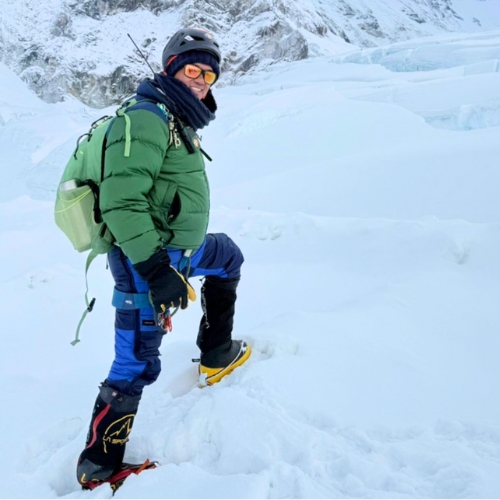
By Natasha Isabel Saravanan
“Namaste. My name is Raj Gurung. Originally, I’m from Nepal, and I’ve been in the hospitality business in Hong Kong for over 30 years,” he shared.
It was a simple introduction, but it carried the weight of decades of experience, reinvention and perseverance. Gurung’s journey did not begin in the mountains, but in the fast-paced world of hospitality, where he built a life far from home.
“Hong Kong changed my life,” he reflected. “It gave me everything. Opportunity, identity, and a future.”
For over three decades, he worked tirelessly in the nightlife and hospitality industry, managing clubs, bars and restaurants in one of the most competitive cities in the world. It was a career that demanded resilience, adaptability and instinct.
“You have to be ready for anything in this business,” he mused. “Every day is different. You deal with people, problems, and pressure. It teaches you how to stay calm.”
Yet, despite the success he found in Hong Kong, there remained a quiet distance from his roots. Nepal, the place he once called home, had been absent from his life for many years. That absence would eventually shape the next chapter of his story in ways he could not have predicted.
Rekindling Purpose in the Himalayas
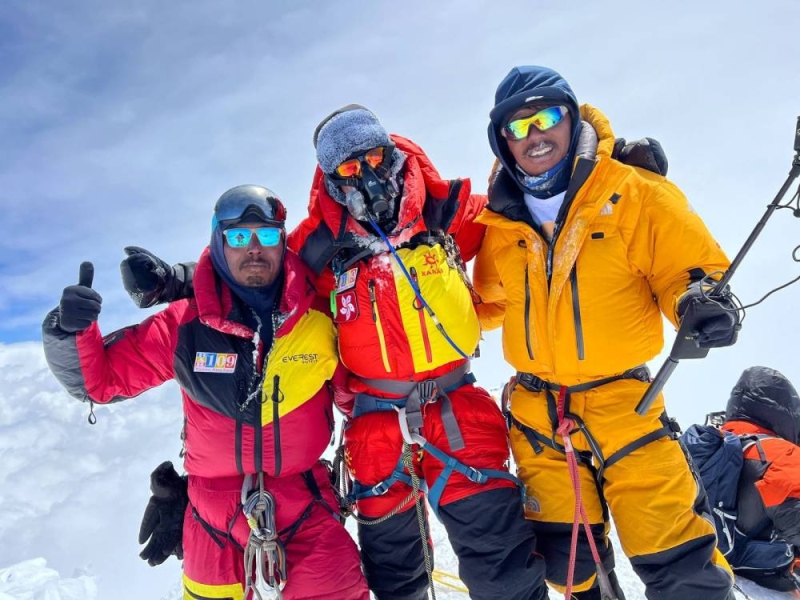
“It all started just very recently in 2023 when I visited Nepal after 26 years,” he recalled. “The mountains captivated me in a way I hadn’t expected.”
That return marked a turning point. What began as a long overdue trip home quickly became something far more profound. The scale and stillness of the Himalayas left a lasting impression on him.
“When I went back after 26 years, the mountains just pulled me in,” he explained. “I didn’t expect it, but something changed.”
Within a short period of time, that feeling translated into action. Later that same year, he undertook the Everest Base Camp trek, choosing the demanding Three Passes route. It was a physically and mentally challenging journey, one that pushed him beyond anything he had experienced before.
“It wasn’t easy,” he admitted. “But I realised I could push myself much more than I thought.”
During that trek, he also climbed Island Peak, marking his first serious step into mountaineering. It was here that he met Phurba Tenjing Sherpa, a highly experienced climber whose influence would prove pivotal.
He described his mentor’s passion as “unbelievable”, and it was this encounter that helped shape his next goal. From that point on, his progress was rapid.
Within less than two years, he climbed several major peaks, including Ama Dablam, Mount Elbrus, Lobuche and Yalung Ri. Then, on 18th May 2025, he reached the summit of Mount Everest.
For many climbers, Everest represents the culmination of years of preparation. For Gurung, it came as part of an intense and transformative period of discovery.
Yet for him, the achievement was never about speed or recognition. It was about understanding his own limits and redefining what he believed was possible.
Where Business Meets the Mountain

“Running clubs and bars in Hong Kong for 30 years taught me that preparation and adaptability are everything,” he noted.
At first glance, the worlds he operates in could not be more different. Hospitality is vibrant, social and unpredictable. Mountaineering is solitary, dangerous and deeply dependent on nature. However, Gurung sees a strong connection between the two.
“In business or on a mountain, preparation is everything,” he emphasised. “But things never go exactly as planned.”
That unpredictability is something he has learned to navigate over the years. In the hospitality industry, success depends on responding quickly to changing circumstances. In the mountains, the stakes are far higher, but the principle remains the same.
“You must trust your preparation, rely on your team, and make decisive calls,” he opined.
This mindset has shaped his leadership style. Whether managing a busy venue or climbing at extreme altitude, the ability to stay calm under pressure is essential. It allows him to think clearly and act with confidence, even in uncertain situations.
Risk is another constant factor in both worlds. In business, risks are often financial or strategic. In mountaineering, they are immediate and physical. Yet in both cases, success depends on careful assessment and informed decision making.
Through these experiences, Gurung has developed an approach that blends discipline with flexibility. He prepares thoroughly, but he also accepts that not everything can be controlled.
Resilience, Teamwork and the Power of Belief
“Climbing mountains is not easy,” he stressed. “Any mountain can take your life, big or small.”
This awareness of risk is central to how he approaches mountaineering. The mountains, he explained, demand respect. They do not reward overconfidence, and they do not tolerate complacency.
“There’s no such thing as impossible,” he stated. “You just need the will to keep going.”
For Gurung, resilience begins with mindset. His journey into mountaineering may have been recent, but his determination has been shaped over decades of experience in business. He has faced challenges, setbacks and uncertainty, yet he continues to move forward.
What sustains him is belief. Not just belief in his own ability, but belief in the people around him.
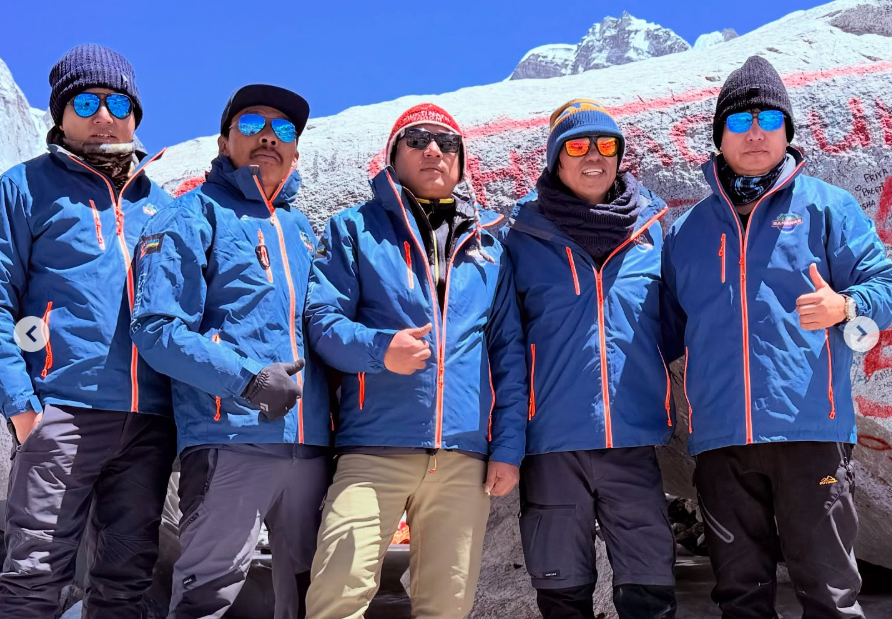
“No one summits alone,” he observed. “The Sherpas, they are the real heroes.”
He spoke with deep respect for his team, crediting Phurba Tenjing Sherpa, Nima Gyalzen Sherpa and others for their guidance and support. Their expertise and strength were essential to his success on Everest.
This emphasis on teamwork carries over into his professional life. He places great importance on building strong relationships with his staff and creating an environment based on trust and respect.
“When your team knows you trust and support them, they’ll go beyond,” he noted.
By celebrating achievements together and maintaining open communication, he fosters a sense of unity within his team. For him, leadership is not about authority, but about collaboration.
Ultimately, his philosophy is simple. Lead with purpose, support your team, and believe in what you are capable of achieving.
Legacy, Sustainability and the Long View
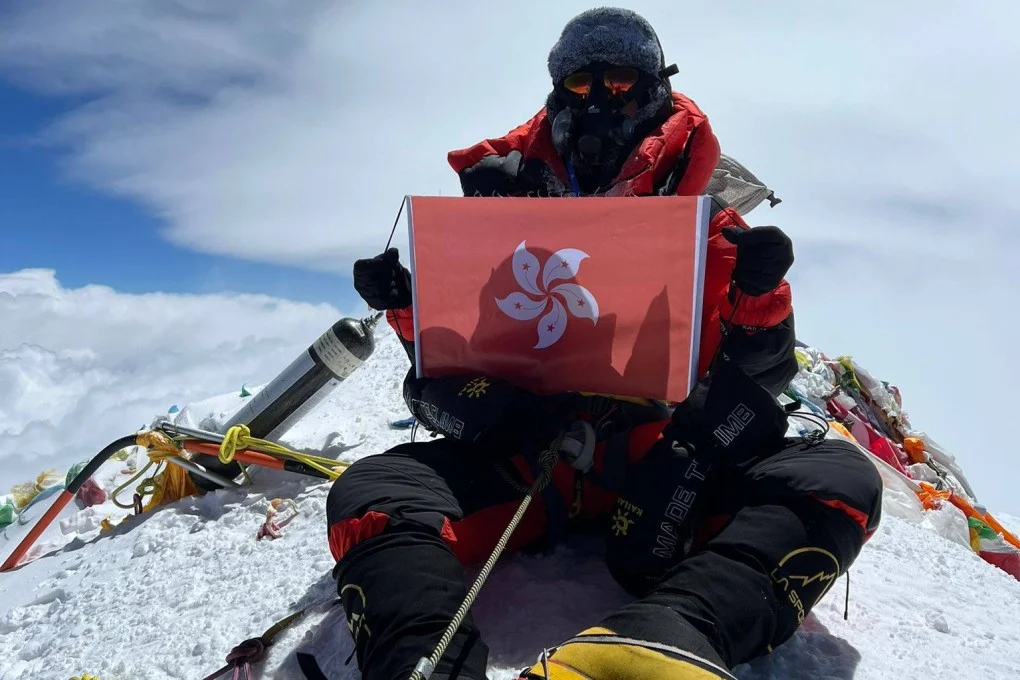
“Spending time in the mountains has made me more conscious,” he reflected. “The mountains are fragile, and so is our environment.”
Beyond personal achievement, his experiences have led him to reflect on broader responsibilities. Witnessing the effects of climate change in the Himalayas has influenced how he approaches both life and business.
He now makes a conscious effort to reduce waste and support local communities through his work. For him, sustainability is not just an idea, but a practical commitment.
At the same time, he continues to pursue the Seven Summits, a challenge that involves climbing the highest peak on each continent. It is a long term goal that requires patience, discipline and continued effort.
Each climb represents another step in his journey of growth. It is not simply about reaching the top, but about the process of getting there.
“I want to inspire others to believe that anything is possible,” he said.
This desire to inspire is at the heart of the legacy he hopes to leave behind. Whether through his business or his mountaineering, he aims to show that it is never too late to pursue something new.
“We are going there to complete, not to compete,” he asserted. “Your competition is with yourself.”
It is a perspective shaped by experience, one that values progress over comparison. In a world often focused on external measures of success, his message is a reminder that the most meaningful achievements are often personal.
Beyond the Summit
Gurung’s story is not defined by a single accomplishment. Instead, it is shaped by a willingness to evolve, to take risks and to embrace new challenges.
From the nightlife of Hong Kong to the summit of Mount Everest, his journey reflects a rare combination of ambition and humility. He has shown that success in one field does not limit the possibility of growth in another.
More importantly, he has demonstrated that belief, resilience and teamwork can carry a person further than they might ever expect.
“There’s no such thing as impossible,” he said.
In many ways, that belief has guided every step of his journey. It is what allowed him to return to Nepal after decades away. It is what pushed him up the slopes of Everest. And it is what continues to drive him forward today.
His story serves as a powerful reminder that new beginnings can happen at any stage of life. All it takes is the courage to take the first step, and the determination to keep going.