
By Aileen Anthony
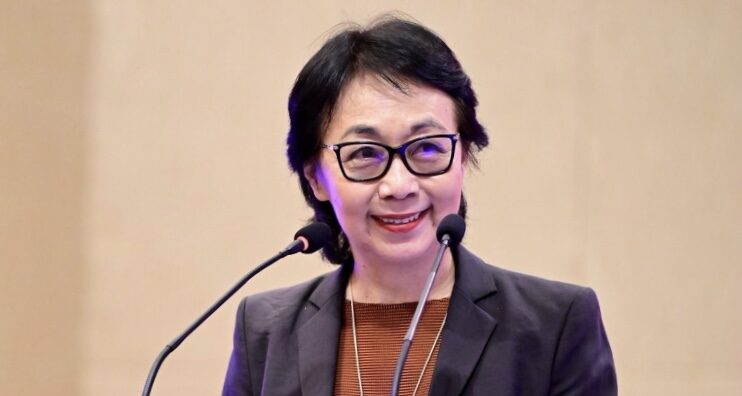
As Breakthrough Energy Fellows’ Lead in Southeast Asia/Singapore, Zhang sits at a critical junction where science meets scale, and where early-stage innovation must cross what is often referred to as the “valley of death”—the precarious space between research breakthroughs and real-world deployment. This pivotal role sets the stage for how Breakthrough Energy (BE) is reimagining the region’s climate innovation landscape.
MALAYSIA SME recently spoke to Zhang about her role – building bridges between laboratories and markets; between founders and funders; and, increasingly, between Southeast Asia’s emerging innovation ecosystems and global climate ambitions that demand urgency.
Breakthrough Energy: Building the Industries of the Future
Founded in 2015 by Bill Gates, Breakthrough Energy was created with one mission: accelerate innovation that reduces greenhouse gas emissions while delivering affordable, reliable, and clean energy. Unlike conventional venture platforms, Breakthrough Energy is an end-to-end system. It supports technologies from discovery through development to deployment.
The platform has focused on five main sectors responsible for most global emissions: manufacturing, transportation, electricity, buildings, and agriculture – with an eye on expansion into new sectors and areas as opportunities arise. These are structural challenges—not incremental ones.
Breakthrough Energy supports companies at every stage of their growth. Breakthrough Energy Discovery is BE’s philanthropic innovation arm that runs the Fellows Programme, supporting startups at the earliest stages to help innovators turn lab research and breakthroughs into companies. Breakthrough Energy Ventures is the for profit, venture capital arm of Breakthrough Energy – investing in groundbreaking companies poised to take clean technologies to global scale. Deployment targets late-stage projects where capital and scale become main barriers.
Where the Fellows Programme Fits—and Why It Matters
Zhang explained, “The Fellows Programme is intentionally designed for the earliest stage of company formation.”
These startups often spin out of universities or research institutes. They are frequently founded by scientists—PhDs, post-doc researchers, or technical experts. These founders have deep domain knowledge but limited experience with company building.
“This is where the journey really begins,” Zhang explained. “Founders have breakthrough science, but translating that into solutions and products that can survive in the market is a completely different challenge.”
The programme is cohort-based and global. Each year, Breakthrough Energy Fellows selects founders worldwide for a 12-month fellowship. Fellows are integral parts of a single global cohort, ensuring exposure, peer learning, and collaboration across geographies.
BE’s support, Zhang emphasised, goes beyond funding. Fellows receive a structured curriculum tailored to deep-tech startups, along with hands-on mentorship in technology de-risking, scaleup, and commercialisation. They also gain access to global climate innovation networks. Just as importantly, they join a lifelong community that continues beyond graduation.
“The company-building journey is also a leadership journey,” Zhang said. “We look closely at the team, their ability to execute, and their willingness to learn and adapt.”
Why Southeast Asia—and Why Now
In 2024, Breakthrough Energy, in partnership with Temasek and Enterprise Singapore, launched its Southeast Asia hub—the organisation’s first global location outside the United States. Based in Singapore, the hub serves the wider ASEAN region. It also remains fully integrated into Breakthrough Energy’s global operations.
The choice was deliberate.
“Southeast Asia is at the crossroads of rising energy demand, rapid urbanisation, agricultural dependence, and climate vulnerability,” said Zhang.
She added, “The region’s startup ecosystems, though still forming, are becoming more active. Supported by stronger university research, growing government interest, and new founders, they are ready to tackle complex, science-driven problems.”
“Ecosystems matter,” Zhang noted. “Academic excellence, industry presence, government support, market needs, and access to capital all have to come together. Southeast Asia is at a point where those elements are starting to align.”
Being on the ground has made a difference. Zhang has visited several countries in the region, including Malaysia. There, she engaged universities, accelerators, and ecosystem partners. As a result, applications to the Fellows Programme from Southeast Asia—especially Malaysia—have increased.
Qarbotech: A Milestone for Malaysia
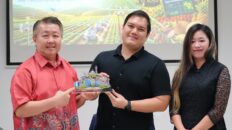
Qarbotech became the first Malaysian company selected into the Breakthrough Energy Fellows Programme—marking a significant milestone not just for the company, but for Malaysia’s deep-tech and climate innovation ecosystem.
Headquartered in Puchong, Qarbotech is an award-winning agritech company committed to sustainable farming solutions. Through its flagship product, QarboGrow™, the company is pioneering a new era of food production—focused on empowering farmers, strengthening food security, and contributing to a greener planet.
QarboGrow™ is developed using nanocarbon material derived from agricultural waste. The biocompatible and eco-friendly compound enhances photosynthesis, enabling plants to utilise sunlight, water, and carbon dioxide more efficiently. The outcomes are measurable: increased yields, reduced fertiliser dependency, and improved crop resilience under increasingly volatile climate conditions.
For Zhang, Qarbotech stood out because of both its scientific rigour and practical validation. “Their work is grounded in strong science,” she said. “They demonstrated results in the lab and in real field trials. That matters.”
At the time of application, Qarbotech had already validated its core technology beyond proof-of-concept. The team had conducted multiple trials across different geographies and demonstrated a credible pathway to scale. Just as crucially, they showed execution capability, openness to feedback, and a pragmatic approach to market deployment—qualities that align closely with BE’s philosophy.
Impact, in this context, is inseparable from commercial viability. Technologies must be cost-competitive to achieve wide adoption and meaningfully reduce emissions.
“For us, market deployment is impact,” Zhang explained. “If a solution cannot reach the market, it cannot deliver sustained climate benefit.”
Qarbotech’s inclusion has created a ripple effect. Visibility matters—especially in emerging ecosystems. Seeing a Malaysian company succeed on a global platform has encouraged other founders, scientists, and research teams to consider whether their own innovations could follow a similar path.
A Global Community

Although the Breakthrough Energy Fellows Southeast Asia hub leads recruitment, outreach and ecosystem building, the SEA-based Fellows remain deeply connected to the global Breakthrough Energy community. Cohort gatherings—virtual and in-person—remain central to the experience.
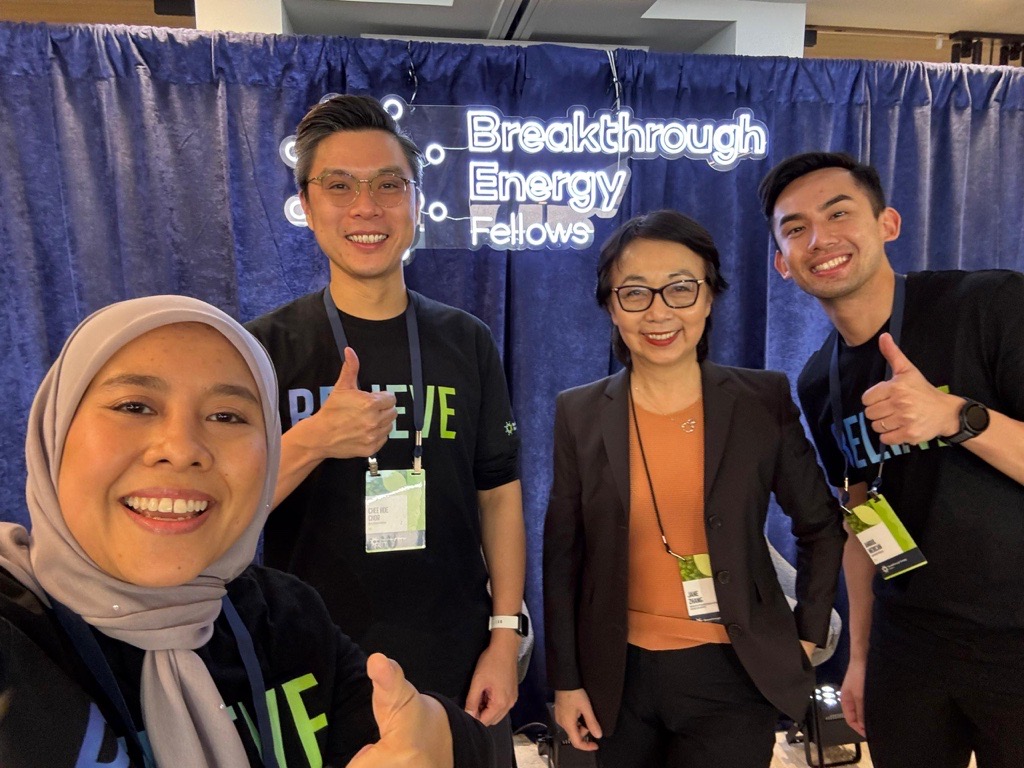
Cohort 5 officially launched this past September in Washington, D.C. There, Fellows—including Qarbotech’s founders—met peers worldwide. These meetings are practical and often result in problem-solving, exchanging supplier tips, and equipment sourcing .
For early-stage founders, such access is transformative.
Looking Forward: Building What Comes Next
As Breakthrough Energy Fellows prepares to announce Cohort 6 later in 2026, Zhang emphasised Southeast Asia’s growing role. While the programme stays open globally, a regional hub enables deeper engagement, stronger partnerships, and better understanding of local and regional markets.
Malaysia is fast becoming a country to watch, thanks to its universities, industry base, and growing interest in deep-tech entrepreneurship.
“We are still at the beginning,” Zhang said. “But supporting founders early, strengthening ecosystems, and helping breakthrough ideas become real solutions is where we can make the most impact.”
To learn more the Breakthrough Energy Fellows programme, visit: https://befellows.smapply.org/