
Quick FAQ
What’s the biggest market research trend in 2026?
Wai Yu points to affordability and accessibility—especially through blended AI + human research—and a growing industry interest in synthetic data.
Should SMEs use AI for research?
Yes, for routine, scalable work—if humans still own the nuance, interpretation, and follow-ups.
What’s the minimum research an SME should do this year?
Talk to existing customers consistently using a few structured questions—and record, track, and act on what emerges.
How do I build trust in my data?
Collect it intentionally, avoid leading questions, look for patterns (not one-off opinions), and ensure someone competent interprets what silence, neutrality, and contradictions might mean.
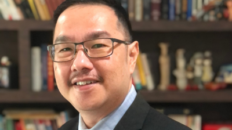
See Toh Wai Yu, CEO of Central Force International Sdn. Bhd., on the shifts shaping customer research in Malaysia—and how SMEs can compete with the big players.
Market Research and Business Hygiene
In 2026, Wai Yu believes that guessing will become increasingly expensive.
“The big players are constantly doing research,” he said. “They’re constantly finding out what customers want… and they’re just going to come up with better and better products. If SMEs don’t make use of data and understanding, they’re just going to struggle more and more.”
This is the core shift he sees for the year ahead: market research is no longer a ‘nice-to-have’ reserved for conglomerates—it’s becoming basic business hygiene for SMEs. And the companies that treat it that way will widen the gap against those who don’t.
The 2026 shift: Market research stops being “corporate” and becomes survival
Wai Yu has a simple way of describing the misconception: many founders think market research is reserved for the big boys. But he argues the opposite.
“Even more so, it is the small and medium players who need this more than them,” he said. “Why are you allowing that gap to grow bigger and bigger? And why are you making it harder for yourself to compete?”
In his view, SMEs have something big players don’t: deep passion and agility. But passion alone doesn’t translate into market traction unless it’s paired with customer truth.
“The beauty of SMEs… is the passion. They really do love what they do. Now, they need to find a way to really speak to their customers—or to the market.”
So for 2026, his focus is clear: make research accessible—financially, operationally, and emotionally.
A story SMEs will recognise: Spending big on marketing, but sales don’t move
One of Wai Yu’s most telling examples came from a medium-sized client that had poured money into marketing—roadshows, advertising, campaigns—only to find sales stubbornly flat.
“They have been spending a lot of money on their marketing campaigns,” he said. “Unfortunately, it didn’t really convert into return on investments.”
Central Force stepped in with a lower-cost qualitative approach: focus groups, made affordable enough for the client to try without committing to a full corporate-style budget. The setup mattered—because the client wasn’t just reading a report. They were listening.
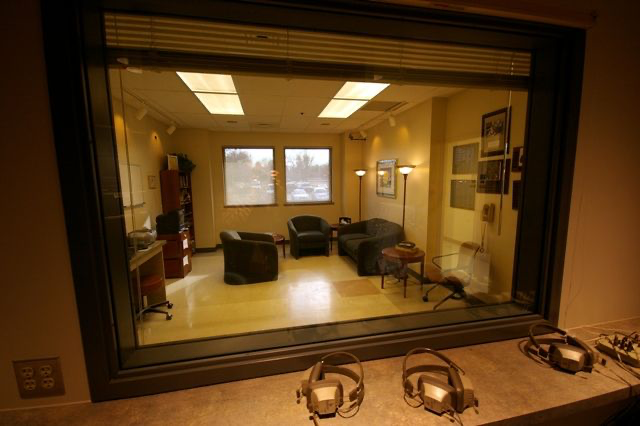
In a one-way mirror room, the leadership team heard customers describe the brand in their own words—and discovered two painful realities:
- Their ads weren’t landing. The algorithm simply wasn’t pushing their ads to the intended audience. Targeting and SEO were off, meaning money was being spent into a void.
- Their packaging and visuals were misaligned. Customers felt the product looked “for older people” even though the brand was trying to reach younger, Gen Z audiences.
“For the client, listening to what actual customers are saying, really wakes them up,” Wai Yu said.
This is the kind of awakening he expects more SMEs to pursue in 2026—not because they suddenly love research, but because it becomes the fastest path to stopping waste.
The real meaning of “accessible”: Not cheap work—smarter work
Wai Yu is careful about what accessibility should mean. It’s not about lowering standards or doing “cheap” research. It’s about redesigning the process so the same insight becomes reachable.
“AI will help,” he said. “AI will play a significant role, making things affordable and accessible.”
He offered a tangible example. Traditional qualitative interviews can cost close to RM1,000 per interview, largely because skilled moderation is specialised work. Central Force’s approach uses an AI moderator for routine sections of the interview, reducing cost dramatically.
“What would cost the client RM10,000 only cost them RM2,000,” he said—an up to 80% cost saving in some cases. But he is equally firm about the limits.

“AI will never be a pure replacement for humans,” he said. It won’t reliably catch cultural nuance, and it won’t have that “sudden realisation” moment a seasoned interviewer gets—when a respondent’s tone suggests a missing question.
So the model he’s building for 2026 is a blend:
- AI handles the straightforward questions (the easy inventory and behavioural basics)
- Humans handle the meaning (the “why” behind decisions, emotional triggers, contradictions, and nuance)
He put it plainly: AI can ask what bags a person owns. But a human researcher must ask, “Why did you choose silver instead of red?”. That’s where insight lives.
What Central Force is investing in: Training, specialisation, and “no more generic AI”
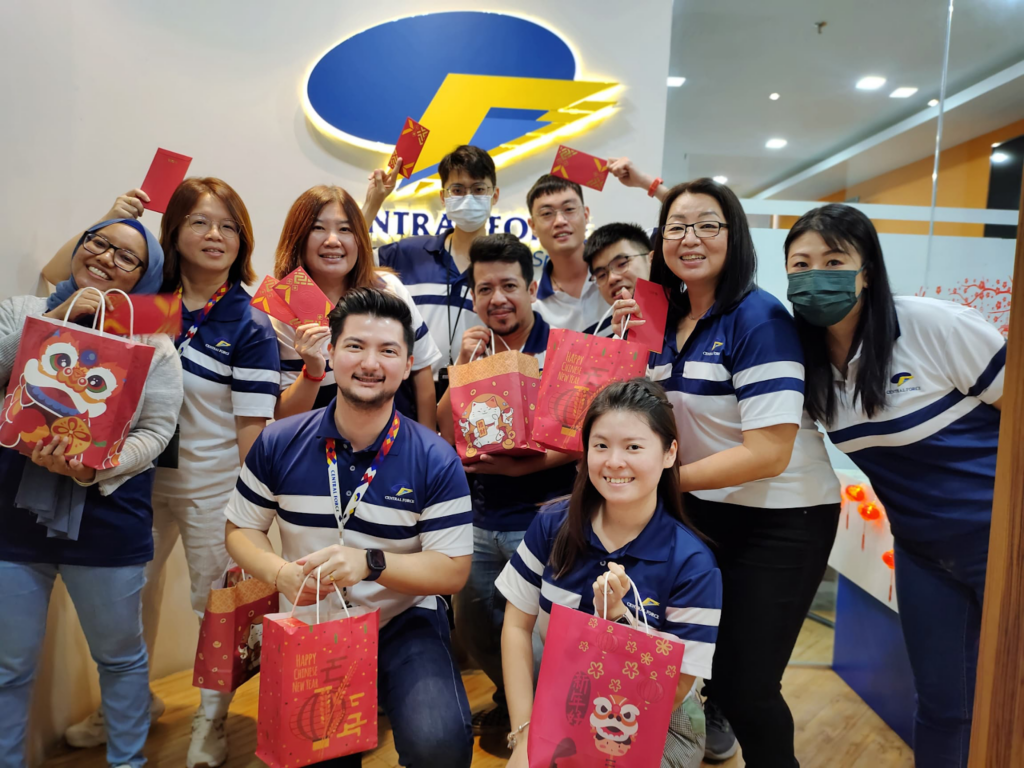
Wai Yu said the Central Force team hasn’t expanded headcount recently—but they have expanded capability.
“Our team right now has undergone a lot more AI research training,” he said, focused on building models more effectively.
A key learning, he added, is that many “AI products” on the market are essentially the same engine repackaged.
So in 2026, differentiation won’t come from slapping “AI-powered” onto a deck. It will come from building models that are:
- focused
- specialised
- trained for research outcomes, not general conversation
In short: AI that behaves like a research instrument, not a chatbot.
The trend Wai Yu is watching: Synthetic data
When asked what major players are experimenting with, Wai Yu pointed to a trend that still feels unfamiliar to many SMEs: synthetic data.
He described it in the simplest way possible: “I’m getting AI to create humans to answer my survey.”
In practice, it can look like prompting an AI to generate 1,000 “Malaysians” across demographic splits, then having them complete a questionnaire—without fieldwork.
The appeal is obvious: speed and scale.
“Why speak to a thousand people when you can get a thousand people to answer your survey in 10 minutes?” he asked.
But Wai Yu’s caution is equally clear: ethics, quality, and responsibility.
His concern is that AI answers are limited by what the system has been trained on. If training data is skewed, the “respondents” become a mirror of bias rather than reality.
“If all I had was input from TikTok… it’s not going to be about actual situations in the country,” he said.
Still, he does not dismiss the direction of travel. He believes synthetic data may become mainstream—if it is anchored to relevant, up-to-date, grounded data sources.
Until then, he called it a “deep pothole” the industry must navigate carefully.
The expectation SMEs must reset in 2026: “Don’t be angry when you see the results”
If Wai Yu could write one disclaimer above every SME research project, it would be this:
“You cannot be angry when you see the results.”
He has seen founders fall into denial when feedback is critical—especially when they are emotionally attached to the brand.
Respondents, he said, want owners to listen. They don’t soften their words just because a founder might be in the room.
- So the first 2026 expectation is psychological: humble yourself enough to hear the truth. Research is not a compliment-hunt. It is a mirror.
- The second expectation is behavioural: act on what you learn.
“You want to know what’s good so you can strengthen it… but you need to know what’s bad so you can fix it,” he said.
The minimum viable market research any SME can do
Not every business will hire an agency in 2026. Wai Yu is realistic about that. But he insists every business can start.
“At the very bare minimum, do it yourself and just talk to your own customers,” he said.
His simple starter set:
- Do you like my product?
- How do you use it / what do you use it for?
- What can I do better?
Even a nasi lemak seller can do research, he argued—by asking customers directly what to adjust: spice, sweetness, portion, sambal intensity. That feedback is market research. The only difference is whether you treat it casually—or systematically.
Data and trust: Why Wai Yu wants to “revive big data”
Wai Yu believes the “big data” era ended too quickly—not because it wasn’t useful, but because many organisations didn’t know how to turn volume into meaning.
Now, he wants to bring it back through something practical: data banks.

“Don’t throw away data,” he said. “Use it to analyse and predict patterns and create forecasts.”
Central Force has accumulated decades of work across industries—from automotive to healthcare to IT. His goal is to tag and organise projects so the company can detect patterns over time: what’s outdated, what’s emerging, what’s consistent across sectors.
For 2026, the deeper point is this: trust in data comes from how it is collected, structured, interpreted, and explained. A WhatsApp poll may produce numbers, but without context and meaning-making, it can be noise. The value isn’t just the data. It’s the story the data is truly telling.
Why research IS business continuity
Some people say research is dying because “you can just Google things.” Wai Yu doesn’t buy it.
“How can you Google something when it’s something so personal to you?” he asked—your customers’ taste preferences, your brand’s colour resonance, your service experience gaps.
Those are not searchable facts. They are lived realities.
And for Wai Yu, that is where research becomes a sustainability engine—not sustainability as a buzzword, but business continuity.
“If you always listen to your customers… your business will continue to flourish,” he said. “All we need to do is listen and act.”
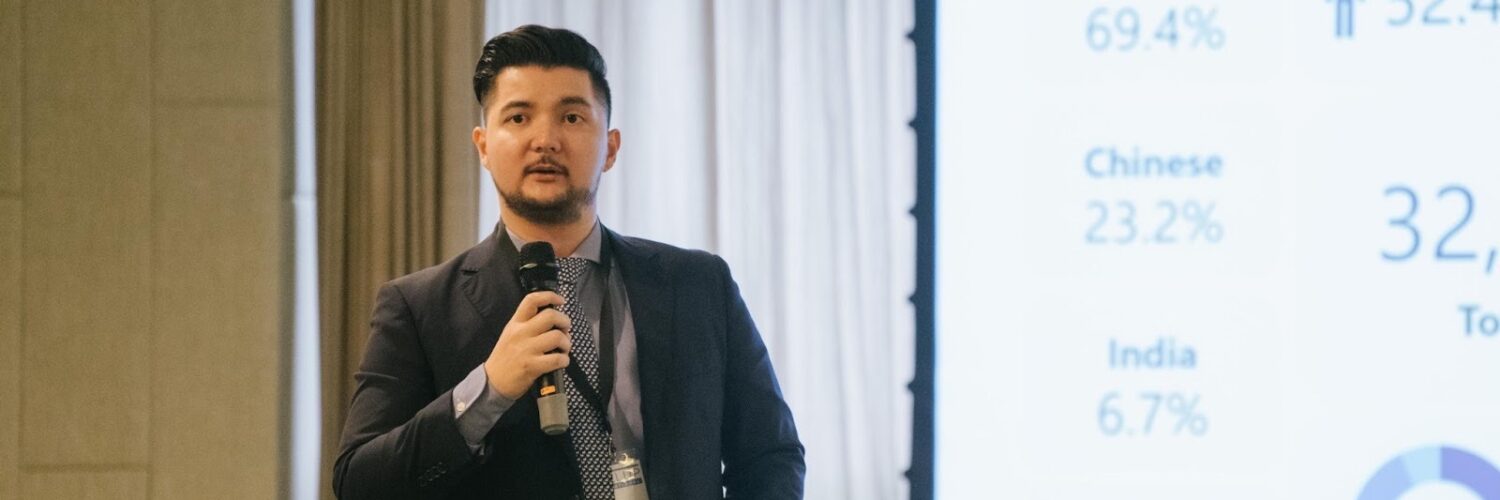
See Toh Wai Yu, CEO, Central Force International Sdn. Bhd.
In 2026, that may be the most practical competitive advantage an SME can build.